

























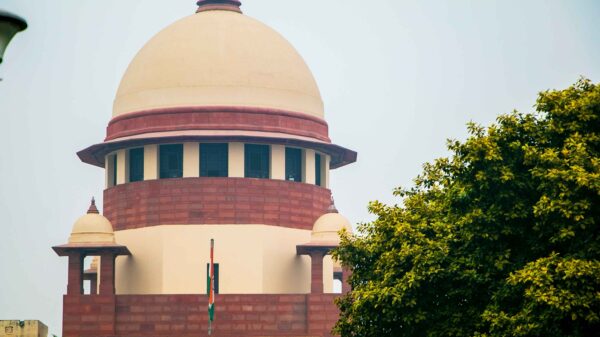




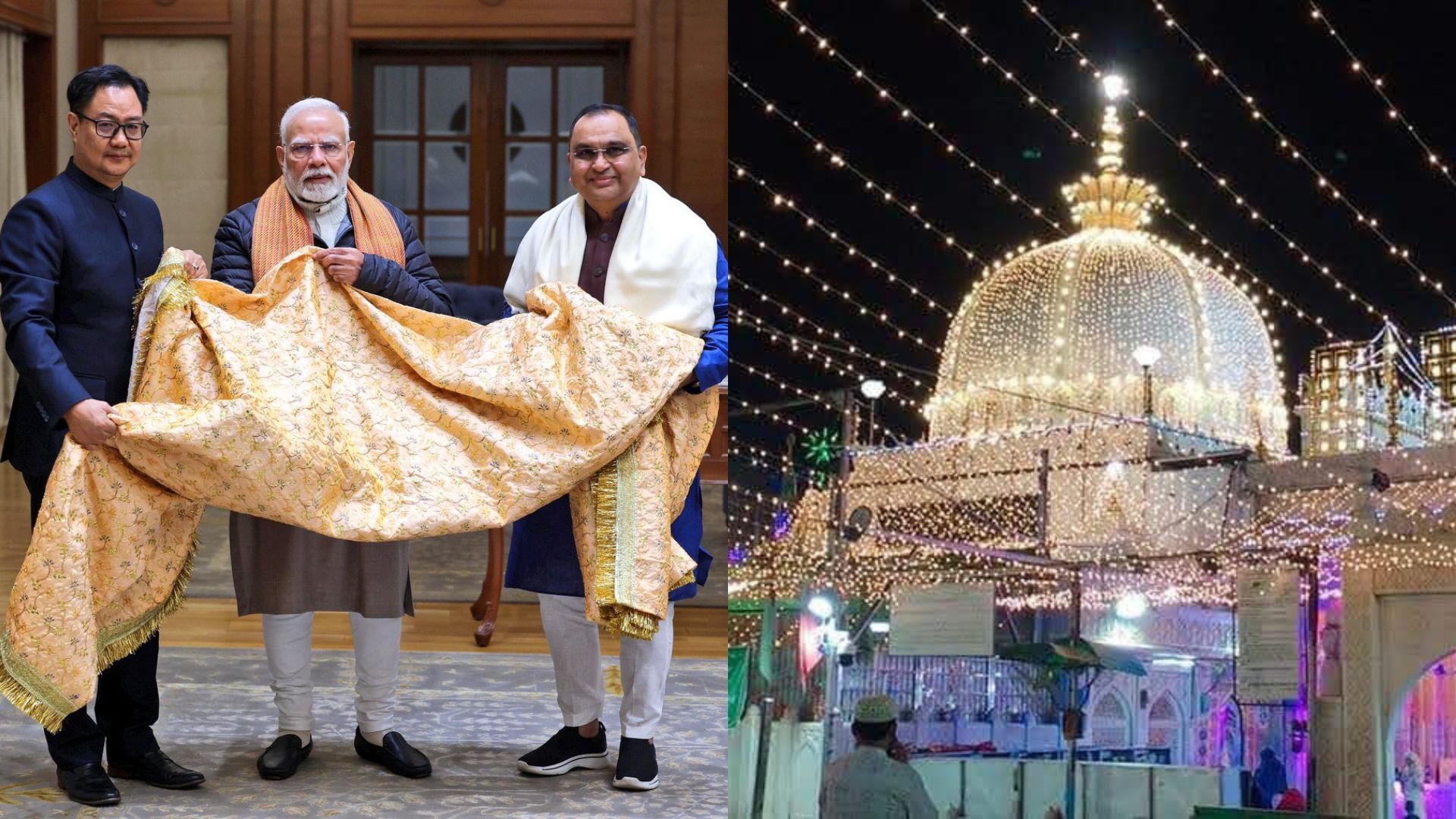
The long-standing practice of offering a ceremonial chadar on behalf of the Prime Minister’s Office and other constitutional authorities during the annual Urs of Khwaja Moinuddin Chishti in Ajmer has been challenged in the Supreme Court, with a hearing scheduled for today.
The petition argues that official patronage and honour extended to Khwaja Moinuddin Chishti is unconstitutional, arbitrary and against the constitutional ethos and sovereignty of the Republic of India. It claims that there is no historical basis for the government’s involvement in the religious tradition. The plea has been filed on behalf of Jitendra Singh Bisens, chief of the World Vedic Sanatan Sangh, and Vishnu Gupta, president of the Hindu Sena.
The issue has also reached the Ajmer district court, which has issued a notice to the Union Ministry of Minority Affairs and asked it to clarify its stand. The court is scheduled to hear the matter on December 10. The petition before the district court challenges the long-standing tradition of constitutional authorities sending a chadar to the Ajmer Dargah during the Urs.
According to information from Jaipur, Hindu Sena national president Vishnu Gupta told the Ajmer court that the dargah site was originally an ancient temple dedicated to Lord Shiva. He said a civil suit based on this claim is already pending. In this context, Gupta argued that the Prime Minister and other constitutional authorities sending a chadar during the Urs sends a wrong message and is used by the Muslim side to strengthen its claim in the ongoing case.
The petition further claims that the practice of sending a chadar to the Ajmer Dargah was started by India’s first Prime Minister, Jawaharlal Nehru. The Hindu Sena has described this as a policy of Muslim appeasement and alleged that the practice has now turned into a malpractice. It has demanded that the tradition be stopped at least until the main case related to the site is finally decided.
Vishnu Gupta told the court that he had earlier submitted memorandums to the Prime Minister’s Office and other government departments requesting that the chadar not be sent this year. He said he approached the judiciary only after receiving no response. He urged the court to intervene and impose a ban on the practice of constitutional authorities offering chadars at the dargah.
The annual Urs at the Ajmer Dargah is scheduled to begin on December 16. Traditionally, the Prime Minister, Chief Ministers and other constitutional authorities send chadars to the shrine during the Urs. The Hindu Sena has claimed that offering a chadar is not even part of Islamic religious practice and therefore has no religious basis.
The Ajmer district court will hear the plea seeking a ban on chadar offerings by constitutional authorities on December 10, while the next hearing in the main petition is fixed for January 3. Meanwhile, preparations for the Urs are continuing in Ajmer amid growing legal and political attention on the issue.