Anusreeta Dutta
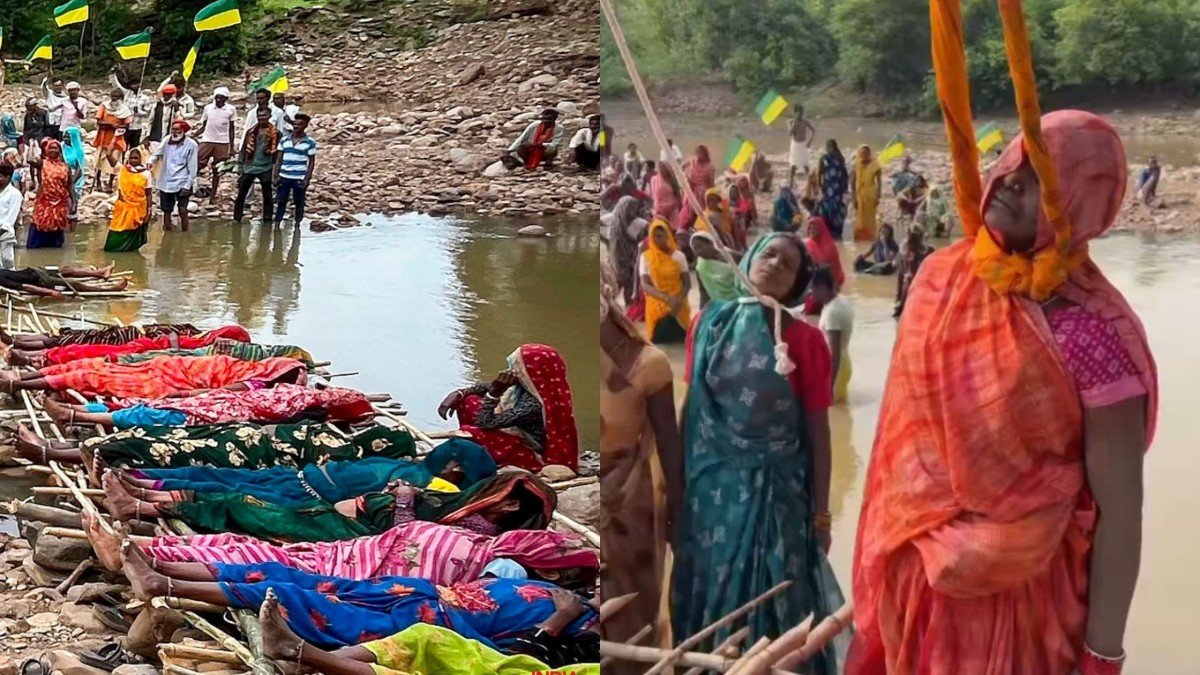
The Ken-Betwa River Link Project, when it is discussed, tends to be overshadowed by the discussions on irrigation potential, ecological impacts and the future of the Panna Tiger Reserve. These are clearly important issues, but one crucial aspect has been largely ignored. It is the impact on Dalit people whose lives and livelihoods are intrinsically linked to the land now destined for transformation.
As India embarks on one of its most ambitious water infrastructure projects, the question is not whether rivers can be interconnected but whether it is possible to grow in a socially just and inclusive manner.
Development has never been asocial
Major infrastructure investments rarely impact all communities equally. People who own property, have money and political power are usually better placed to get compensation or to rebuild their lives. Marginalised communities, particularly Dalits, tend to come into such processes with fewer assets, less bargaining power and a greater dependence on shared resources. In Bundelkhand, many Dalit households depend on agricultural wage labour, grazing grounds, woods, riverbanks and village commons for their survival. Even if they do not own the land being acquired, they risk losing access to economic networks that support their everyday life.
That creates a dangerous paradox: a project aimed at reducing regional inequality may actually exacerbate existing socioeconomic inequities if rehabilitation policies are exclusively targeted at landowners.
Hidden costs of displacement
Public debate around rehabilitation often centres on compensation for seized land. But many Dalit households rely on labour for their livelihood, rather than ownership. Relocation of villages changes agricultural patterns and may eliminate job opportunities. While landowners may be compensated or given alternative plots of land, agricultural workers tend to lose both their livelihoods and social support systems. Seasonal jobs, access to forests for fuelwood, collection of minor forest produce, cattle grazing and informal economic activity could be lost overnight.
Without understanding these losses, rehabilitation risks being a bureaucratic exercise rather than an exercise in meaningful justice.
The pay is as important as the representation
The Constitution guarantees equality before the law, but in reality participation in development planning is uneven. Important questions need to be asked: Were Dalit settlements consulted separately in public hearings? Were their interests tracked separately from the big landholding interests? Do rehabilitation committees effectively represent the scheduled castes? Are compensation schemes intended to recognize dependence on a livelihood, not just legal ownership?
These questions are meant to bolster, not to stymie, growth. The Indian environmental governance framework is more about involvement. But meaningful participation also requires an understanding that communities are not homogenous. Social hierarchies in communities often determine who gets to be heard and whose concerns are dismissed.
Learning from Previous Development Projects
The history of India’s big dams, mining projects, industrial corridors and urban expansion tells us a familiar story: exposed areas often pay higher prices with fewer long-term benefits. Research on displacement in infrastructure projects has often found that Scheduled Castes and other marginal groups recover livelihoods more slowly due to a lack of economic assets and institutional support. The Ken-Betwa project is a chance to break free from this trend.
Rather than considering rehabilitation as a post-project requirement, planners may incorporate social justice measures into the implementation of the project. Tracking the restoration of jobs, access to schools, quality of housing, and local government representation may become as important as tracking the building accomplishments.
Water justice is social justice
The Ken-Betwa project aims to enhance water security in one of the most drought-prone areas in India, a noble aim. But water justice is also about irrigation canals. It raises questions about who gives up land, who gains from development, and who participates in decision-making processes.
But the promise of the project’s development would remain unfulfilled if irrigation benefits mainly go to large landowners and landless agricultural workers continue to endure prolonged economic hardship. Infrastructure should work to diminish, not reinforce, historical inequalities.
Developing an inclusive approach to development
The Ken-Betwa River Link Project is likely to set a pattern for the future river-linking projects in India. Thus, its success should be measured not just on the basis of how many reservoirs it constructs or how many hectares it irrigates, but also on whether it sets a new standard for socially inclusive growth. This demands transparent social impact assessments, comprehensive rehabilitation schemes, independent monitoring of vulnerable groups and adequate Dalit representation at all stages of the project. Development is often described as a public good. If that claim is to be believed, it cannot be that those with the least political and economic power are silent.
The Ken-Betwa project has the potential to change the water scenario of Bundelkhand. Whether it also reconfigures India’s approach to equitable development depends on whether the country’s most marginalized residents are seen not only as project-affected folks, but as equal stakeholders in the future being built around them.
Conclusion
Finally, the Ken-Betwa project finds itself at a crossroads of ambition and accountability. It allows India not just to fight water stress, but to reimagine how development serves its most vulnerable. Dalit communities must be heard, protected and empowered; this is vital for the project’s credibility and sustainability. In order for growth to be truly transformative, it has to bring forward people who have been left behind previously, and to make equity more than just an aspiration, but a fundamental concept.
Anusreeta Dutta is a columnist and climate researcher with experience in political research analysis, ESG research and energy policy.
The views expressed in this article are the author’s own and do not necessarily reflect the policy of the platform.