Usama Hazari
Fourteenth-century sociologist Ibn Khaldun wrote in his book The Muqaddimah that the vanquished always try to imitate the victor in his characteristics, dress, customs and entire way of life.
During the colonial era, non-religious sections of society imitated their European counterparts. However, the Muslim religious class, too, seems to have ended up imitating the Protestant Christian clergy of Britain from the nineteenth century, if not in dress or customs, then at least in epistemology and devotion to the nation-state.
Dr Farah El Sharif, a scholar of Islamic intellectual history at Harvard University, was asked by Siasat.com whether most mainstream ulema had been complicit in the neo-colonisation of the Muslim world and the genocide in Gaza. She replied: “Yes, insofar as they don’t resist the Sykes-Picot system, as they don’t mobilise the masses to resist their corrupt and complicit governments, what is their ‘ilm’ really about then?”
She questioned: “I don’t think they realise how poisonous the nation-state is to their ilm output. It is the number one aqidah (creed) issue of our times.”
In India, how did we reach a point where the Delhi Police can walk into mosques filled with worshippers, take the microphone and threaten Muslims against participating in anti-government protests? How did we reach a point where so many Maulanas came out to dictate to Muslims that they should not oppose a government that has destroyed thousands of Islamic structures across India since 2014?
Historically, Islamic scholars have positioned themselves against corrupt ruling elites, with all four Imams of Sunni jurisprudence having faced imprisonment or torture.
In the colonial era, resistance against imperialism was led primarily by Islamic scholars, with figures such as Fazl-e-Haq Khairabadi issuing a famous fatwa of jihad against the British. Similarly, Omar Al-Mukhtar led resistance against the Italian fascists in Libya, while Imam Shamil fought against the Russians in Dagestan and Chechnya.
Today, when mosques are being demolished and a genocide is being broadcast live, what is the priority of the “Grand Mufti of India”? “Women should stay confined to their homes.”
It is also important to point out that, according to the argument being made here, publicly offering naseehah (advice) to women in front of men goes against Islamic etiquette, let alone discussing women in an all-male gathering. The Prophet Muhammad صلى الله عليه وسلم and many pre-modern scholars imparted advice to women directly, often in private, women-only gatherings. They did not turn it into a public polemical spectacle.
Dr Farah El Sharif told Siasat.com: “Classically, ulama adjudicated specific issues on a case-by-case basis and declared fatwas only on specific women or those who came to them.” She added that contemporary “da’wah bros” make sweeping public generalisations on issues such as women and, yes, “do end up mimicking the reductionist, sensationalist rhetoric of Christian clergy.”

This seems to be the result of importing a colonial engineering of faith and theology, in which religion is reduced to beliefs and rituals: a form of Protestantisation. When ulema cannot speak about Islam’s socio-economic frameworks, its paradigms of justice and resistance, or Islamic philosophy and psychology, they end up with a simple “lack of content” to cover.
Hence the hyper-fixation, even obsession, with women, outward religiosity and theological hair-splitting, all of which emerge from the same psycho-epistemic disorder.
In Formations of the Secular, Talal Asad argues that modern states do not simply regulate religious practices. They reshape the very conditions under which religion can be imagined and lived. He discusses how certain Islamic aspirations become acceptable, such as private piety, spirituality and individual ethics, while others become unintelligible or threatening. These include alternative sovereignties, comprehensive ethical worlds, anti-colonial dissent and Ummatic imaginaries.
Modern states have therefore reorganised Islamic authority through bureaucratic institutions, official religious offices and state-defined boundaries of “acceptable religious activity”.
Muhammad Iqbal explored this phenomenon rhetorically in Iblis ki Majlis-e-Shoora (The Devil’s Advisory Council), through the perspective of Iblis (Satan), who tells his advisors:
Better, if this Law be kept hidden from the world’s eye:
So much the better, the Believer himself is deprived of inner conviction.
Better that he remains busy and entangled in metaphysical theology:
Better, that he remains busy and entangled in the interpretations of the Book of God.Whose cries of God is Most High could break the charm of the universe:
May the dark night of that God-thinking man not ever turn bright!Is the Son of Mary dead or is he endowed with eternal life?
Are the Attributes of God separate from God, or do they form what He is?
Is the expected Mahdi Jesus of Nazareth?
Or a Renewer, endowed with the attributes of the Son of Mary?
Are the letters of the Word of God New or of Old?In which of the doctrines does the salvation of the Blessed Community lie?
Are not enough to the Faithful in this age:
These idols of worship carved by Metaphysical Theology?Keep him separate from the world of character
Until he loses all the plans (tactical moves) of life.

Iqbal calls them the idols of worship carved by metaphysical theology. Dr Farah El Sharif calls it “spiritual opium”.
She further quoted a respected scholar from Gaza, Dr Faiz Abu Shamla, who sent a message to the “scholars” of the Muslim world. In a scathing, sarcastic remark, he said:
“O High and Mighty Scholars of the Muslim Ummah, O scholars of Al-Azhar, O Ulema, O Mufti, O jurists, please tell us, enlighten us. We don’t want your armies, we don’t want your food, we don’t want your bread, we don’t want anything from you. Tell us, how did the Prophet صلى الله عليه وسلم tie the rock on his stomach when he was hungry? Was the rock big? Was it small? Did he put it up or down?”
In an article on her Substack, Dr Farah El Sharif further explains that colonialists feared the great political danger Islam represented: its unifying, anti-hegemonic power. Since well before the eighteenth century, with the trusted help of fox-like native informants, colonial forces have been doing everything in their power to divide and conquer Muslim communities by subsuming the voice of Islamic orthodoxy and creating a “state-compliant Islam”.
But she argues that, for the first time in a long while, this pernicious, age-old project is crumbling like a house of cards. How do we know? Look around. The political apparatus that colonisers have long deployed to regulate Islam, the nation-state experiment, is gasping its last breaths.
At the same time, young Muslims increasingly feel detached from and distanced from the so-called ulema class. This is one reason people like Sahil Adeem have gained considerable, if controversial, popularity in Urdu-speaking Muslim circles. Adeem, based in Pakistan, has been a vocal critic of the ulema class for years.
What Does Islamic Tradition Say About the Ulema?
The Prophet Muhammad صلى الله عليه وسلم reportedly said: “Shall I tell you what I fear for you, Muslims, more than the Anti-Christ (Dajjal)? … The misguiding scholars, the misguiding scholars, the misguiding scholars.”
In another, weaker hadith reported in Mishkat and narrated by Ali, the Prophet Muhammad صلى الله عليه وسلم is reported to have said:
“A time will come upon the people when only the name of Islam and only the script of the Qur’an will remain. The mosques will be populated, but they will be devoid of any guidance. And the scholars will be the worst people under the sky, and the mischief (fitnah) will appear from them and end within them.”
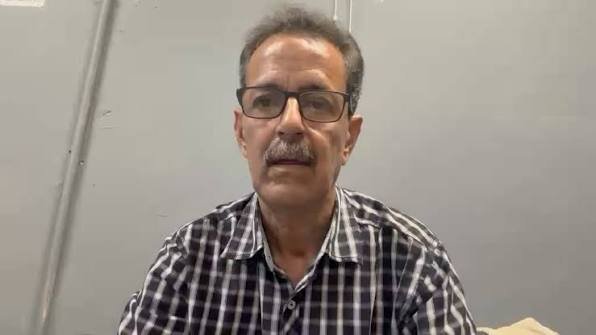
Dr Jaan Islam, an assistant professor of political science at Boğaziçi University in Türkiye, explained in an exclusive interview with Siasat.com that the crisis in Islamic scholarship begins with a simple question: What is knowledge for if not to be acted upon?
The Islamic scholar, he argues, cannot claim to be an inheritor of the Prophets merely by acquiring knowledge, adopting titles such as Aalim, Mufti or Shaikh, or dressing a certain way. “That inheritance carries a condition: the willingness to act upon the knowledge that they have.”
Dr Jaan invokes the Qur’anic image of a donkey carrying books on its back to describe scholars who possess knowledge but fail to embody it, either out of cowardice or hubbul duniya (love of worldly life). “Scholarship without action, in this view, is not simply incomplete.”
“It is a betrayal of trust and a failure to fulfil a responsibility.”
Rome wasn’t built in a day, and Islam wasn’t Protestantised in a day. Dr Jaan traces the changing relationship between Islamic scholars and political authority.
During the Rashidun Caliphate, he argues, scholars were the rulers.
The emergence of Umayyad dynastic rule created a distinction between the state and the scholarly class. In response, scholars developed institutions and traditions through which rulers could be challenged and held accountable.
Over subsequent centuries, however, rulers increasingly patronised scholars whose pronouncements legitimised and favoured their authority and policies. Furthermore, the establishment of institutions such as the Nizamiyya madrasas under the Seljuk vizier Nizam al-Mulk marked an important stage in the institutional relationship between scholarship and the state. Colonial rule and the modern nation-state, he argues, completed this transformation, eviscerating Islam as a Din and turning it into something more readily managed by state institutions.
Dr Jaan insists that this is not an indictment of every scholar.
“Are all scholars bad? No, the good ones act upon the knowledge they have.”
He invokes the Qur’anic account of the people of the Sabbath, in which some Israelites were condemned for failing to prevent wrongdoing, to argue that the failure to act can itself carry moral consequences.
“You put yourself in this situation. If you didn’t call yourself Imam, Mufti, Shaikh, Maulana, we wouldn’t be having this discussion,” Dr Jaan said.
The titles, in other words, are not merely marks of honour. They are obligations. In Islam’s formulation, those who claim the authority of Islamic scholarship must be accountable for how they exercise it.
What Next?
This is not just an opinion piece. This generation does not believe in polemics.
This is a call to action.
Prominent Supreme Court advocate Mahmood Pracha has been calling for a boycott of madrasas, Jamaats and ulema organisations that are run on donations from the Muslim masses, citing their inaction against mosque demolitions. If they do not change course soon, people may respond to Pracha’s call.
Perhaps not in the way Mustafa Kemal Atatürk did when he banned madrasas, following the fatwa issued by the Ottoman Empire’s Shaikh-ul-Islam, Dürrizade Abdullah, against the Turkish War of Independence, which he described as “fitnah” (corruption in the land).
But in the sense that people like me will mobilise the masses to economically boycott the Jamaats and madrasas that depend so heavily on our charity.
Unless, of course, they come to their senses and recognise the responsibility they bear as “inheritors of the legacy of Prophet Muhammad صلى الله عليه وسلم”.
Islam offers solutions to most of the problems humanity faces. Instead of offering those solutions, you are becoming tools of state power. This criticism specifically includes people like Umer Ilyasi, Arshad Madani and Mahmood Madani, whom even Sharjeel Imam referred to as “roadblocks”.
With knowledge comes responsibility. Some of these people have not only betrayed that responsibility but also Gaza and their covenant with Allah by importing the idols of secular modernism and colonialism into Islamic discourse.
I write this with a heavy heart. If the ulema really wanted to, the genocide in Gaza would not have dragged on for more than a month. It is well within their power to mobilise their moral authority, institutional networks and popular constituencies with sustained urgency, exerting far greater pressure on governments to end their complicity and take concrete action on Gaza.
They could bring all 50-plus Muslim capitals around the world to a halt and make the puppets listen to the cries of 1.6 billion Muslims.
But they are mentally, spiritually and politically self-emasculated.
The next generation is watching, and its patience is wearing thin. This is a rebellion against an establishment that has too often failed to translate its knowledge into courage, its piety into justice and its moral authority into meaningful action.
The Muslim masses fund these institutions, and they have every right to demand accountability. If the ulema refuse to reform, the people must be prepared to withdraw their support and build alternatives. This is not a call to abandon the tradition, but to reclaim it from those who have forgotten what it demands of them. And that struggle must begin somewhere. Let it begin in India.
“Mullah ko jo hai Hind mein sajde ki ijazat, nadaan yeh samajhta hai Islam hai azaad.”
— Muhammad Iqbal
Usama Hazari is an Istanbul-based journalist, researcher, and content producer working on political theory, media, and the Muslim world.
The information presented in this article represents the personal viewpoints of the author and does not necessarily reflect the opinions of The Observer Post.