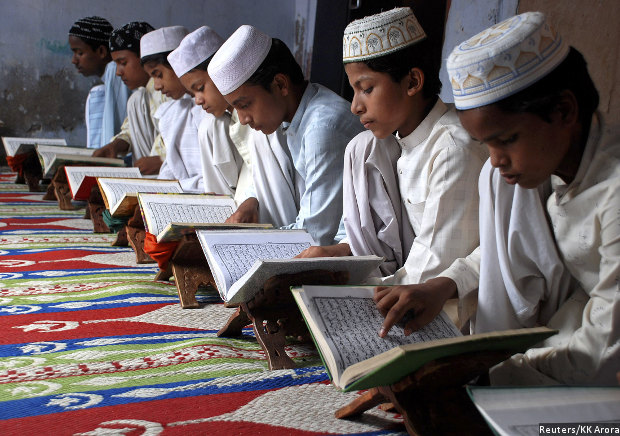
Uttarakhand is moving to introduce a prescribed syllabus for religious education in its registered madrasas and other minority-run institutions. A draft covering Classes 9 to 12 has been prepared and is awaiting approval from the state Education Department.
Surjeet Singh Gandhi of the Uttarakhand State Authority for Minority Education (USAME) said that once the approval comes, Uttarakhand will become the “first state in the country” to develop and implement such a curriculum for religious education.
The syllabus is meant to cover topics on religion and religious beliefs, along with nationalism, Indian history and culture. Under the proposed system, religious education would be given in minority-run schools either before or after the regular subjects are taught. A curriculum for Classes 1 to 8 has already been prepared and, according to sources, approved by the Education Department, but it has not yet been put into practice. The new draft will be sent to the department for approval, after which it will be implemented, officials said.
The syllabus comes after a sweeping overhaul of minority education in the state. The Uttarakhand Minority Education Act, 2025, passed last year, repealed the Madrasa Education Board Act of 2016 and the rules of 2019 that governed Arabic and Persian madrasas.
The statutory Madrasa Board was abolished on July 1, and replaced by the USAME, which now recognises and oversees institutions run by all six notified minorities: Muslims, Christians, Sikhs, Parsis, Jains and Buddhists. Around 450 madrasas are registered in the state, mostly in Haridwar and Udham Singh Nagar.
To get recognition, institutions must be run by a minority community, affiliate with the Uttarakhand Board of School Education, and be managed by a registered society, trust or company.
After recognition, they may offer supplementary religious education alongside the prescribed academic curriculum, to standards set by the authority. The law also says no student or employee can be forced to take part in religious activities. Recognition can be withdrawn for financial irregularities, mismanagement or acts threatening religious or social harmony.
Chief Minister Pushkar Singh Dhami has described the changes as historic and said that, from the July 2026 session, minority schools must teach the national curriculum and follow the National Education Policy. In April, he said institutions that failed to follow the state board’s curriculum after July would face closure. The move came after the government sealed more than 200 unrecognised madrasas in March 2025.