





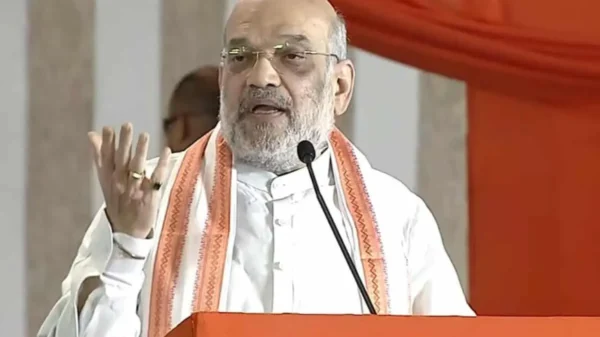










































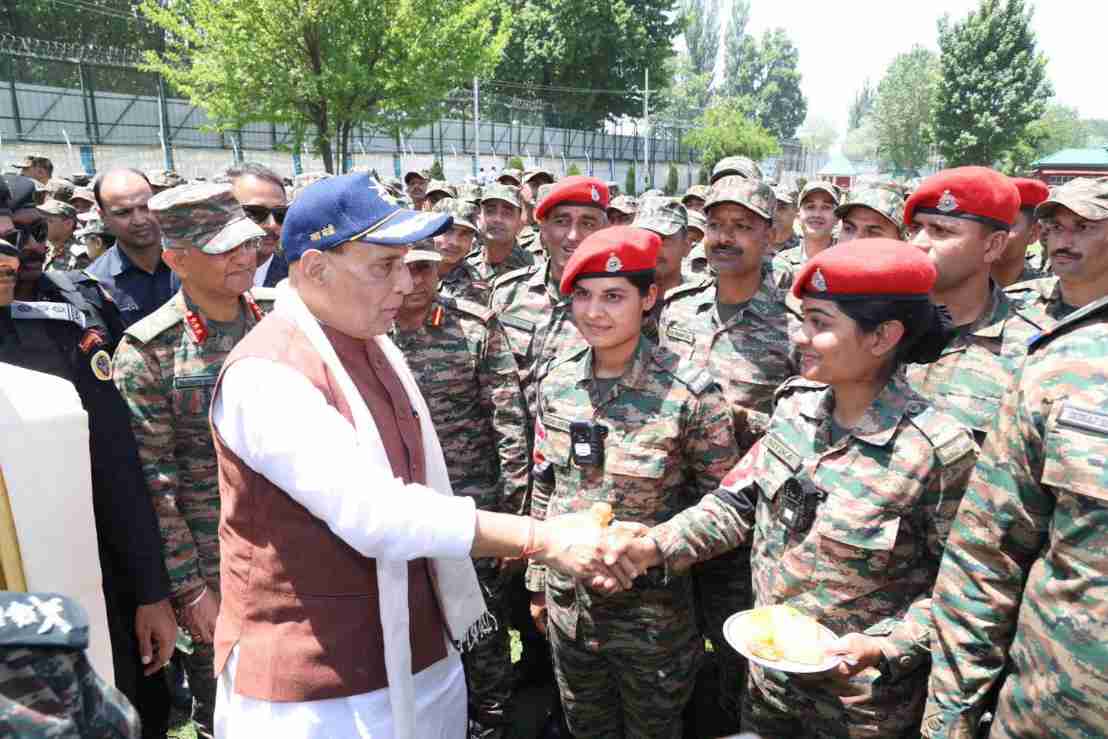
Defence Minister Rajnath Singh said on Sunday that the Indian armed forces could have done “much more” during Operation Sindoor, but chose a limited and restrained response and acted only as much as was needed. He made the remark after inaugurating 125 new infrastructure projects built by the Border Roads Organisation in several parts of the country, including the Shyok tunnel in Ladakh.
Speaking in Leh, the minister said that strong road and communication networks in border areas played a key role in making Operation Sindoor successful. He said the government is committed to improving connectivity in border regions such as Ladakh and wants to ensure development in every border district.
Rajnath Singh highlighted the rapid growth in India’s defence manufacturing sector. He said defence production has grown from forty six thousand crore rupees in 2014 to one lakh fifty one thousand crore rupees today and that India has moved from depending on imports to becoming a country that both produces and exports defence equipment.
He referred to the attack in Pahalgam on April twenty two that killed twenty six people, mostly tourists, and said Operation Sindoor was launched on May seven to target terror infrastructure in Pakistan. “The world knows what our armed forces did to the terrorists. Of course we could have done much more had we wanted but our forces showed valour as well as restraint and did only what was necessary,” he said.
The minister said the operation succeeded because troops had quick access to logistics and uninterrupted connectivity even in difficult terrain. He thanked the people of Ladakh and other border areas for supporting the armed forces and praised the coordination between the forces, civil administration and local residents.
He added that better connectivity is transforming security in border regions. He said soldiers today have access to roads, communication systems, satellite support, surveillance networks and reliable logistics, which helps them operate more effectively. He said stronger connectivity is strengthening security and also boosting the economy. Referring to the eight point two percent GDP growth in the second quarter of the financial year, he said improved networks and government policies have played a big role in this expansion.
Rajnath Singh said India once did not have a strong system to produce defence equipment, but after ten years of effort that situation has changed. He said defence exports have grown from less than one thousand crore rupees a decade ago to nearly twenty four thousand crore rupees now.
He said the 125 new BRO projects are a clear sign of the government’s commitment to strengthening border infrastructure. The projects, worth five thousand crore rupees, include twenty eight roads, ninety three bridges and four other works across Ladakh, Jammu and Kashmir, Arunachal Pradesh, Sikkim, Himachal Pradesh, Uttarakhand, Rajasthan, West Bengal and Mizoram. Officials said this is the largest number of projects ever inaugurated by the BRO in a single day.
The minister praised the BRO for finishing projects quickly and using new technologies that match the vision of a self reliant India. He said stronger border connectivity also stabilises local economies, improves disaster response and strengthens people’s trust in the administration. He pointed to the use of Class seventy modular bridges that have been developed in India in partnership with Garden Reach Shipbuilders and Engineers.
He said the BRO recorded its highest ever spending of sixteen thousand six hundred ninety crore rupees in the financial year twenty twenty four to twenty twenty five and that the target for the next financial year has been set at eighteen thousand seven hundred crore rupees. An official said that in the past two years, 356 BRO projects have been dedicated to the nation, which is a major achievement in building strategic infrastructure.