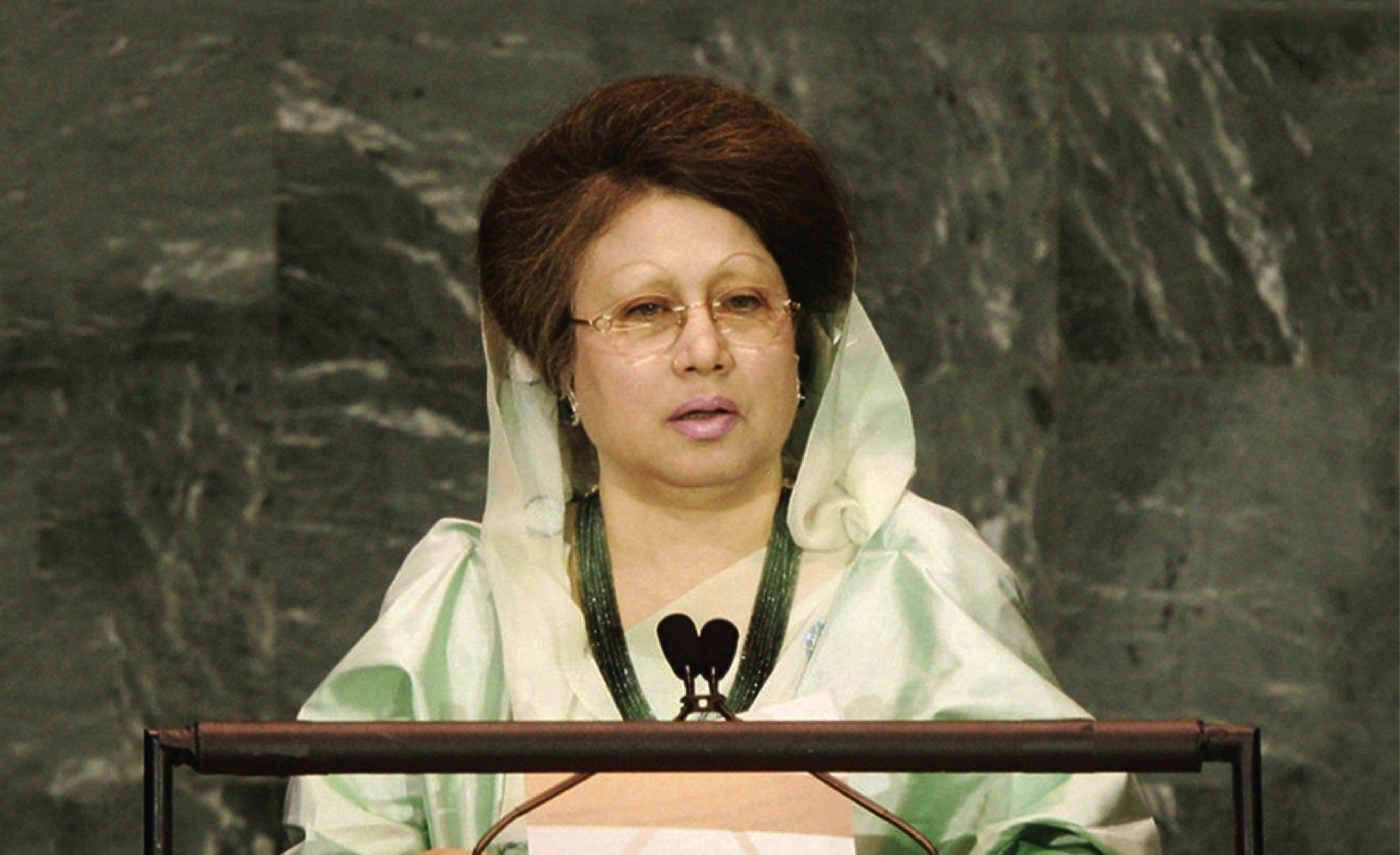
Bangladesh’s first female prime minister and senior opposition leader, Khaleda Zia, died on Tuesday, December 30, 2025, after a long illness, her party, the Bangladesh Nationalist Party, said. She was 80.
In a statement, the BNP said, “The BNP chairperson and former prime minister, the national leader Begum Khaleda Zia, passed away today at 6.00 am, just after the Fajr prayer.” The party added, “We pray for the forgiveness of her soul and request everyone to offer prayers for her departed soul.”
Doctors said Khaleda Zia had been suffering from several serious health problems, including advanced cirrhosis of the liver, arthritis, diabetes, and chest and heart-related issues. Her health had remained fragile for many years, and she often travelled abroad for treatment. She returned to Bangladesh in May this year after medical care in the United Kingdom.
Khaleda Zia was one of the most influential figures in Bangladesh’s politics, and her long rivalry with Awami League leader Sheikh Hasina shaped the country’s political life for decades. The two leaders dominated elections and governments, often facing each other as bitter opponents.
Her entry into politics followed a personal tragedy. She stepped into public life after her husband, President Ziaur Rahman, was assassinated in a military coup in 1981. Ziaur Rahman had founded the BNP in 1978 and served as president from 1977 to 1981. After his death, Khaleda Zia emerged as a key leader in the movement against military rule and played an important role in protests that led to the fall of military ruler Hussain Muhammad Ershad in 1990.
She made history in 1991 when she became Bangladesh’s first woman prime minister after the return of parliamentary democracy. She served another term from 2001 to 2006. Even after losing power, she remained a powerful political figure, with the BNP continuing to enjoy strong public support.
In the later years of her life, Khaleda Zia faced several corruption cases, which she consistently said were politically motivated. In 2018, she was jailed following a conviction. In 2020, the government led by Sheikh Hasina suspended her sentence on medical grounds, placing her under house arrest and restricting her political activity and travel. After the change in government, an interim administration allowed her to travel abroad for treatment earlier this year, after previous requests had been rejected many times.
In January 2025, the Supreme Court acquitted her in the last remaining corruption case. The decision cleared the way for her to contest elections that were scheduled for February, raising hopes among her supporters of a political comeback.
Khaleda Zia is survived by her elder son, Tarique Rahman, his wife Zubaida Rahman, and their daughter Zaima Rahman. Tarique Rahman, who is the acting chairman of the BNP, returned to Bangladesh on December 25 after spending nearly 17 years in exile. He is widely seen as a strong contender for the prime minister’s post in the upcoming elections. Her younger son, Arafat Rahman Koko, died several years ago.
Though she had been out of power since 2006 and spent years in prison or under restrictions, Khaleda Zia remained a central figure in Bangladesh’s political imagination. Her death marks the end of an era in the country’s politics.