Eid-ul-Fitr was marked across Madhya Pradesh on Saturday, with members of the Shia Muslim community refraining from celebrations in protest against the killing of Iran’s Supreme Leader, Ayatollah Ali Khamenei.
Shia Community Registers Protest
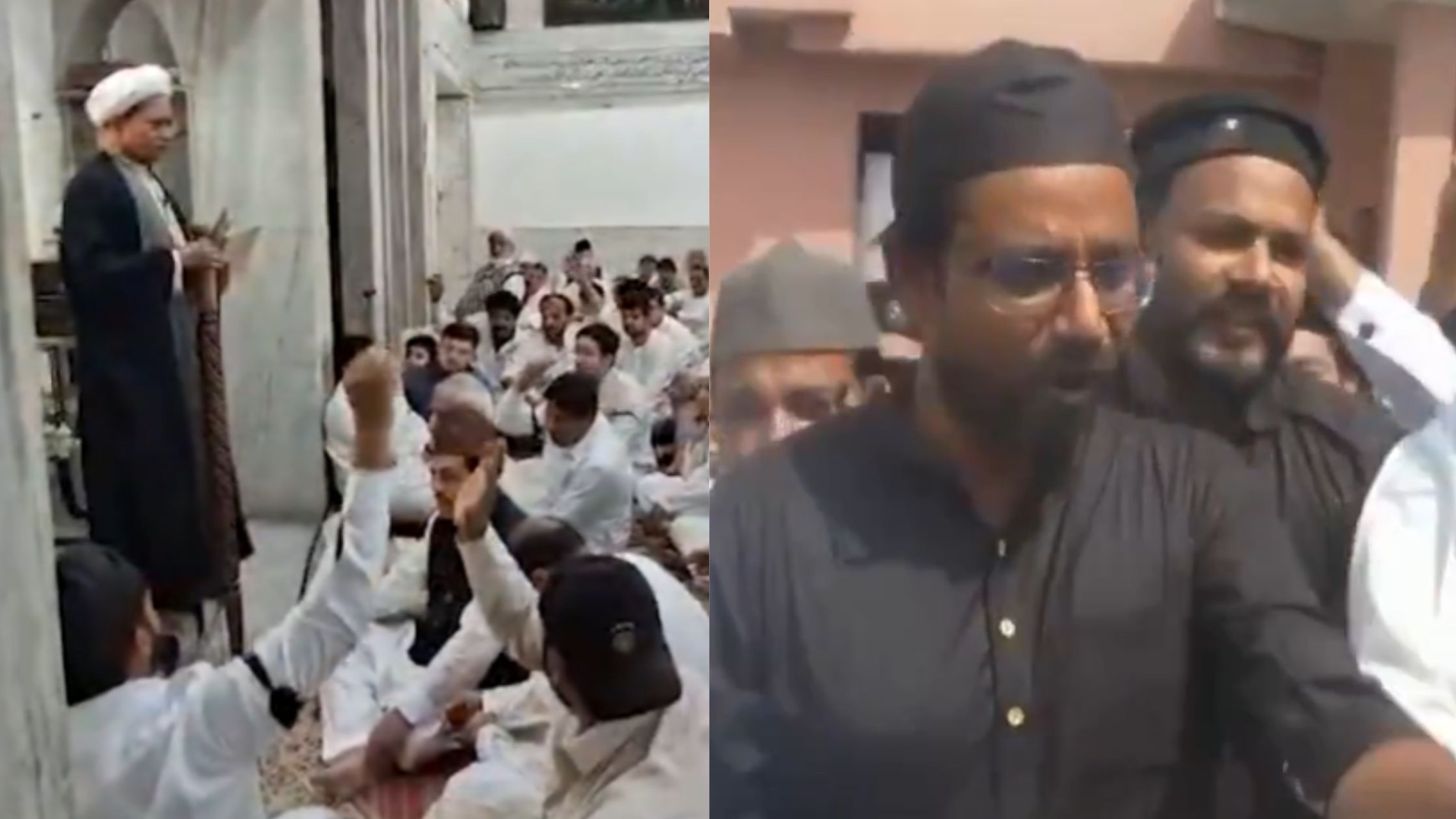
Many Shia Muslims chose not to celebrate Eid this year, expressing grief and anger over the death of Khamenei, who was killed in US-Israel strikes in Iran last month. Instead of festivities, several members of the community held symbolic protests after offering namaz, raising slogans against the United States and Israel.
In cities like Bhopal and Burhanpur, Shia families gathered at mosques and imambaras wearing black armbands as a mark of mourning. Some also wore simple and old clothes to reflect a sombre mood. Children were seen participating in the protest by wearing black armbands, highlighting the collective sentiment within the community.
At an imambara in Bhopal, a photograph of Khamenei was placed as people paid tribute. Religious leaders used the occasion to speak about justice and resistance. During an address, Maulana Razi-ul-Hasan urged people to stand against oppression.
Speaking from Burhanpur, Iftikhar Ali, president of the All India Shia Samaj in the state, said, “After offering namaz at Sidhipura Imamiya Masjid and raising slogans against US-Israel, I returned home. My community and I are not celebrating Eid.” He added that the decision was taken in response to what he described as “excesses” by the US and Israel in Iran.
The Shia population in Madhya Pradesh, estimated at around 4,000 families, is spread across cities including Bhopal, Jabalpur, Indore, Vidisha, Ujjain, Burhanpur, Itarsi, and Jaora.
Sunnis Celebrate Eid with Prayers and Gatherings
Sunni Muslims across the state celebrated Eid-ul-Fitr with enthusiasm, gathering in large numbers at Eidgahs and mosques to offer prayers. Major congregations were reported from Bhopal, Indore, Jabalpur, Gwalior, and Ujjain.
In Bhopal, Syed Mushtaq Ali Nadvi had announced the Eid date after the moon was not sighted on Thursday. The first Eid namaz in the city was offered at the Eidgah early in the morning, followed by prayers at prominent mosques including Jama Masjid and Moti Masjid.
A large gathering was also seen at Taj-ul-Masajid, one of the largest mosques in the country, where a special prayer congregation was held under the supervision of Maulana Hassan Sahib.