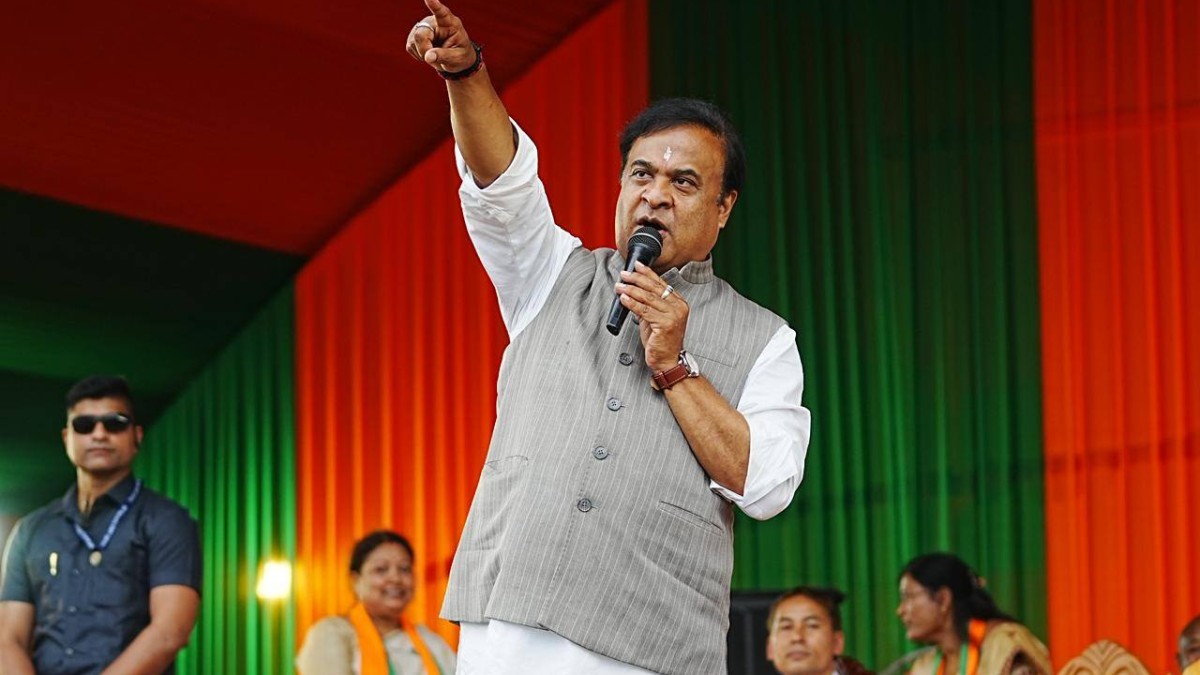
The Assam government on Monday introduced a new Bill on the Uniform Civil Code (UCC) in the state assembly, proposing a ban on polygamy and making the registration of live-in relationships compulsory.
The Bill, titled The Uniform Civil Code, Assam, 2026 Bill, was tabled by Parliamentary Affairs Minister Atul Bora on behalf of Chief Minister Himanta Biswa Sarma.
The move sparked protests from opposition parties, including the Indian National Congress, Raijor Dal and All India Trinamool Congress, which demanded wider discussions with stakeholders before the Bill’s introduction.
Bill Aims to Simplify Marriage and Family Laws
In the “Statement of Object and Reasons” attached to the Bill, Sarma said the proposed law seeks to bring together and simplify rules related to marriage, divorce, succession and live-in relationships.
“The Bill aims to consolidate and simplify laws governing marriage, divorce, succession, and live-in relationships,” Sarma stated.
Under the proposed law, the minimum legal age for marriage would remain 21 years for men and 18 years for women. The Bill also seeks to prohibit polygamy in the state.
Registration of Live-in Relationships Made Mandatory
One of the major provisions of the Bill is the legal recognition of live-in relationships through compulsory registration.
“For the first time, the Bill provides a legal framework for live-in relationships. By requiring registration, the law ensures that the rights of partners — and any children born from such unions — are formally recognised and protected,” Sarma said in the Bill.
The government argued that formal registration would help secure legal rights and protections for couples and children born from such relationships.
Scheduled Tribes Exempted from UCC
The proposed law will not apply to Scheduled Tribes residing in Assam, according to the Bill. The exemption mirrors provisions adopted in similar legislation introduced elsewhere.

Opposition Raises Concerns
Opposition parties strongly opposed the Bill, arguing that such an important legal reform should be discussed more widely with religious communities, civil society groups and legal experts before being introduced in the assembly.
The ruling BJP, however, has defended the proposal as a reform aimed at creating uniformity in personal laws and ensuring legal equality.
Gujarat Passed Similar UCC Law Earlier
Assam’s move comes months after the Gujarat Assembly passed a similar Uniform Civil Code Bill in March 2026. The Gujarat law introduced a common legal framework for marriage, divorce, succession and live-in relationships regardless of religion.
The Gujarat Bill also made registration of marriages and live-in relationships mandatory, prohibited polygamy and bigamy, and introduced punishment of up to seven years in prison for marriages conducted through force, coercion or fraud.
While the BJP described the Gujarat law as a landmark reform promoting equality, the Congress criticised it as “anti-Muslim” and argued that it violated fundamental rights.