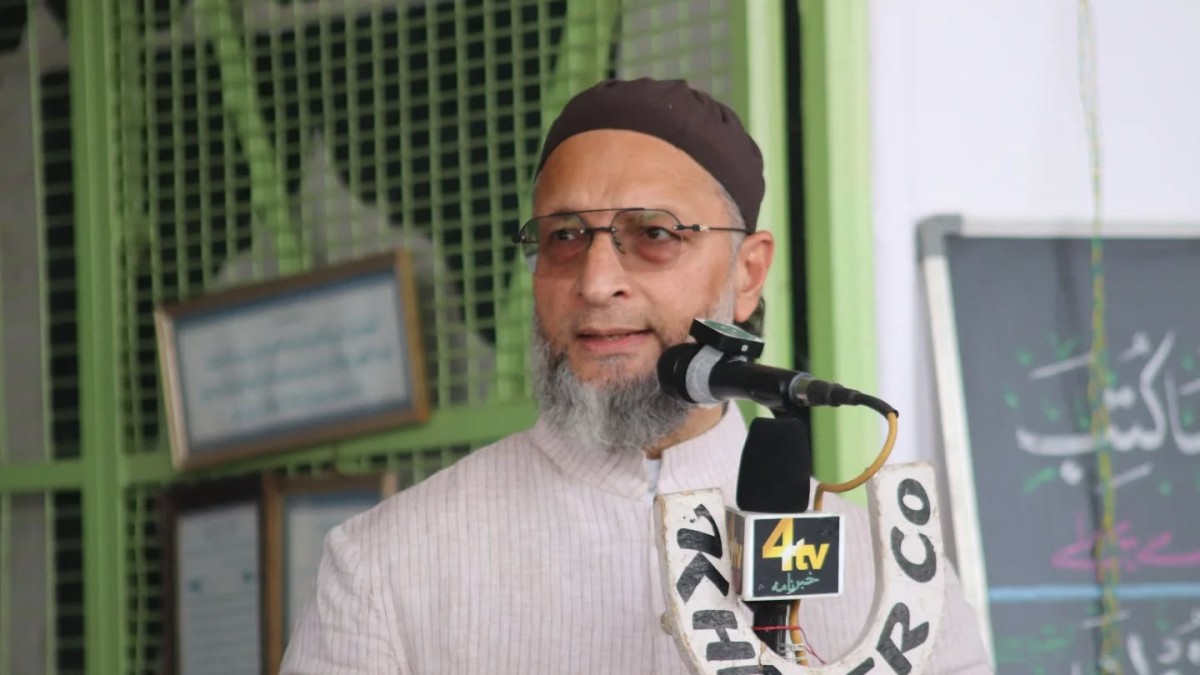
Asaduddin Owaisi on Wednesday launched a sharp attack on the Union government over the alleged large-scale deletion of voters from electoral rolls under the Special Intensive Revision (SIR) exercise, warning that the process could create a “permanent class of excluded Indians.”
In a post on X, Owaisi alleged that the Centre had overseen the removal of nearly 6.5 crore names from electoral rolls across 13 states and Union Territories through a document-based verification exercise. He claimed the government was now attempting to institutionalise the process through a committee that would examine those exclusions and create a long-term mechanism for identifying, detaining and deporting alleged illegal immigrants.
“The Union Government first carried out a document-driven SIR that deleted nearly 6.5 crore names from electoral rolls across 13 States and UTs. Now it wants a committee to study those very exclusions and build a permanent system for the identification, detention, and deportation of illegal immigrants,” Owaisi said.
‘Right to Vote Is the Poor’s Only Weapon’
The Hyderabad MP expressed concern that the exercise could have deep consequences for democratic participation, particularly among vulnerable and marginalised groups.
“SIR will be used to create a permanent class of excluded Indians. The right to vote is the poor’s only weapon against the powerful. Without it, the government will do what it pleases with them,” he said.
Owaisi also alleged that individuals removed from electoral rolls were already facing difficulties in accessing welfare benefits. However, he emphasised that exclusion from voter lists does not automatically impact a person’s citizenship status.
“Under the law, a deletion under SIR does not mean that a person is not a citizen,” he said, adding that around 27 lakh cases remain under adjudication and many affected individuals could still seek enrolment through Form 6.
Questions Raised Over Transparency and Impact
Questioning the transparency of the process, Owaisi alleged that the Election Commission of India had not released data on how many deletions were linked to foreign nationality.
He further claimed that Muslims, women, migrants and economically weaker sections were disproportionately affected by the exercise.
The AIMIM chief also questioned the rationale behind the proposed committee, citing government demographic figures showing that India’s total fertility rate (TFR) had stabilised at 2.0.
“The government’s own data show that our demography and population have stabilised and that our TFR is 2.0. Why do we need this committee?” he asked, alleging that it would fuel “paranoia and fear” among Muslims.
Owaisi Links SIR to Broader Documentation Burden
Expanding his criticism of the government, Owaisi linked the issue to wider concerns over bureaucratic documentation requirements, referring to controversies surrounding NEET-UG 2026 and the CBSE OSM system.
“This government loves making Indians waste their time on documentation. Sometimes it is KYC or SIR; sometimes it is uploading some document to some portal. But it cannot conduct a simple exam properly,” he said.
“Common people are scrutinised by the government, but the government cannot be scrutinised by us,” he added.
Election Commission Announces Phase III of SIR
Meanwhile, the Election Commission announced on May 14 the rollout of Phase III of the Special Intensive Revision exercise across 16 states and three Union Territories, covering over 36 crore electors, including in Telangana.
According to the Commission, the exercise is being conducted alongside the Census house-listing phase to ensure efficient use of field staff and resources.
For Telangana and Punjab, the qualifying date has been fixed as October 1, 2026. The preparatory phase will be conducted between June 15 and June 24, followed by Booth Level Officer visits from June 25 to July 24.
Draft electoral rolls are scheduled to be published on July 31, while claims and objections can be submitted until August 30. Final electoral rolls will be published on October 1, 2026.