The National Council of Educational Research and Training (NCERT) has released a revised edition of its Class 8 Social Science textbook, making several changes to chapters on the judiciary, India’s Partition, the freedom struggle and discrimination. The revision comes months after the Supreme Court ordered the withdrawal of the earlier edition over controversial content relating to the judiciary.
The revised textbook, Exploring Society: India and Beyond, removes the portions that had triggered the controversy and introduces new content on Public Interest Litigation (PIL), tribunals and alternative dispute resolution mechanisms.
Partition chapter revised
One of the key changes appears in the history chapter, India’s Long Road to Independence. The revised version states that Partition was “widely opposed even by the Indian National Congress” and adds that whether accepting Partition was “the only way forward” remains a matter of debate.
The earlier edition had stated that although Mahatma Gandhi and most Congress leaders opposed Partition, they ultimately accepted it as the only solution. It also said Congress leaders were “helpless as communal massacres engulfed the subcontinent during Partition.” This sentence has been removed from the new edition.
Reference to Savarkar added, Hitler removed
The revised textbook expands the discussion on the demand for complete independence by adding that “a similar demand for Swaraj was expressed by VD Savarkar in 1925.”
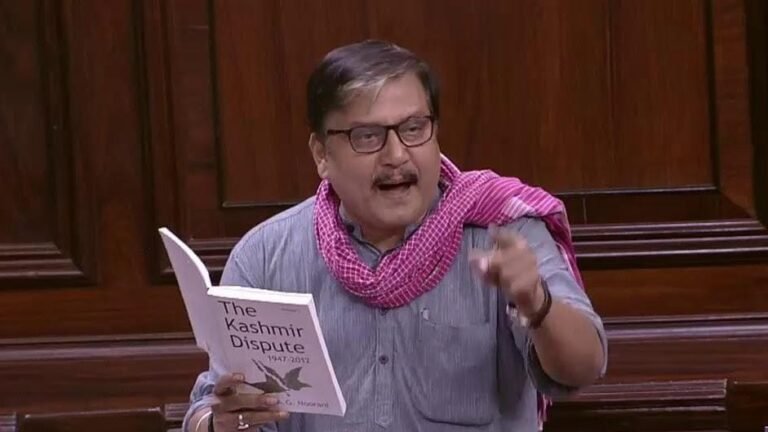
Another notable change concerns the section on Netaji Subhas Chandra Bose. The earlier version stated that Bose sought the support of Adolf Hitler and described Hitler as “a dictator whose racist Nazi ideology and expansionist goals” triggered the Second World War.
The revised edition replaces this with a broader statement saying Bose “sought support from the anti-British forces,” removing references to Hitler and Nazi ideology.
Judiciary chapter rewritten after Supreme Court intervention
The revisions follow the Supreme Court’s intervention earlier this year, when it directed NCERT to withdraw both physical and digital copies of the previous textbook over content relating to corruption in the judiciary.
The revised edition states that the chapter on “The Role of the Judiciary in Society” was rewritten by an expert committee constituted by the Union Ministry of Education in compliance with the Supreme Court’s directions.
It also notes that the revised textbook was published following the review process ordered by the apex court in Suo Motu Writ Petition (Civil) No. 1 of 2026.

The development team has also been revised. While the earlier edition listed 51 members, the new version lists 48, with the names of Michel Danino, Suparna Diwakar and Alok Prasanna Kumar removed.
Economic background included as a ground for discrimination
The revised textbook also broadens the definition of discrimination. In the chapter titled Citizenship: Rights and Duties, it states that discrimination includes unfair treatment based on caste, religion, ethnicity, disability, race, physical appearance, gender, sexuality and economic background.
The textbook adds that children from economically disadvantaged families can also face prejudice and unequal treatment.
This revision comes amid debate over the Centre’s UGC (Promotion of Equity in Higher Education Institutions) Regulations, 2026, which list religion, race, caste, gender, place of birth and disability as protected grounds but do not explicitly include economic background.
Remaining textbooks to be released by August
According to NCERT officials, all new textbooks for Classes 1 to 8 are now available in print and digital formats under the National Curriculum Framework for School Education (NCF-SE) 2023. Only Part 2 of the Class 9 Social Science and Mathematics textbooks remain pending and are expected to be released by August.

Officials also said new textbooks for Classes 10 and 11 will be introduced from the 2027–28 academic session, while the existing textbooks will continue to be used during the current academic year.