Md. Junaid Usmani
Should Muslims support the Cockroach Janta Party? My answer is yes, but not unconditionally.
Muslims cannot afford to support any political movement with unquestioning enthusiasm, because history has repeatedly demonstrated that many people who speak courageously when their own interests are affected often remain silent when Muslims become the targets of discrimination.
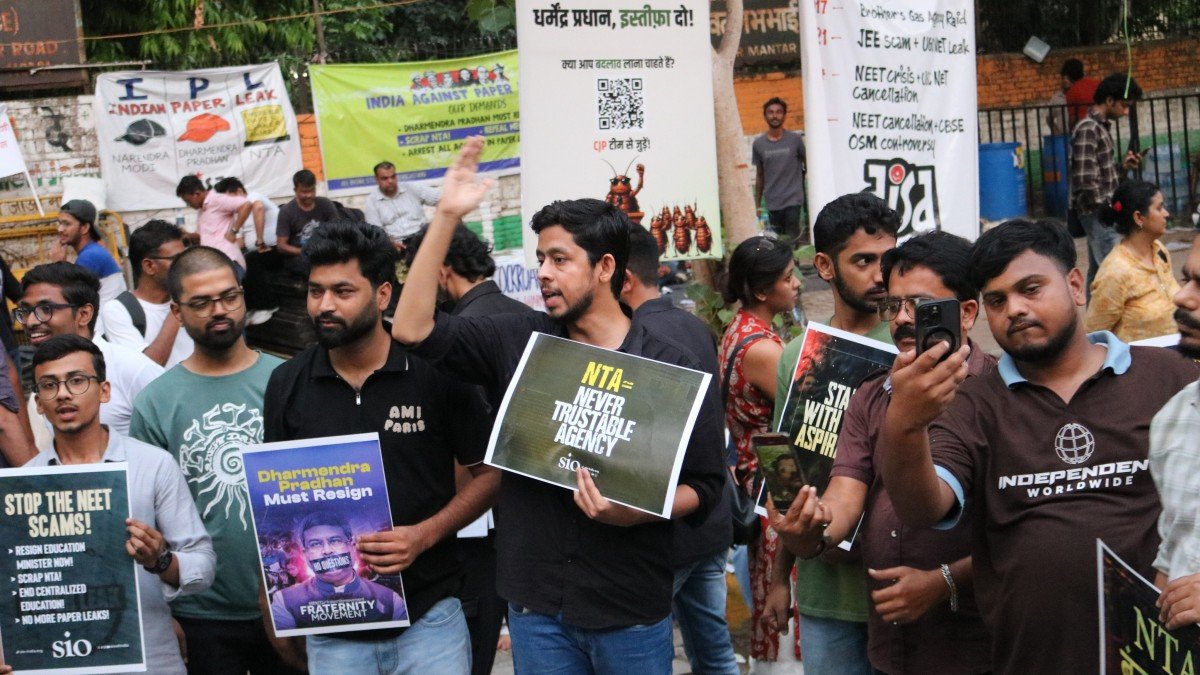
Over the last few days, Indian society has suddenly discovered its political voice. Thousands of young people who had rarely questioned the government are today demanding resignations, institutional reforms, and accountability.
As someone who believes that governments should constantly be questioned, I welcome this awakening.
But I cannot ignore another reality.

It took an issue affecting a much larger section of society for this collective conscience to awaken. The same urgency was largely absent when Muslims spent months on the streets during the anti-CAA-NRC movement, believing that their citizenship, identity, and constitutional rights were under threat.
That memory cannot simply disappear because today’s cause is different.
Some argue that Muslims should support CJP because paper leaks affect everyone equally.
That statement is only partially true.
Yes, educational corruption harms every student.
But Muslims have never experienced education in exactly the same way as everyone else.
Educational injustice for Muslims has often gone far beyond examination irregularities.
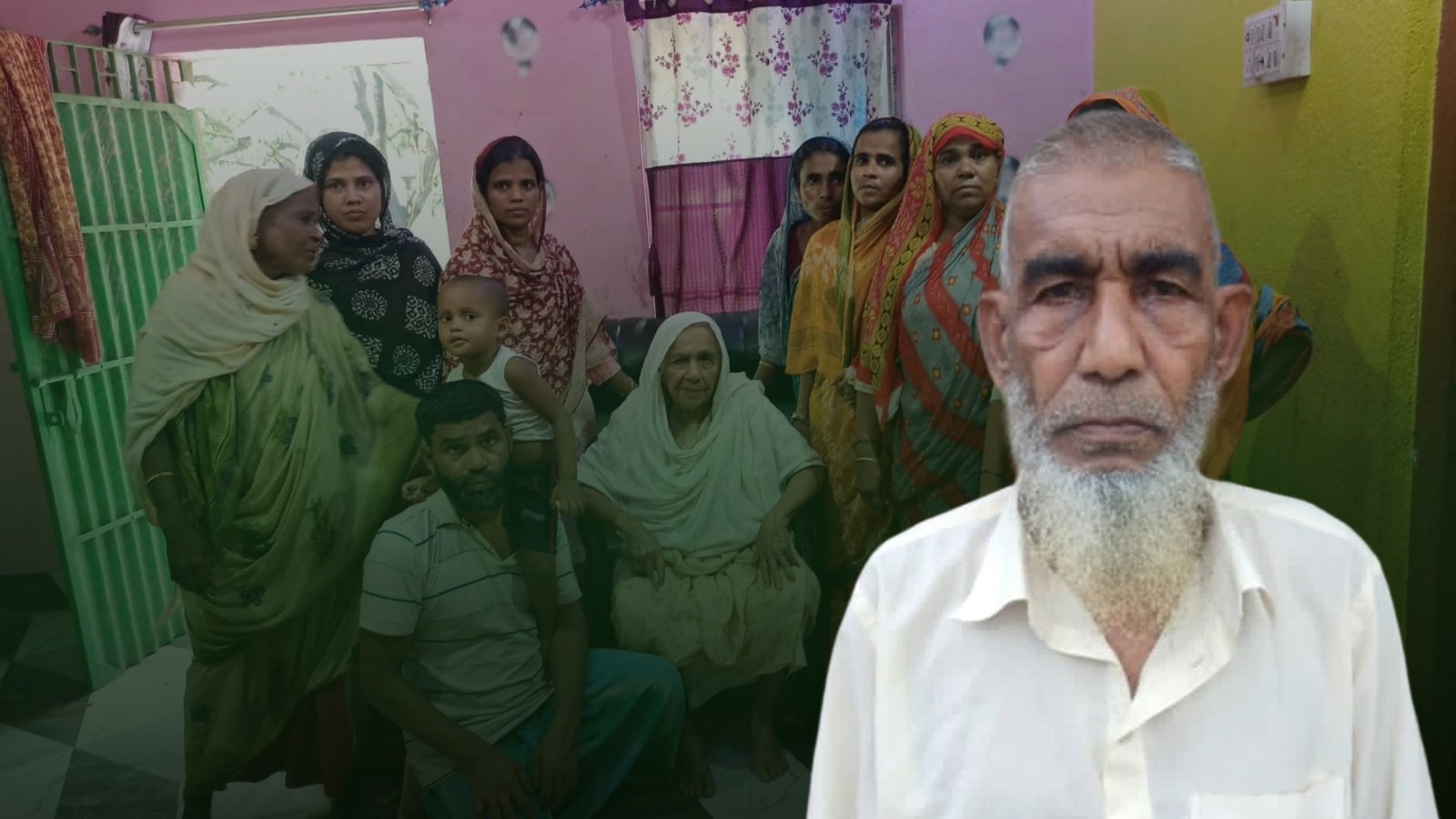
When Kulsum Bano of Beawar reportedly faced resistance while entering her re-NEET examination centre because she was wearing a burqa and was allowed only after her father pointed officials to Rule 18 of the NTA Information Bulletin, it demonstrated something important.
Educational injustice is not confined to paper leaks.
It also includes equal access, dignity, and the freedom to pursue education without being treated differently because of one’s religious identity.

If a movement genuinely claims to represent educational justice, then questions like these cannot remain outside its conversation.
The same applies to the Karnataka hijab controversy. Muslim students were denied entry into classrooms because they wore the hijab. Whether one agrees with the policy or not, it undeniably raised questions about access to education, religious freedom, and equality within educational institutions. If education is the movement’s concern, why should such issues be treated as unrelated?
The conversation extends beyond examinations.
When NCERT textbooks remove or substantially reduce discussions on the Mughals or the 2002 Gujarat riots, that too is an educational question. Curriculum determines what generations of students learn about their country’s history. A movement that speaks about educational accountability should also be willing to debate what is being taught and what is being deliberately omitted.
Likewise, the police action inside the campuses of Jamia Millia Islamia and Aligarh Muslim University during the anti-CAA protests cannot simply be dismissed as unrelated political events. Universities are not merely buildings where examinations are conducted. They are spaces where constitutional values, dissent, and citizenship are debated. If educational justice matters, then what happens inside university campuses matters as well.
This is where the perspectives of an ordinary CJP supporter and a Muslim participant begin to diverge.
For many supporters, the issue begins and ends with the paper leak.
This brings me to perhaps the most uncomfortable question for CJP.
When Saurav Das was asked about Umar Khalid during the protest, he distanced the movement from the conversation, arguing that it would distract from the main cause.
But what exactly is the main cause?
If the movement is merely about one examination scandal, perhaps that answer is understandable.
But if CJP claims to represent educational justice and the defence of students, then refusing even to engage with the case of Umar Khalid exposes the limits of its own politics.
For many Muslims, Umar Khalid’s continued incarceration represents one of the clearest examples of the criminalisation of student dissent. Whether CJP wishes to acknowledge it or not, a movement that claims to defend education cannot conveniently distance itself from one of the most prominent student leaders to emerge from Indian universities.
If conversations about educational justice can comfortably exclude discussions about student activists who emerged from those very universities, then it is fair to ask whether the movement’s understanding of education is complete.
This is not a distraction from the movement. It is a test of its consistency.
A similar question arises with Sonam Wangchuk.
There is no denying that his hunger strike has brought unprecedented attention to the protest.
But many Muslims also remember that he publicly welcomed the abrogation of Article 370 and the conversion of Jammu & Kashmir and Ladakh into Union Territories. They also remember that he did not publicly speak with similar prominence about the restrictions imposed in Kashmir during that period.
Mentioning this is often dismissed as “whataboutery.” I disagree. Seeking consistency from public figures is not whataboutery.
A movement asking society to hold governments accountable must itself be prepared to answer uncomfortable questions about the political choices and silences of those leading it.
Many people at Jantar Mantar have openly said that they came to support Sonam Wangchuk rather than Abhijeet Dipke.
This itself is revealing.
Both are standing for the same stated cause, yet one has become a moral symbol while the other remains politically controversial.
If the movement gradually becomes centred around a hunger strike instead of educational reform, it risks losing sight of the very issue that brought people together in the first place.
The cause must remain larger than the personalities representing it.

Should Muslims participate? Yes. Absolutely. But on their own conditions.
First, support the demand for accountability in paper leaks because educational corruption harms Muslim students as much as anyone else.
Second, refuse to treat discrimination against Muslims as a distraction from educational reform. Whether it is a hijab controversy, discriminatory treatment at examination centres, or unequal access to educational institutions, these are educational issues too.
Third, continue asking uncomfortable questions of CJP itself. Political accountability should not stop where the organisers become uncomfortable.
Fourth, Muslims must remember that standing with a movement does not mean standing by it forever. Support should last only as long as the movement remains consistent with the principles it claims to uphold.
Muslims should never feel compelled to suspend their own political memory in order to prove solidarity.
The question Muslims should ask is simple.
If tomorrow another Muslim student faces discrimination because of her identity, will the same stage that speaks so passionately about paper leaks make space for her?
If the answer is yes, the movement becomes stronger.
If the answer is no, then Muslims are justified in maintaining political caution.
Supporting a democratic cause and questioning its limitations are not contradictory positions.
They are, in fact, the essence of democratic participation.
I will always stand with people who question governments.
But I will also question those who ask for my solidarity while expecting silence on issues that have shaped the lived experiences of my community.
Political movements are judged not only by the questions they ask the state, but also by the questions they are willing to answer themselves.
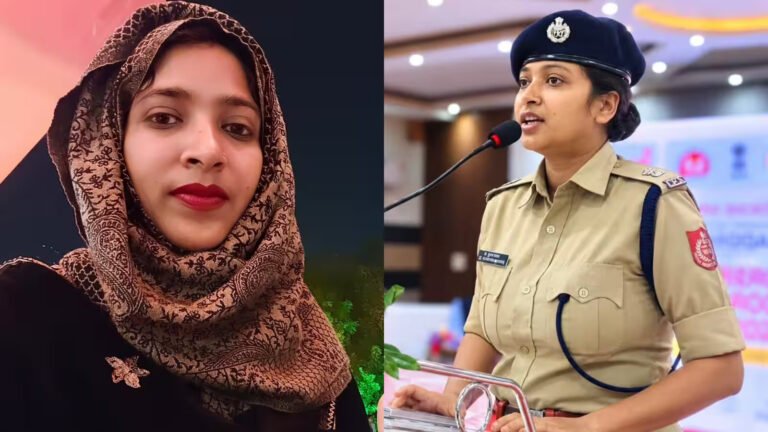
Md. Junaid Usmani is a third-year B.A. LL.B. student at the Faculty of Law, Aligarh Muslim University.
The views expressed in this article are the author’s own and do not necessarily reflect the policy of the platform.