Sahil Hussain Choudhury
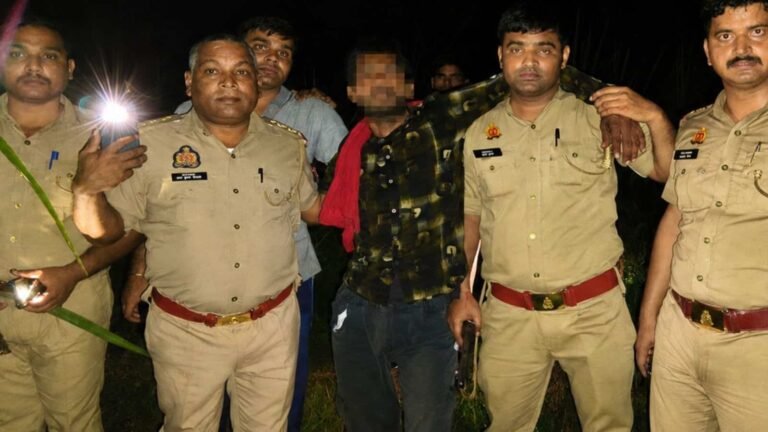
As citizens attempted to march towards Parliament on 20 July, the State’s immediate response came through the police. Delhi Police had declared that no permission had been sought or granted for the Cockroach Janta Party’s “Chalo Sansad” march. It had invoked a prohibitory order under Section 163 of the Bharatiya Nagarik Suraksha Sanhita—the successor to Section 144 of the Code of Criminal Procedure—restricting marches, demonstrations and assemblies in the New Delhi district. Participation in an unauthorised gathering, the police had warned, could invite prosecution.
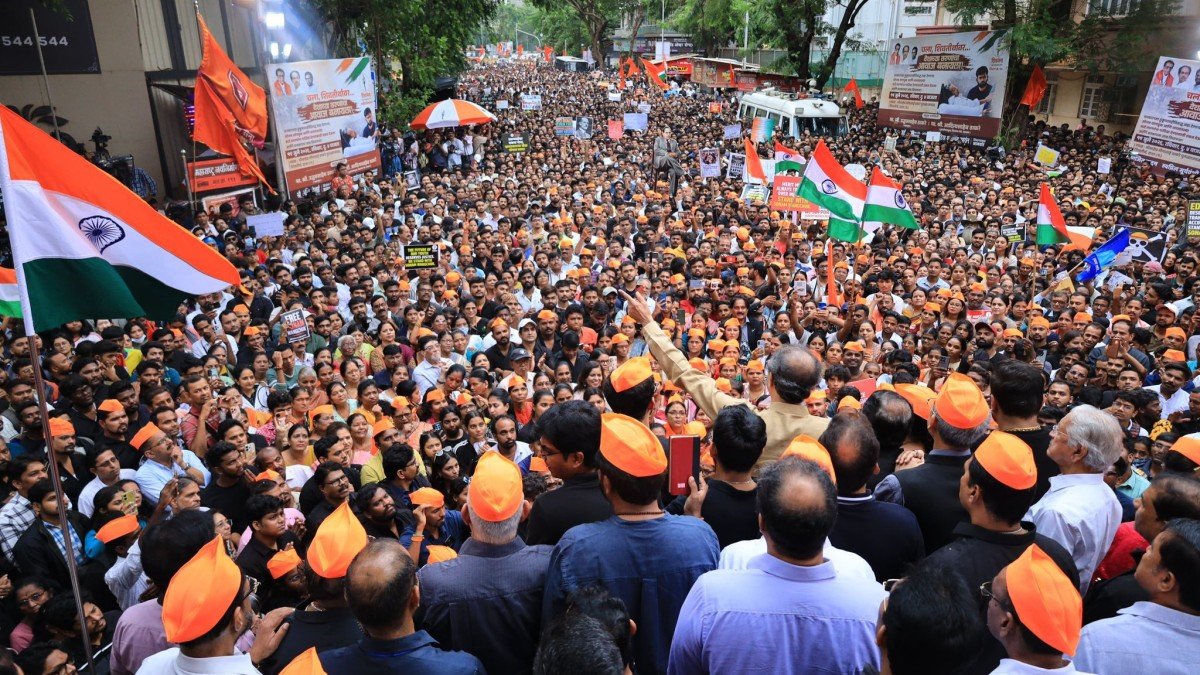
The protesters nevertheless gathered at Jantar Mantar and attempted to proceed towards Parliament. Organisers had urged participants to carry the national flag, avoid party flags and maintain non-violence. Additional forces, barricades, vehicle checks and surveillance were deployed around the protest site and the route towards Parliament.
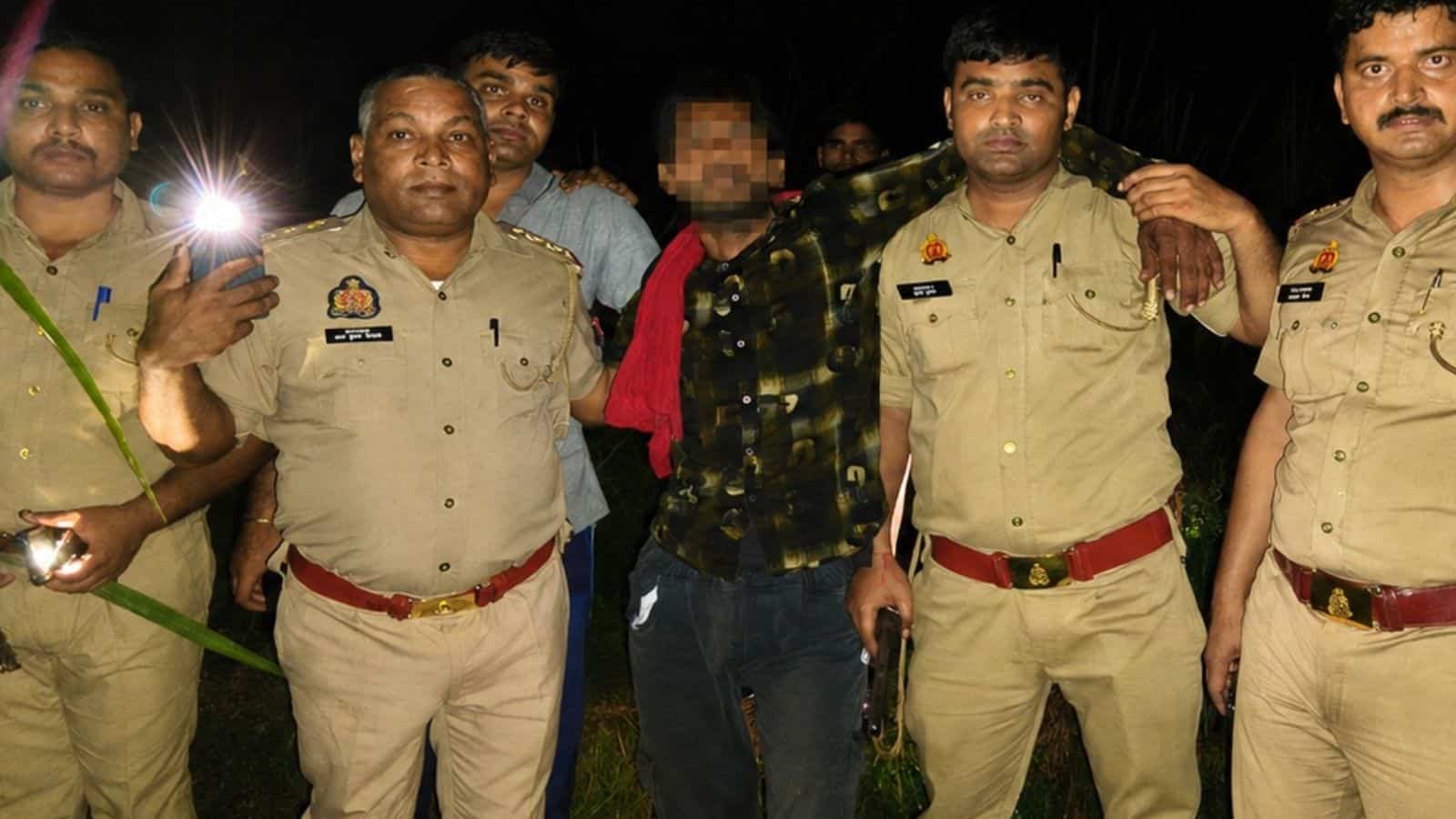
There should be no violence from either side. Protesters must remain peaceful, and the police must exercise restraint. Yet, as the mobilisation unfolded, clashes were reported near Jantar Mantar, and security personnel reportedly used lathis to disperse sections of the crowd attempting to proceed towards Parliament. Whether the reported use of force was necessary and proportionate requires closer scrutiny. But the constitutional standoff existed before the reported use of lathis, and it survives afterwards.
The question is not whether citizens possess an unrestricted right to enter Parliament or choose any route they please. They do not. Parliament may be secured, roads may be regulated and genuine threats to public order may be prevented.
The harder question is this: when the State prohibits the politically meaningful form of a peaceful mobilisation, what democratic avenue does it provide in its place?
Was an alternative route offered? Could a limited delegation have proceeded under police escort? Was any minister, parliamentarian or authorised representative prepared to receive the protesters’ demands before the confrontation occurred?
A prohibitory order may control movement. It cannot become the government’s entire answer to citizens.
The grievance behind the barricades
The movement did not begin as a dispute about traffic, permissions or policing. It arose from allegations of paper leaks, examination irregularities and institutional failures affecting students’ educational and professional futures. The protesters are demanding accountability, including the resignation of Union Education Minister Dharmendra Pradhan.
For students whose families spend years of savings on coaching, travel, accommodation and application fees, an examination failure is not an abstract defect of governance. A leaked paper, arbitrary cancellation or opaque recruitment process can waste years of labour and alter the course of an entire life.
Yet the grievance has gradually been displaced by the administration of the protest.

Students questioned the credibility of examinations. The official question became whether they had permission to march.
Parents demanded accountability. The response concerned barricades, deployment and prohibitory orders.
Sonam Wangchuk undertook a hunger strike to force attention towards the grievance. Public attention shifted instead to his medical condition and removal from Jantar Mantar.
The government can avoid confronting a political claim when the protest expressing it is converted into an administrative problem.
The march becomes a matter for the police. The fast becomes a matter for doctors. The gathering becomes a security concern. The political grievance is displaced between institutions, each performing a technical function.
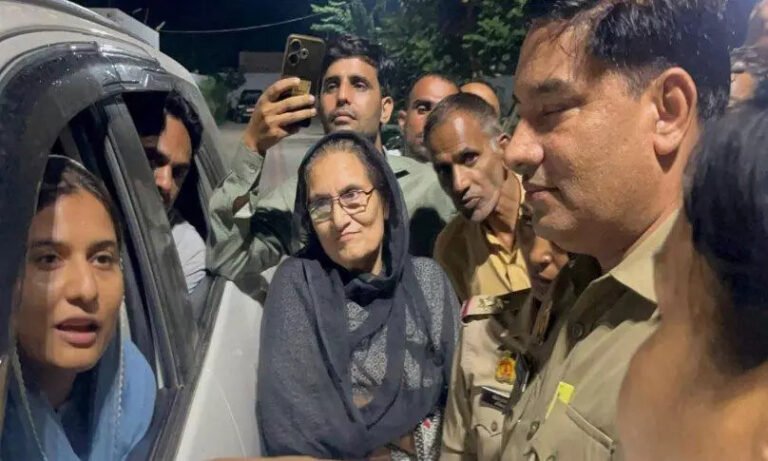
The police can say they are enforcing Section 163 of the BNSS. Administrators can invoke security assessments. Doctors can address medical necessity. Courts can review particular actions. Meanwhile, those from whom political accountability is demanded need not encounter the protesters at all.
The State appears active, but no political answer is given.
Section 163 of BNSS is not a constitutional blank cheque
Articles 19(1)(a) and 19(1)(b) protect speech and peaceful assembly. These freedoms are subject to reasonable restrictions. But reasonableness requires more than identifying a statutory power and repeating the words “public order”.
Section 163 of the BNSS is preventive. It operates before an offence has occurred and on the basis of anticipated danger. That makes specificity, necessity and proportionality especially important. Peaceful citizens cannot be treated as prospective offenders merely because they intend to move collectively towards a constitutional institution.
The Supreme Court’s decision in In Re: Ramlila Maidan Incident is particularly relevant. The case arose from the midnight police action against people assembled at Ramlila Maidan in June 2011. The Court found serious constitutional infirmities in the use of preventive power and in the forcible dispersal of a largely peaceful assembly. It affirmed that statutory authority and an invocation of public order do not, by themselves, justify disproportionate interference with freedom of speech, peaceful assembly and personal liberty.
The judgment did not make protest absolute. It recognised the State’s duty to maintain order and also examined the responsibilities of the organisers. But it affirmed that the existence of administrative power does not, by itself, supply sufficient constitutional justification for its exercise.
Later decisions have continued to recognise both the constitutional importance of protest and the State’s authority to regulate its location and manner. In Mazdoor Kisan Shakti Sangathan v Union of India, the Supreme Court required accommodation between protesters and residents around Jantar Mantar. In Amit Sahni v Commissioner of Police, arising from Shaheen Bagh, it held that public roads cannot be occupied indefinitely.
The consistent principle is not that protesters must always prevail. It is that regulation should preserve the freedom as a real freedom.
The relevant question is therefore not simply whether the march had permission. It is whether the authorities attempted meaningfully to accommodate it before resorting to dispersal and force.
Could there have been a regulated route? Restricted numbers near Parliament? A designated meeting point? A small delegation permitted to submit the demands?

No single judgment expressly guarantees each of these arrangements. They follow instead from the wider constitutional requirements of reasonableness, proportionality and meaningful accommodation. Where the preferred form of peaceful mobilisation is restricted, the State should consider whether a less restrictive arrangement can preserve its communicative purpose.
“Security” cannot be both the beginning and the end of constitutional reasoning.
Parliament is part of the message
A march towards Parliament has a communicative meaning that confinement to a designated protest enclosure cannot fully reproduce.
Citizens approach Parliament because it represents political responsibility. They are not merely seeking physical movement through Delhi. They are attempting to place their grievance before the institution where laws are made, ministers are held to account and political responsibility is demanded.
This does not create a right to enter Parliament or compromise its security. But it requires the State to search for an arrangement that preserves both security and political communication.
The police may determine where citizens cannot go. Only political government can answer why they came.
When the government leaves the police to become its principal interface with protesters, the constitutional relationship is transformed.
The citizen approaches government with a political demand and encounters a barricade.
The citizen seeks an answer from a minister and receives a prosecution warning.
The citizen invokes accountability and is answered through the language of permission.

The problem is not simply that dissent is regulated. Some regulation is inevitable. The problem arises when regulation replaces political response altogether.
What 20 July has already revealed
Responsibility for what unfolded is shared, but it is not equal.
Organisers must ensure that the march remains peaceful. Participants must respect the safety and liberty of others. Violence would damage both the movement’s moral force and its constitutional claim.
The police must distinguish peaceful assembly from actual disorder. The absence of permission does not erase the constitutional status of those who gather, nor does it make indiscriminate detention or unnecessary force lawful.
But the greatest responsibility rests with the government. It controls both the machinery of coercion and the possibility of political engagement.
The constitutional test is not simply whether the protesters were able to reach Parliament. It is whether anyone politically responsible was willing to receive them.
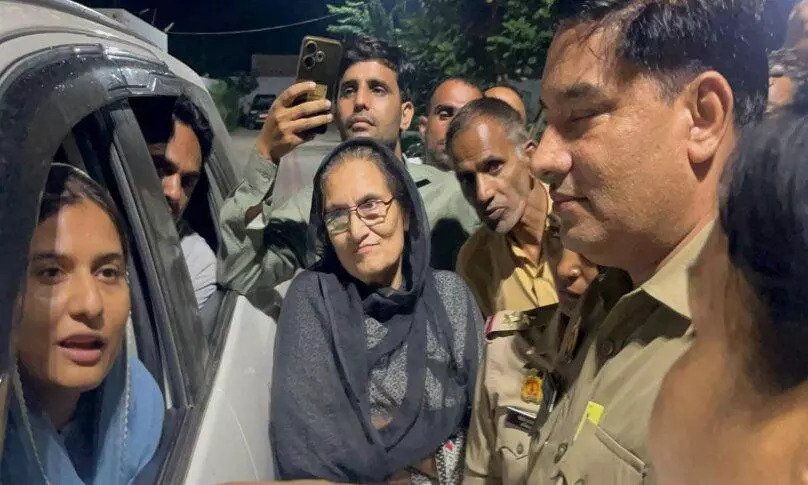
Reports that CJP spokesperson Saurav Das was taken to the Deputy Commissioner’s office, where he said discussions with the government were underway, suggest that some channel of communication may finally have opened. That development matters. But administrative talks after confrontation are not necessarily a substitute for timely political engagement. The continuing question is whether an authorised representative will receive the protesters’ demands and whether the government will offer a substantive answer rather than allowing the encounter to remain primarily between citizens and police.
Most Indians will encounter the march through brief videos: protesters confronting barricades, police announcements, scuffles and images of security personnel wielding lathis. But behind those images lies a constitutional question that cannot be captured in a reel.
What remains of the right to protest when the government controls where dissent may stand, how far it may move and whether political power must ever encounter it?
The Constitution does not promise that every protest will succeed or that every demand must be accepted. It promises something more basic: citizens must be treated as participants in the Republic, not merely as crowds to be controlled.
The march has now encountered barricades, prohibitory orders and police action. The government has made clear where the protesters cannot go and what legal consequences may follow if they attempt to proceed.
It must still answer why they are marching.
Sahil Hussain Choudhury is an advocate and constitutional law researcher from Assam.
The views expressed in this article are the author’s own and do not necessarily reflect the policy of the platform.