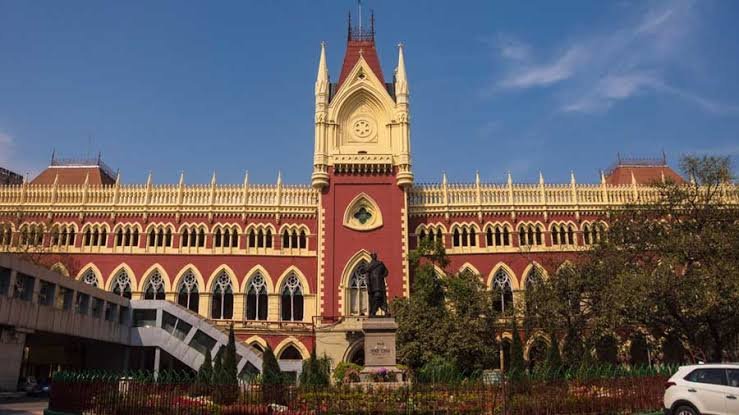
The Calcutta High Court on Tuesday orally observed that “heavens will not fall” if all six stanzas of Vande Mataram are sung in madrasas while hearing a petition challenging a West Bengal government notification making the practice compulsory in state-run and state-recognised madrasas.
The bench of Acting Chief Justice Tapabrata Chakraborty and Justice Partha Sarathi Sen was hearing a public interest litigation against the May 19 notification issued by the state’s Minority Affairs and Madrasah Education Department.
Court Questions Objections to Singing the Song
During the hearing, Acting Chief Justice Chakraborty questioned the objections raised by the petitioners.
“Heavens will not fall. Today if I am asked to utter a quote that is not in my religion, what will happen? Will I cease to belong to that religion?” the judge orally remarked.
The court also referred to educational institutions run by other religious communities, saying students in many Christian schools participate in prayers regardless of their faith.
“There have been thousands of Christian schools where all students are asked to pray to the Lord. Then, do students belonging to a particular community ask why they are being asked to sing certain things which are in the Christian religion?” the bench observed.
Petitioners Say National Anthem Has Higher Status
The petitioners argued that Jana Gana Mana, the national anthem, holds a higher constitutional status than Vande Mataram, which is recognised as the national song. They contended that singing Vande Mataram should not be made mandatory.
The court, however, asked whether the government had taken any punitive action against anyone for not following the notification.
“Only if any punitive action is taken can you contend that it was mandatory. Has anybody suffered yet?” the bench asked.
State Seeks Time to File Response
Additional Solicitor General Dhiraj Kumar Trivedi, appearing for the West Bengal government, sought time to file an affidavit explaining the state’s position.

He argued that the petitioners were seeking relief based only on apprehensions and that no coercive action had yet been taken under the notification.
Background of the Notification
The notification was issued after the newly formed BJP government in West Bengal directed government model madrasas, government-aided madrasas and recognised unaided madrasas to sing all six stanzas of Vande Mataram.
Traditionally, schools in West Bengal sang only the national anthem, Jana Gana Mana, during assemblies. In recent years, the previous Trinamool Congress government had also introduced the state song Banglar Mati Banglar Jol.
Debate Over Vande Mataram
Vande Mataram, written by Bankim Chandra Chatterjee in 1875, played an important role during India’s freedom movement and is recognised as the country’s national song. However, unlike Jana Gana Mana, it is not mentioned in the Constitution.
Earlier this year, the Union Home Ministry directed that all six stanzas of Vande Mataram should be sung first whenever it is played together with the national anthem. Previously, official events generally used only the first two stanzas, while the remaining verses, which refer to Hindu goddesses Durga, Lakshmi and Saraswati, were usually omitted.
The High Court has granted the state government time to file its response, and the matter will be heard further after the affidavit is submitted.