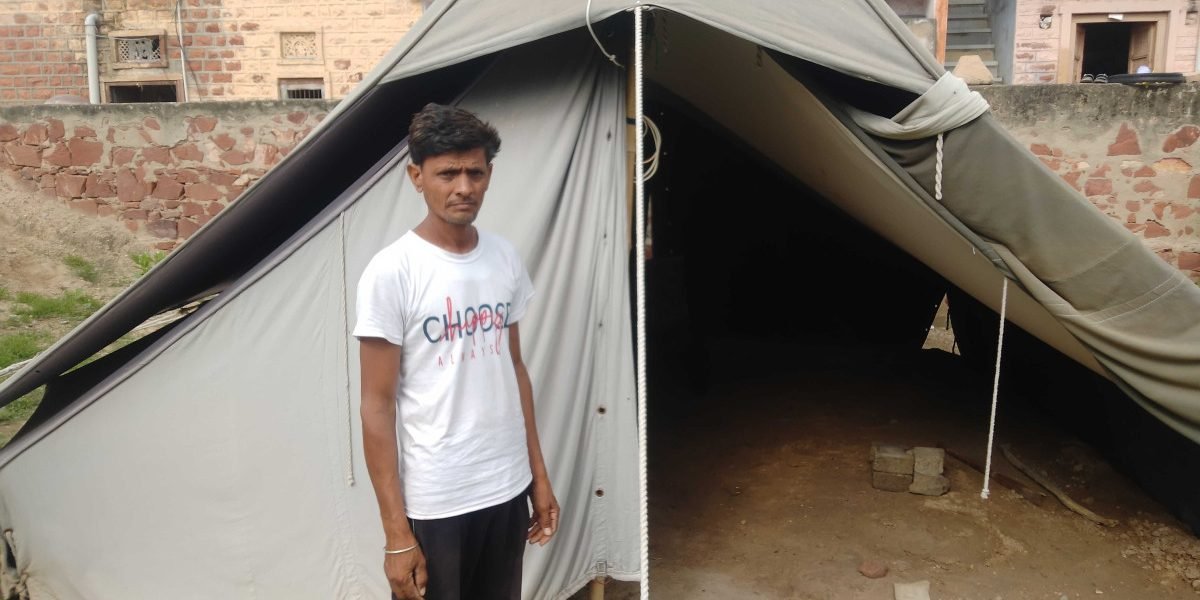
A special court in Rajasthan’s Merta has acquitted all 40 accused in the 2015 Dangawas massacre case, in which six people, including five Dalits, were killed, citing serious lapses in the police and CBI investigation. The court held that while the massacre was proven, the prosecution failed to establish the involvement of any particular accused beyond reasonable doubt.
Court Says Investigation Failed to Link Accused to Crime
Delivering its verdict after an 11-year trial, the Special Court for SC/ST (Prevention of Atrocities) Act cases observed that investigators failed to conduct a Test Identification Parade (TIP) after the arrests and did not collect DNA samples from the accused to match blood recovered from the crime scene.
The court also noted delays in forensic examination and said investigators could not establish any forensic connection between the recovered weapons and the accused. Although forensic reports confirmed the presence of human blood on some seized weapons, the blood groups could not be conclusively matched with the deceased or injured victims.
“It is not proved which party initiated the incident… The prosecution failed to prove beyond reasonable doubt the absence of the right of private defence,” the court said, adding that the evidence did not meet the required legal standard for conviction.
2015 Dangawas Massacre
The violence took place on May 14, 2015, in Dangawas village of Rajasthan’s Nagaur district over a decades-old land dispute. According to the CBI charge sheet, nearly 200 people travelling on tractors and motorcycles allegedly attacked members of the Dalit Meghwal community who had set up a camp on disputed agricultural land.
Five Dalits — Ratnaram, Pokharram, Pancharam, Khemaram and Ganpatram Meghwal — were killed, while 11 others, including five women, sustained injuries. Another man, Rampal Goswami, also died during the violence in a separate incident that remains subject to a different criminal case.
The dispute centred around a 23-bigha plot of land allotted to Dalit farmer Bastaram Meghwal in 1961. The ownership was later transferred to his adopted son Ratnaram. The CBI alleged that tensions escalated after Ratnaram attempted to reclaim possession of the land, culminating in the deadly attack.
Court Highlights Multiple Procedural Lapses
The court pointed to several deficiencies in the investigation, including the failure to conduct identification parades, recover weapons from the accused, and seize or forensically examine tractors allegedly used during the attack.
It also noted that no witness identified all 40 accused and that several witnesses admitted they knew only a few members of the alleged mob. The Central Forensic Science Laboratory visited the crime scene 21 days after the incident, by which time no weapons were recovered.
In its judgment, the court remarked that the incident itself was beyond dispute but the prosecution failed to legally establish who was responsible.
“What occurred on 14.05.2015… was beyond any doubt a heinous and heart-wrenching mass violence. What has not been proven is the connection, beyond reasonable doubt, of any particular accused to that violence,” the court observed.
It further clarified that the acquittal did not mean the crime never occurred, but only that the perpetrators could not be identified through admissible evidence.
Victims’ Families Question Verdict
Speaking to The Wire after the verdict, Arjunram Meghwal, whose father Ratnaram was among those killed, said he was devastated by the acquittal and questioned how no one could be held responsible for the massacre.
“I had hoped that those who murdered my father and other relatives would be punished. But today, after the court’s decision, I don’t know what to do. If nobody is guilty, then who killed my family? Did they die themselves?” he said.
Arjunram, who was also injured in the attack, said he witnessed the killings and could not understand how the accused had been acquitted. His family has said it will challenge the verdict before the Rajasthan High Court.
Victims’ counsel Abdul Salim Ansari alleged that the investigation had been weak from the beginning, claiming that the police omitted names mentioned by eyewitnesses in the FIR and later added others, creating inconsistencies that persisted throughout the trial.
Activists, Congress Criticise Verdict
Dalit rights activist Bhanwar Meghvanshi told The Wire that the acquittal exposed the difficulties Dalits face in securing justice. He argued that despite the CBI filing chargesheets, the prosecution failed to establish the case in court.
“This shows how difficult it is for Dalits to get justice. This is eroding trust in the justice system and the constitutional guarantee of justice,” he said, urging the Rajasthan government to challenge the trial court’s judgment before the High Court.
Congress leader and former Rajasthan Chief Minister Ashok Gehlot also criticised the verdict, questioning how all 40 accused could be acquitted when six people had lost their lives. He said the outcome highlighted serious shortcomings in the investigation and prosecution and demanded accountability from the BJP government.
Meanwhile, counsel for the accused welcomed the verdict, maintaining that the investigation had not been fair and asserting that the accused had no role in the violence. The defence also claimed the disputed land belonged to their clients and rejected allegations that a large armed mob had gathered before the incident.