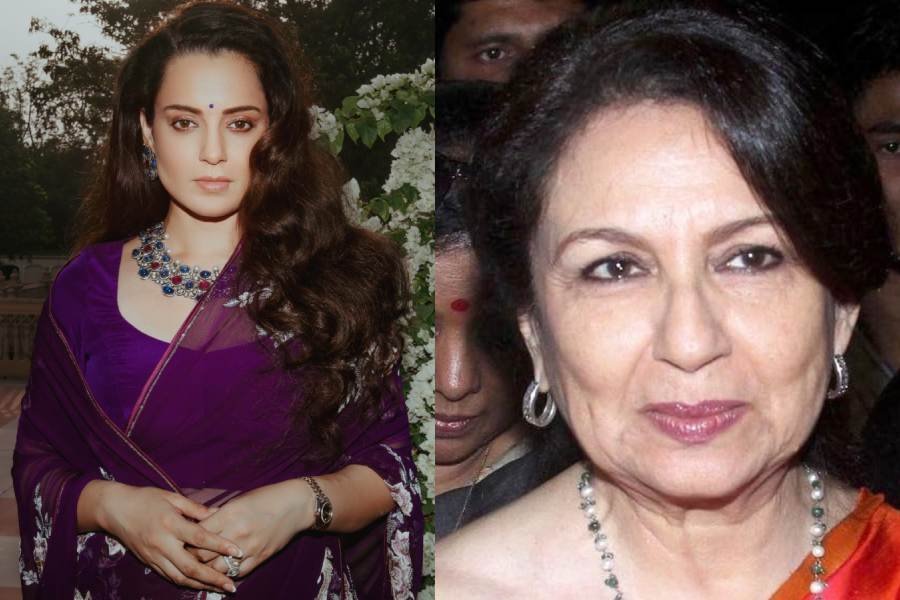
Actor and BJP MP Kangana Ranaut has criticised veteran actor Sharmila Tagore over her comments on Vande Mataram, arguing that the song’s references to Hindu deities should be understood as poetic metaphors rather than literal religious instructions.
Tagore, 81, had recently said that the first two stanzas of Vande Mataram would be more appropriate for everyone to sing because later portions invoke Hindu deities, which could make people belonging to monotheistic faiths uncomfortable.
Reacting to Tagore’s remarks, Ranaut said she was “shocked” by what she described as a restrictive interpretation of art and poetry.
“I appreciate that Sharmila ji has spoken about her reservation on Vande Mataram, but I am shocked as an artist how can her views on art/poetry be so limiting and contrived,” Ranaut wrote on her Instagram Stories.
She argued that poetry frequently uses metaphors and imagery to convey ideas beyond the literal meaning of words.
“Vande Mataram is the spirit of the freedom struggle. Bankim Chandra ji is compelling the nation to awaken the Shakti within,” Ranaut said.
She questioned whether references to Hindu goddesses should necessarily be interpreted as religious practice rather than artistic symbolism.
Ranaut also invoked Swami Vivekananda’s descriptions of strength, saying that his references to iron bodies and thunderbolt-like veins were not literal statements but calls for inner strength.
She concluded by telling Tagore to “please come out of Hindu-Muslim mindset” and appealed for people of different faiths to “embrace each other like our own.”
Why Sharmila Tagore raised the issue
Tagore had said that people following monotheistic religions could have reservations about singing the later verses of Vande Mataram because they contain references to multiple Hindu deities.
She argued that the first two stanzas, which primarily celebrate the motherland, could be accepted more broadly.
The comments have come amid a renewed political debate over the national song and which portions should be performed at public and political events.
Written by Bankim Chandra Chattopadhyay in the 1870s and later included in Anandamath, Vande Mataram became closely associated with India’s freedom movement. While its opening verses praise the motherland, later portions invoke Hindu deities including Durga, Lakshmi and Saraswati.
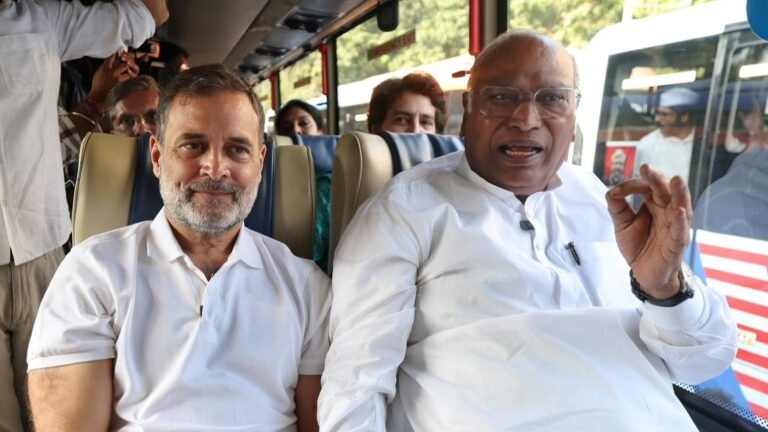
The Congress has previously maintained its 1937 position that only the first two stanzas should be sung at its programmes.
Actor Mukesh Khanna has also entered the debate, arguing that Vande Mataram should replace Jana Gana Mana as India’s national anthem.