The Sengol sceptre, installed inside the new Parliament building in 2023, has been included in the NCERT Class 9 Social Science textbook, which describes it as a “cultural marker of rulership and good governance” and links its tradition to the Chola dynasty.
The reference appears in the second part of the Class 9 Social Science textbook, titled Understanding Society India and Beyond-Part 2. The book was released on Tuesday, around six months after the beginning of the new academic session. The first part of the textbook was released in June.
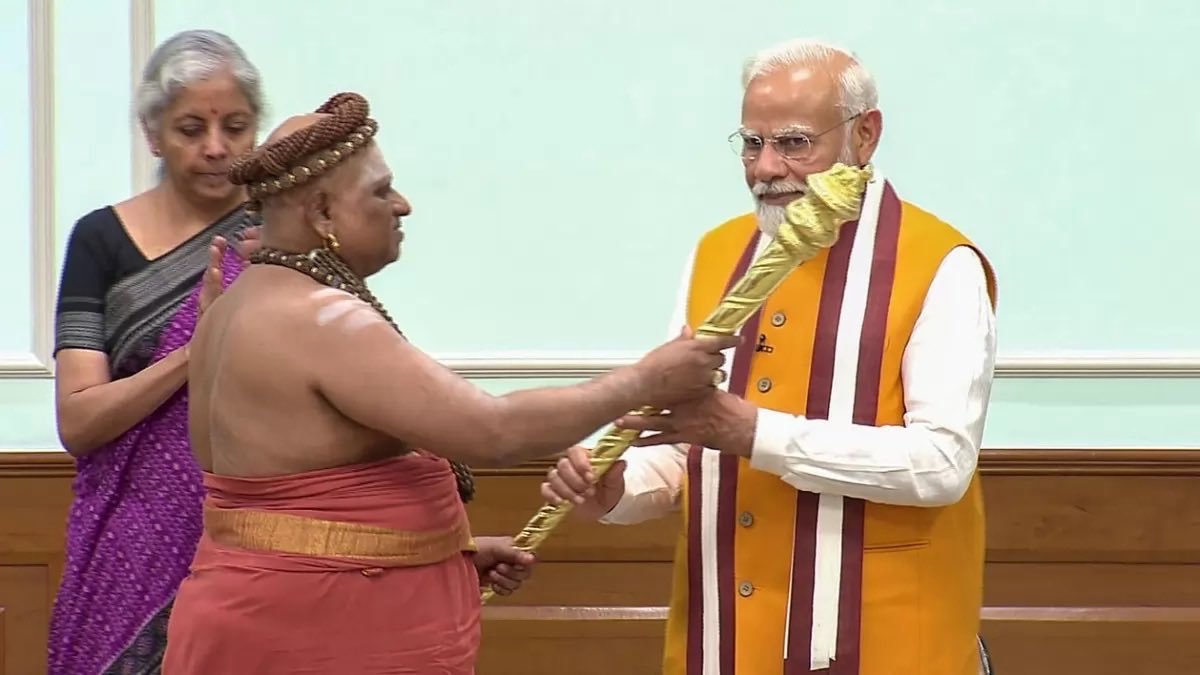
Prime Minister Narendra Modi installed the Sengol in a glass enclosure next to the Lok Sabha Speaker’s podium during the inauguration of the new Parliament building on May 28, 2023.
NCERT Links Sengol to Chola Period
The textbook describes the Sengol as a symbol associated with governance and says its tradition dates back more than a thousand years.
“The Sengol, a cultural marker of rulership and good governance, was placed in India’s newly inaugurated Parliament building in the year 2023 by Prime Minister Narendra Modi,” the textbook says.

It adds that the tradition of using the Sengol as a symbol of “righteous governance” began during the reign of the Chola dynasty.
The chapter also links the sceptre to India’s Independence and says it was received by Jawaharlal Nehru in 1947.
“To mark the occasion of India’s Independence, at the stroke of midnight on 15 August 1947, the first Prime Minister, Jawaharlal Nehru, received the Sengol from the Adheenam Saints (an old Shaivite tradition) of Tamil Nadu,” the textbook states.
Congress Questions Sengol’s Independence-Era History
The inclusion of the Sengol comes amid an ongoing political disagreement over its historical association with India’s transfer of power in 1947.
During the inauguration of the new Parliament building, Prime Minister Modi said the Sengol had symbolised the transfer of power and was connected with C Rajagopalachari and the Adheenams.
The Congress has disputed this account, saying there is no documented evidence that Lord Mountbatten, C Rajagopalachari or Jawaharlal Nehru described the Sengol as a symbol marking the transfer of power from British rule to India.
The disagreement has continued since the Sengol was installed in Parliament in 2023.
What the Culture Ministry Says
The Ministry of Culture describes the Sengol as a ceremonial sceptre rooted in the spiritual and cultural traditions of ancient Tamil civilisation. According to the ministry, it represents the idea that political authority should be guided by dharma, or righteousness.
The ministry says the Sengol was traditionally associated with the coronation ceremonies of Tamil monarchs and represented the ethical responsibilities of a ruler.
It also says the tradition was revived in 1947, when a Sengol was presented to Jawaharlal Nehru before Independence.

According to the ministry, the sceptre was handcrafted by Vummidi Bangaru Chetty and sanctified by seers of the Thiruvaduthurai Adheenam.