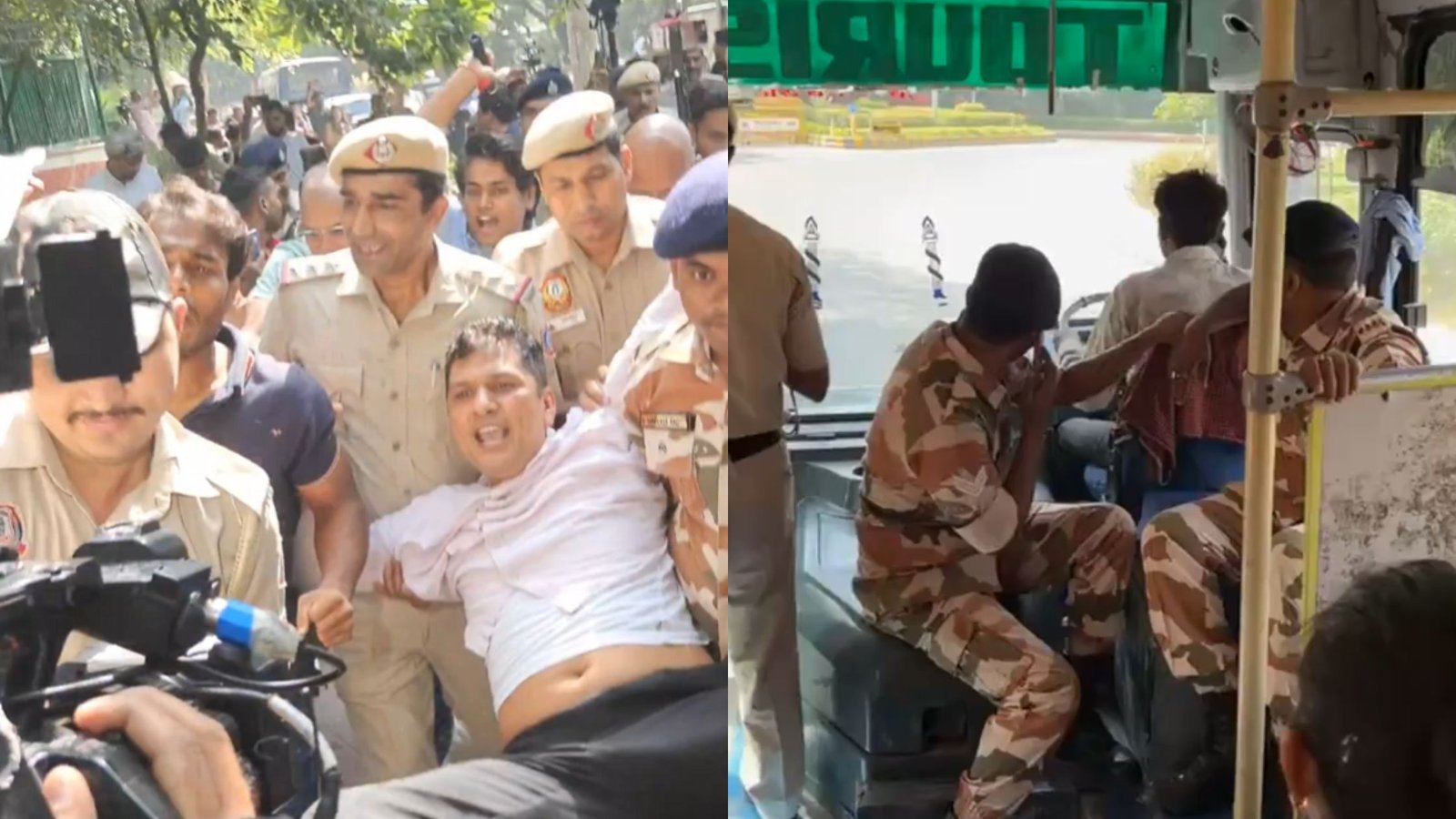
Tensions escalated at Delhi’s Jantar Mantar on Friday, October 2, as AAP leader Saurabh Bharadwaj and other protesters were detained by police during a demonstration against Chief Election Commissioner Gyanesh Kumar.
Several protesters attempting to reach Jantar Mantar from the Ashoka Road side were also detained and taken away in police buses. Bharadwaj was later removed from the protest site along with AAP MLA Sanjeev Jha.
The protest was organised amid opposition from student groups, activists and political leaders over the Election Commission’s handling of electoral rolls and the Special Intensive Revision (SIR) exercise.
Section 163 Imposed in New Delhi
Delhi Police has imposed prohibitory orders under Section 163 of the Bharatiya Nagarik Suraksha Sanhita (BNSS) across the New Delhi district.
The order prohibits unauthorised public meetings or assemblies of five or more people, processions, demonstrations, dharnas, slogan shouting and speeches. Carrying firearms, banners, placards, lathis, sticks and other specified objects is also prohibited without permission. Police said the restrictions were imposed to maintain public order, ensure safety and regulate traffic.
Delhi Police said no permission had been granted for the proposed protest at Jantar Mantar and urged people to follow the restrictions.
Police have deployed additional personnel and created multiple security zones around the area. Barricades have also been placed on roads leading towards Jantar Mantar.
AAP Leaders Join Protest
Bharadwaj reached Jantar Mantar and urged people to join the demonstration, saying AAP had applied for permission for a peaceful protest.
He was later detained by police. In a subsequent message, Bharadwaj urged protesters not to be afraid of police and said, “Don’t be scared of police even if they use lathis.”
AAP leaders, including Atishi, had earlier appealed to people to gather at Jantar Mantar. Atishi alleged that the right to vote was under threat and linked her criticism to the functioning of the Election Commission and Gyanesh Kumar.

AAP MP Sanjay Singh also called on people to join the protest and alleged that 1.37 crore names had been removed from electoral rolls during the SIR exercise. The figure was presented as a political allegation by Singh.
Student Groups Planned Protest
The All India Students’ Association (AISA), Students’ Federation of India (SFI) and Democratic Youth Federation of India (DYFI) had announced the October 2 mobilisation, seeking Kumar’s resignation over the Election Commission’s functioning and its handling of electoral rolls.
Delhi Police did not grant permission for the protest. Police officials had expected a large turnout, with estimates ranging from 3,000 to 4,000 people for the broader mobilisation.
The protest is part of wider demonstrations by opposition parties, student organisations and civil society groups over the SIR exercise and electoral rolls.
The Election Commission has rejected allegations of internal disagreement over its decisions, saying the three-member poll panel took decisions unanimously, including those related to the SIR.
11 Metro Stations Shut
The Delhi Metro Rail Corporation closed entry and exit at 11 stations in view of the protests.
The affected stations include Janpath, Patel Chowk, Central Secretariat, Rajiv Chowk, Seva Teerth, Mandi House, Lok Kalyan Marg, INA, Chawri Bazar, Ramakrishna Ashram Marg and New Delhi.
Interchange facilities remained available at Rajiv Chowk, Mandi House, New Delhi and Central Secretariat.
Traffic restrictions and diversions were also announced around Jantar Mantar, Connaught Place, Parliament Street, Patel Chowk and adjoining roads.
Parallel Protest Announced in Mumbai
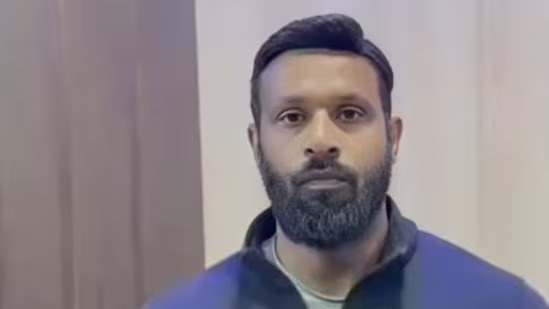
A separate protest against Kumar was planned in Mumbai by Abhijeet Dipke, founder of the Cockroach Janta Party (CJP).

Dipke announced a “Jail Bharo Andolan” at Shivaji Park at 4 pm on October 2. The CJP has demanded Kumar’s resignation, freezing the 2025 electoral roll and a transparent process for appointing the next Election Commissioner.
Mumbai Police had earlier said it was not empowered to grant permission for a gathering at Shivaji Park because of a 2013 Bombay High Court order and the area’s designation as a silence zone.