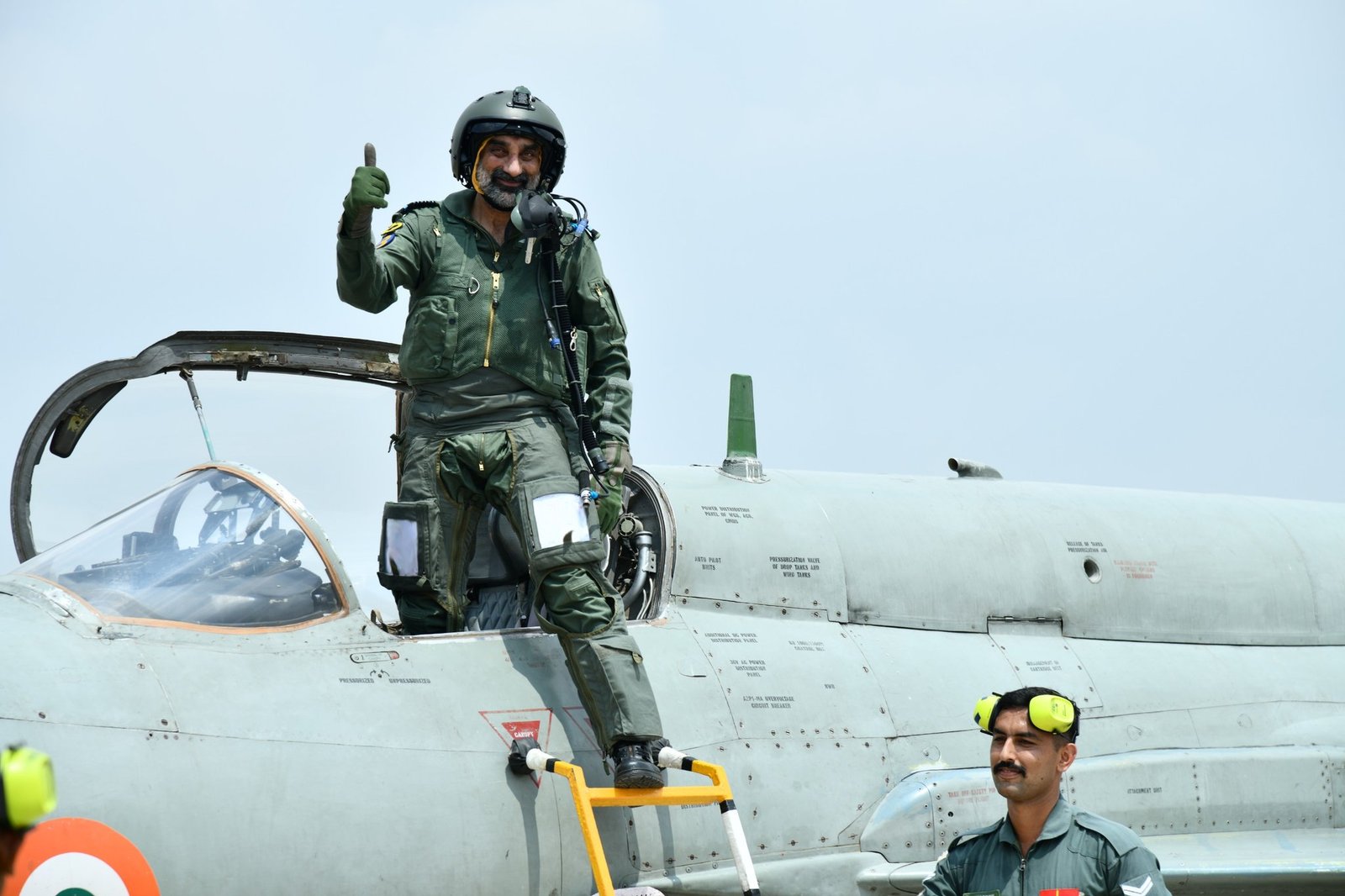
The Indian Air Force may have to consider other fighter aircraft if the indigenous Advanced Medium Combat Aircraft (AMCA) programme is delayed, Air Chief Marshal AP Singh said on Saturday.
Speaking at his annual press conference ahead of Air Force Day, Singh said the arrival of fifth-generation fighter aircraft in India’s neighbourhood was a concern for the IAF.
“We have to fill in the gap. If the other side is getting the 5th generation across, we need to look at some 5th generation,” he said.
“We may have to look at other fighter platforms in case of delays in AMCA, fifth-gen, other programmes,” Singh added.
China has already inducted the J-20 and is developing the J-35, while Pakistani pilots have reportedly been training in China ahead of Pakistan’s planned induction of Chinese fifth-generation fighter aircraft.
Singh said, however, that no decision had been taken to import a fifth-generation fighter as an interim measure. Russia has offered its Su-57 to India, but the IAF chief said there was no decision on the proposal.
AMCA Still Years Away
The twin-engine AMCA is being developed by the Defence Research and Development Organisation’s Aeronautical Development Agency and is India’s main indigenous fifth-generation fighter programme.
The project is currently at the industry selection stage, with Indian companies competing to develop the aircraft under a public-private partnership model.
Even if the programme progresses according to schedule, the fighter is not expected to enter service before the mid-2030s.
IAF Fighter Strength Falls to 29 Squadrons
The possible delay comes as the IAF is already facing a shortage of fighter aircraft.
The force currently has 29 fighter squadrons against a sanctioned strength of 42.5. Singh said the IAF needs to induct around 36 to 40 fighter aircraft every year for the next few years to address the shortage.
The delayed delivery of Tejas Mk1A aircraft has added to the pressure.
The IAF has ordered 180 Tejas Mk1A fighters in two contracts. Singh acknowledged that delays in the programme had affected the force, while expressing hope that the larger Tejas Mk2 would also help address the shortfall.
The Mk1A programme has faced delays linked to the supply of GE-F404 engines from the United States and the integration of aircraft systems.
Rafale Deal Expected This Financial Year
The IAF is also looking to increase its numbers through the Multi-Role Fighter Aircraft (MRFA) programme.
The government cleared the procurement of 114 Rafale fighter jets from France under a government-to-government framework in February.
Price negotiations and other aspects of the agreement are currently being worked out.
“If things go well, we should be able to sign it (MRFA deal) in this financial year. That’s what my hope is. But it is a two-way process,” Singh said.
The Rafale aircraft are expected to address the IAF’s immediate and medium-term requirements, while the AMCA is intended to provide a longer-term indigenous fifth-generation capability.
IAF Open to Theatre Commands, But Wants Fresh Review
On the proposed theatreisation of the armed forces, Singh said the IAF was not opposed to the creation of theatre commands but that the experience of Operation Sindoor had changed the nature of the discussions.
“I have made it clear that the Indian Air Force is not against theatre commands. We have been working towards it, and we have been a part of discussions throughout,” he said.
Singh said the government would have to decide whether theatre commands should be introduced at once or through a phased approach.
Under the proposed system, units of the Army, Navy and Air Force would operate together under integrated theatre commands. The three services currently operate through separate commands.
IAF Wants Indigenous Fighter Engine and AI Integration
Singh also stressed the need for India to develop its own fighter aircraft engine, describing domestic engine production as important for self-reliance and combat readiness.
He said the IAF also needs to become an “AI-augmented force”, while emphasising that humans would continue to take critical decisions.
On drones and loitering munitions, Singh said the IAF was expanding its inventory but did not see a need for a separate drone force. Instead, such systems should operate as part of an integrated military force.