Nabiha Omar
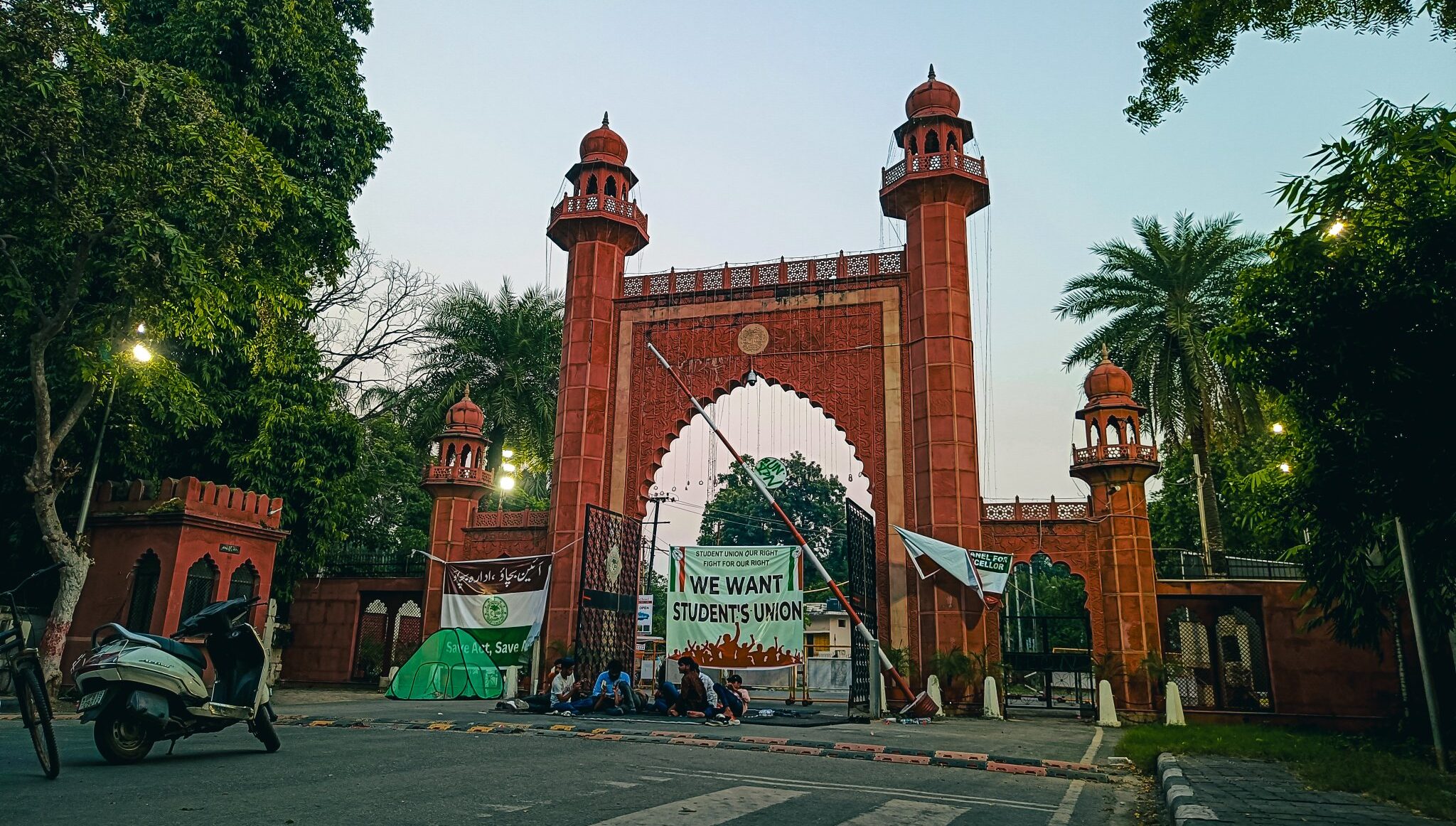
For eight years now, Aligarh Muslim University (AMU) has gone without an elected students’ union. The last poll was held in November 2018, when Salman Imtiaz was chosen as president by an electorate of nearly 19,000 students, and every promise of another has since lapsed. The most recent came in August 2025, when an 18-day agitation against a steep fee hike ended with the administration announcing elections for December 2025. December came and went without a poll, and by January 2026 students were back on the streets, citing the Lyngdoh Committee guidelines on campus elections.
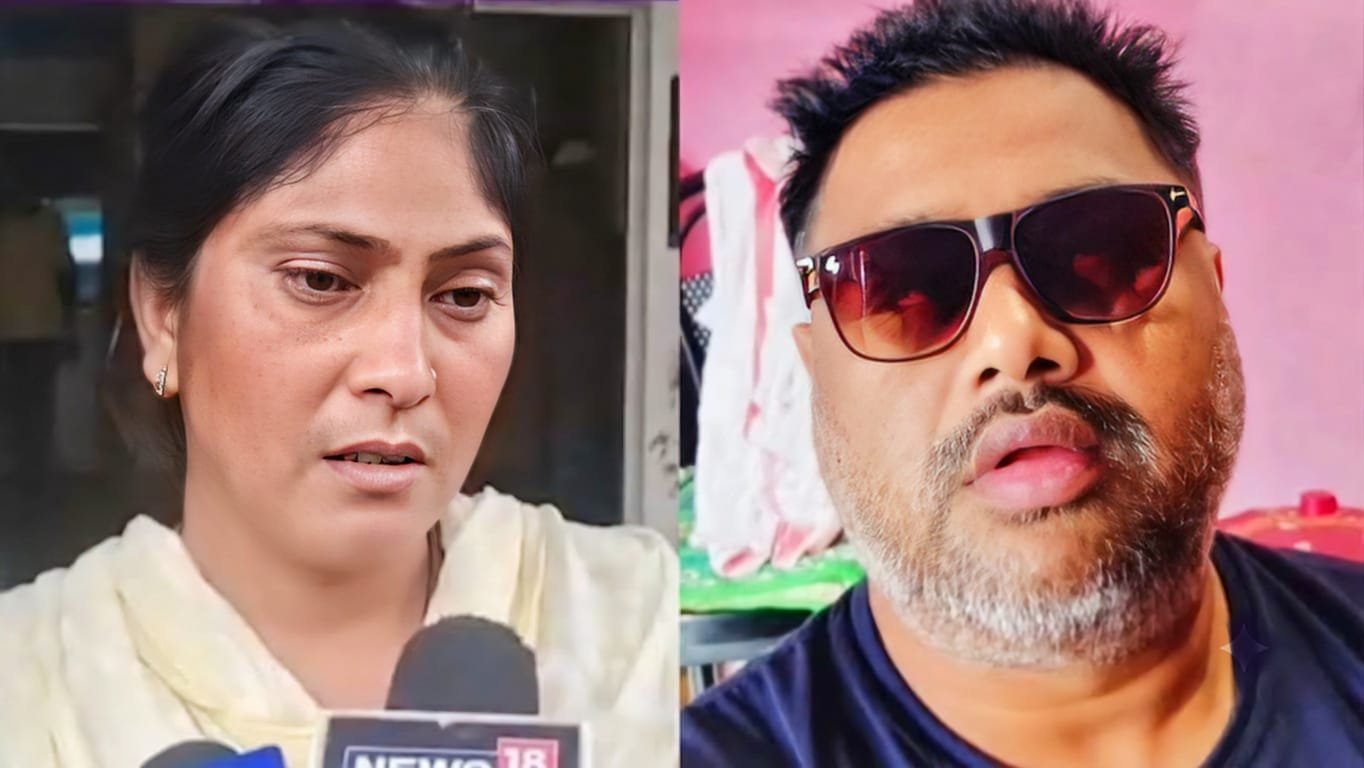
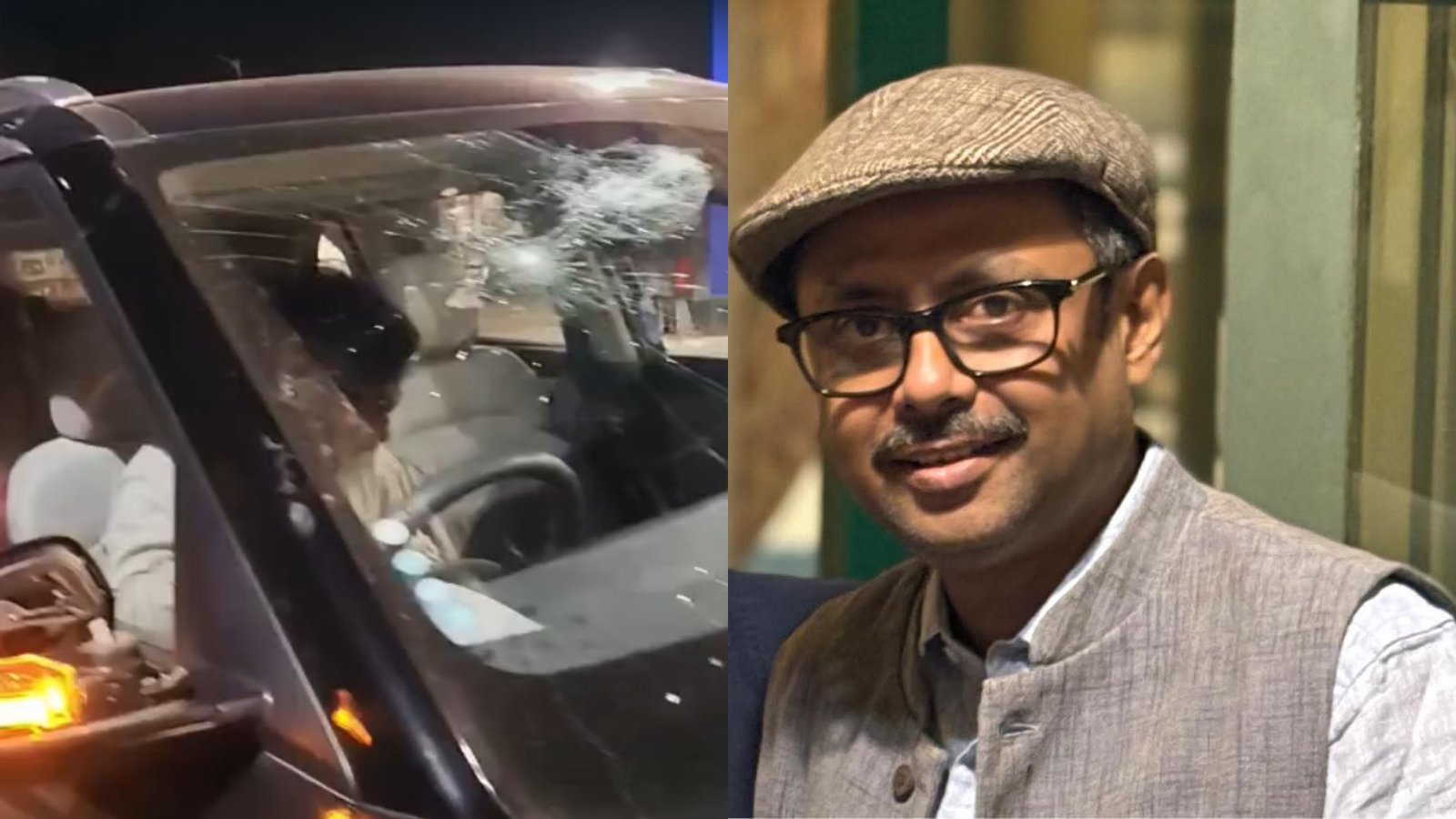
This September, the demand took a more urgent form. Yasir Fahad, an MA Urdu student, began an indefinite hunger strike at Duck Point, and on 22 September he was removed from the site after a scuffle with the proctorial team. He has alleged assault, while the administration maintains that his suspension concerns an earlier protest at Abdullah Hall and is unrelated to the election demand.
Whatever the outcome of that dispute, it points to a larger question about what the university, and its students, believe the Union is for. On campus, it is most often remembered as heritage: a hall, its portraits and the honorary life memberships conferred on visiting dignitaries. Last year, The Wire went so far as to describe it as reduced to a hall with a nameplate. Yet to treat the Union as a monument is to misread its history, which shows that it was built to be a working institution.
A debating society first
That history begins with a debating club. The Siddons Union Club was inaugurated on 26 August 1884 at the Muhammadan Anglo-Oriental (MAO) College, with the principal, Theodore Beck, as its first president. Named after the college’s first principal, H.G.I. Siddons, and modelled on the Cambridge Union Society, it met twice a month to debate in English and once a month in Hindustani.
Its motions, moreover, were far from ceremonial. In November 1884, members debated whether women should be educated only through home tuition, a motion that, according to the Aligarh Institute Gazette, was defeated by just three votes. Debates on purdah and marriage customs followed, so that from its very first session the club served as a forum in which the community’s own practices could be questioned.

Sir Syed Ahmad Khan’s own writings help explain why he valued such a forum. In Asbab-e-Baghawat-e-Hind (1858), he argued that the exclusion of Indians from the legislative councils had been the principal cause of the 1857 revolt, observing that “the voice of the people can alone check errors in the bud.” He returned to the theme in a speech urging Indians to form public associations, where he criticised the “moral cowardice” of those who complained in private while appearing content in public, and asked them instead to express their opinions “openly and honestly”. A college that hoped to send its graduates into public life, then, needed a place where they could learn to argue in public.
Before long, that training was turned on the founder himself. In 1888, when Lala Lajpat Rai published a series of open letters criticising Sir Syed’s opposition to the Indian National Congress, he reminded him that the Siddons Union had trained the college’s students “in the art of discussing public matters in public councils”, and asked why he had founded it at all. Even then, the Union was understood to serve something larger than loyalty to one leader.
After Sir Syed
Nor was the institution that grew around the Union the work of one man. After Sir Syed’s death in 1898, Nawab Mohsin-ul-Mulk became secretary of the college, carrying its fundraising forward and bringing religious and modern learning onto a common platform. By then, student and alumni life had begun to acquire structures of its own: Sahibzada Aftab Ahmad Khan had founded the Duty Society in 1890 to support poorer students, and an alumni brotherhood formed the following year would later become the Old Boys’ Association.
When the movement to turn the college into a university gathered pace, it depended in turn on its benefactors. The Aga Khan III and the Raja of Mahmudabad, Mohammad Ali Mohammad Khan, helped raise the thirty lakh rupees that the colonial government demanded. Once the AMU Act came into force in 1920, Sultan Jahan, Begum of Bhopal, became the university’s founding Chancellor and the first woman to hold that office at any Indian university, while the Raja of Mahmudabad served as its first Vice-Chancellor and contributed a further one lakh rupees.
That same year also revealed how seriously Aligarh’s students took their political education. During the Khilafat and Non-Cooperation movements, a group of teachers and students answered Gandhi’s call to boycott government-aided institutions, left AMU and, on 29 October 1920, founded Jamia Millia Islamia at Aligarh. Those who left and those who stayed had argued the question out in public, much as the Siddons debaters had been trained to do.

These founders and benefactors gave the university its money, administration and patronage, but none of them set out to build a university in which students would have no organised voice.
Why representation matters now
That absence matters all the more today because of who AMU’s students are. Many come from economically weaker families, for whom the 2025 fee hike decided whether they could continue at all. Without an elected union, every grievance, whether about fees, hostels or discipline, has to be negotiated either by individual students or by ad hoc protest committees. The All India Jammu and Kashmir Students’ Association highlighted precisely this gap in a letter to the Union Education Minister last year.
For a minority institution, representation also serves a protective function. A union with elected office-bearers, recorded minutes and an accountable process gives students a recognised channel to the administration, to the courts and to the public. When that channel is missing, protest becomes the only one left, at a far greater cost to students and the university alike.
The responsibility, however, does not rest with the administration alone. A restored Union will be judged by whether it returns to genuine deliberation across halls, regions, castes and the Women’s College, or becomes merely a platform for factional contests. The Siddons tradition, after all, placed debate before mobilisation.
What the university should do
The administration has said it is open to discussing the Union, and the next step is straightforward: appoint a Chief Election Officer, publish a dated schedule in line with the Lyngdoh Committee guidelines and set out transparent rules for nominations. Sir Syed Day on 17 October would be a fitting occasion to announce it.
AMU’s founders and benefactors raised a college into a university so that Indian Muslims could take part in public life on equal terms, and a functioning students’ union is part of that inheritance. The building on campus can preserve the Union’s memory, but only regular elections can preserve the institution itself.
Nabiha Omar holds an MA in History from Aligarh Muslim University and works on Partition, memory and Muslim social history.
The views expressed in this article are the author’s own and do not necessarily reflect the policy of the platform.