Ramisha Fatima
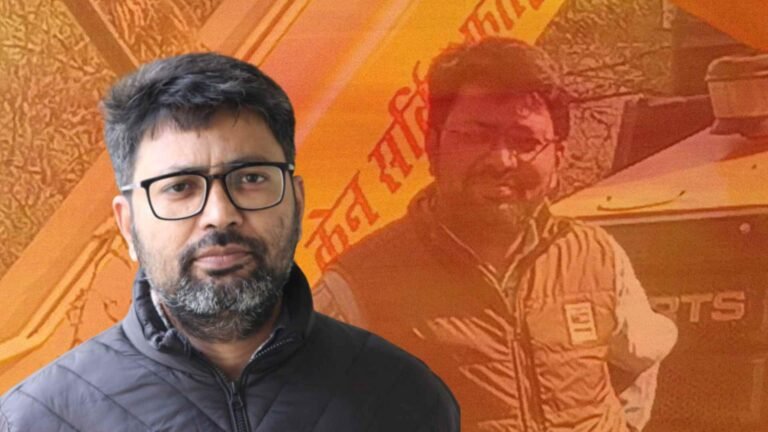
For nineteen days, one student refused to eat so that thousands could vote. On October 9, Yasir Fahad’s hunger strike ended and Aligarh Muslim University’s students’ union, silent since 2018, was back. The Office of the Chief Election Officer issued the schedule for the AMUSU election 2026-27, with polling on November 5. Vice-Chancellor Naima Khatoon then reached Duck Point and offered Fahad a glass of juice, ending a fast that began on September 21.
The strike nobody could ignore
Fahad, an MA Urdu student, began his indefinite hunger strike after being suspended without a show-cause notice, following a memorandum seeking an election notification within 48 hours. The administration maintains that the suspension concerns an earlier protest at Abdullah Hall and is unrelated to the election demand.
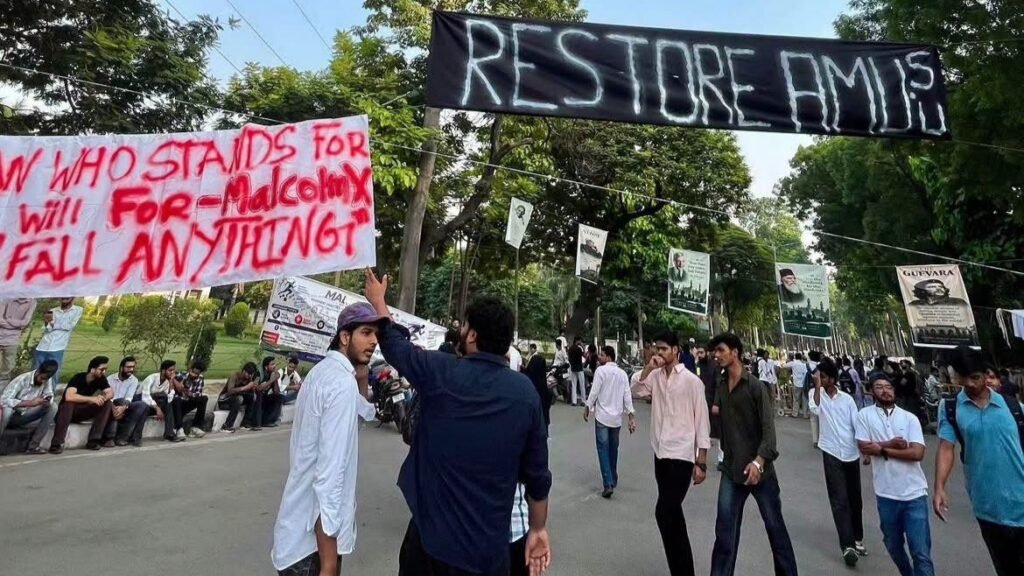
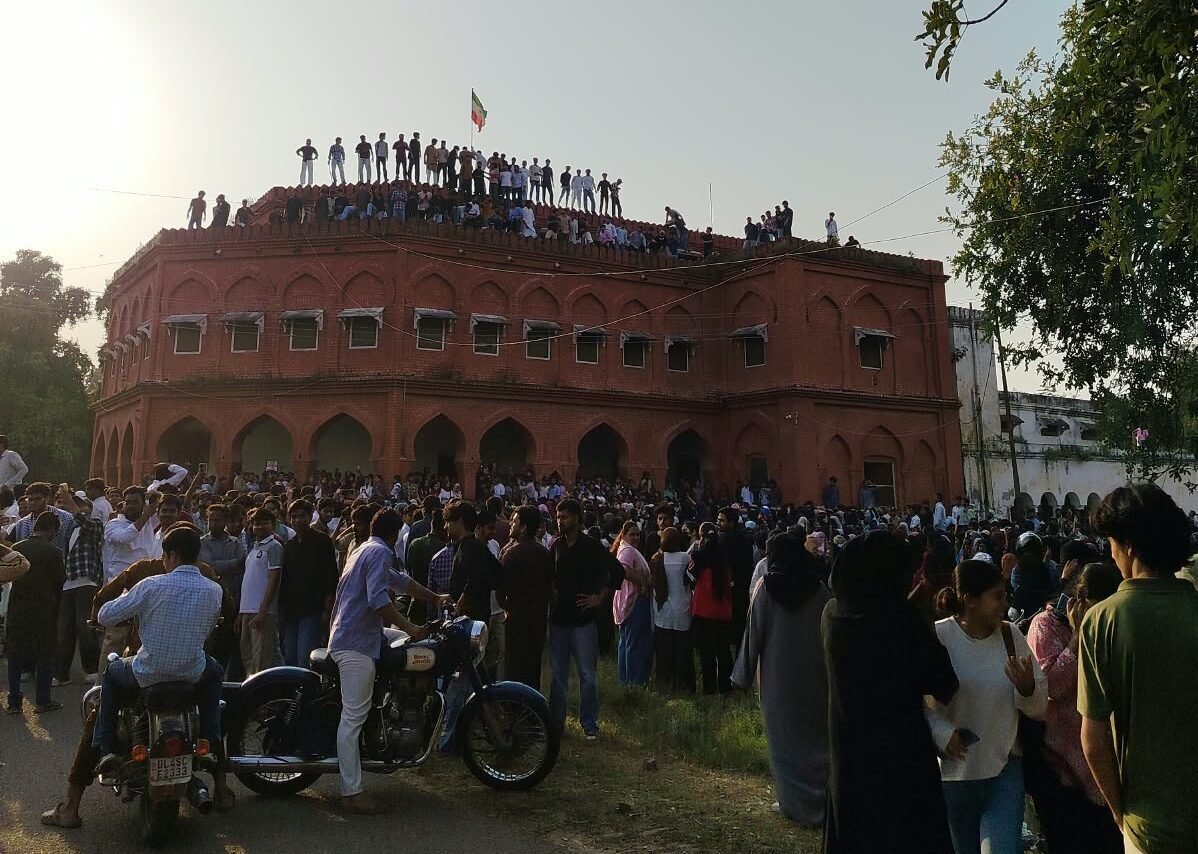
It began with one man at Duck Point. It did not stay that way. Students from almost every major department boycotted classes, Urdu and Law students stood at the site. By October 7, protesters estimated about 2,000 gathered there. Students blocked all four campus gates on October 3 and shut the Maulana Azad Library. JNUSU leaders came to the ground, and the Bhim Army chief urged dialogue.
The night the walls spoke
On the night of October 6, the proctorial team came to take Fahad from the site. Students say it went ahead despite their demands and that boys were pushed. The administration said the move was meant to give him medical help. The students answered with a human chain that would not break. Then the women spoke. From Abdullah Hall, Indira Gandhi Hall, Begum Sultan Jahan Hall and almost every women’s hostel, slogans rose into the night, from within hostel premises. By morning, students from Women’s College and Abdullah Hall had reached Duck Point. They were not lending support to someone else’s cause. Women students have their own grievances against the proctorial administration, and they carried them into this protest.
जब बात लोकतंत्र बचाने की हो __ संविधान 📕 बचाने की हो .. फिर आजादी के मतवाले AMU के स्टूडेंट कैसे खामोश रह सकते ..?
— Rifa Wahid (@RifaW51057) October 8, 2026
AMU – GEN _z का टोला निकल पड़ा संविधान और लोकतंत्र के हिफाज़त करने ✊ #SaveDemocrecy #SaveVotingRight #AMU #AMUGEN_z #Protest pic.twitter.com/hnmETnigD2
Assurances, then a notice
On October 8, a student delegation met the administration and returned with assurances: a Chief Election Officer and an election notice, revocation of Fahad’s suspension, a committee on the Proctor, and no action against any student at the dharna. Students heard them with caution, because they had heard promises before. In August 2025, an 18-day agitation against a fee hike ended with the administration announcing elections for December 2025. December passed without a poll, and students were back on the streets by January.
That broken promise is why a verbal assurance was not enough. This time, the administration’s response came in writing: after the delegation, the election calendar was issued, and the Vice-Chancellor herself went to Duck Point and offered a glass of juice to Yasir Fahad.
What the notice says
The notice, dated October 9 and signed by Chief Election Officer Prof. Javaid Talib of the Department of Law, sets out a full calendar. Voters’ lists go up on October 26. Nominations are filed on October 29, with scrutiny the same day and withdrawals on October 30. Candidates give their final speeches from the Union Hall terrace on November 3. Polling takes place at the faculties on November 5, from 9 a.m. to 5 p.m., with counting from 7 p.m. The last AMUSU poll was held in November 2018.
What the law and history say
Protesters invoked the Lyngdoh Committee recommendations, which the Supreme Court directed colleges and universities to follow in its September 2006 order in University of Kerala v. Council of Principals of Colleges, Kerala. They also pointed to the freedom to form associations and unions under Article 19(1)(c).

AMUSU began in 1884 as the Siddons Union Club, a debating society, and its lifetime members include Mahatma Gandhi, Jawaharlal Nehru and B.R. Ambedkar. A university with that history should not need a hunger strike to be reminded of it.
What comes next
The notice is a beginning, not the end. The calendar must be followed to the letter, the nomination process must be transparent, and the other assurances given to the delegation should be put on paper as well. The students have done their part. They boycotted, blocked, chanted and fasted, and a university that once reached for a suspension letter finally reached for a calendar.