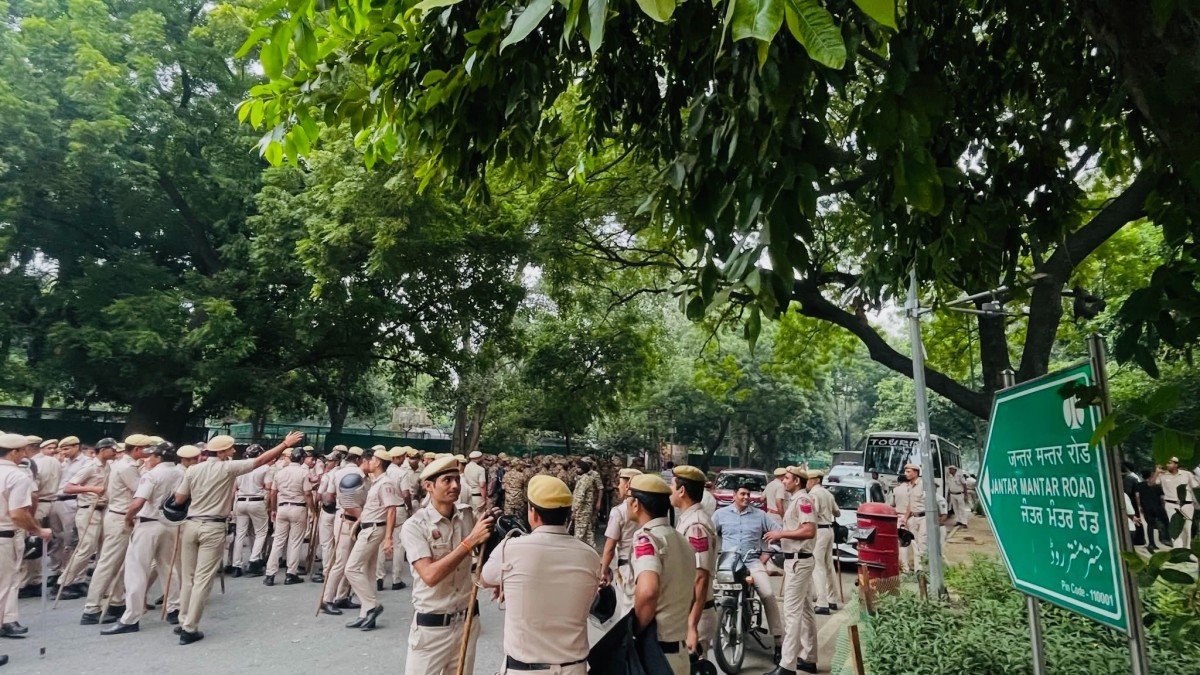
The Supreme Court on Thursday issued notice to the Union Government and Delhi Police on a petition challenging the removal of Jantar Mantar from the list of designated protest sites in New Delhi. The court said it would examine the reasons behind the decision before deciding how to proceed.
A bench comprising Chief Justice of India Surya Kant and Justice Joymalya Bagchi sought responses from the authorities after petitioners asked the court to restore Jantar Mantar’s status as a designated venue for demonstrations.
“You have challenged the denotification. We are issuing notice. Let them come and file their reply. We will see what the reasons are,” CJI Surya Kant said, according to Bar & Bench.
The bench said it would consider the authorities’ explanation before taking further action. The petitioners have argued that removing Jantar Mantar from the list of protest sites could restrict the public’s ability to demonstrate near the country’s political and administrative centre.
Senior advocate Gopal Sankaranarayanan, appearing for the petitioners, sought an immediate direction to restore the site’s status. He relied on the Supreme Court’s earlier judgment in the Mazdoor Kisan Shakti Sangathan v Union of India case, which dealt with restrictions on demonstrations at Jantar Mantar and the Boat Club area.
Former Delhi High Court judge and senior advocate Mukta Gupta also argued that a protest site should allow demonstrators to be heard by those in power. Justice Bagchi observed that the idea of being heard should also be understood in the context of technology.
Delhi Police Names Three Alternative Protest Sites
Delhi Police removed Jantar Mantar’s designated protest status through an order issued on October 11. The order named three alternative venues for demonstrations: Ramlila Ground, Burari Ground and Central Business District (CBD) Ground in East Delhi.
The police told the Delhi High Court that the decision followed the Supreme Court’s October 9 observations on identifying suitable alternative locations with facilities for peaceful and lawful protests.
The police notification also referred to recommendations from a committee constituted by the Union Ministry of Home Affairs to examine alternative venues.
The decision has been challenged in both the Supreme Court and the Delhi High Court. Petitioners have argued that shifting demonstrations away from Jantar Mantar could weaken the right to peaceful assembly. One petition has also raised concerns that some of the alternative grounds require payment for their use.
The authorities have yet to respond to the latest notice issued by the Supreme Court.
What Did the Supreme Court Rule in 2018?
The petitioners have invoked the Supreme Court’s 2018 judgment in the Mazdoor Kisan Shakti Sangathan case, which recognised peaceful protest as a fundamental right under Articles 19(1)(a) and 19(1)(b) of the Constitution.
The judgment also held that the right to protest is subject to reasonable restrictions to protect public order and the rights of others.