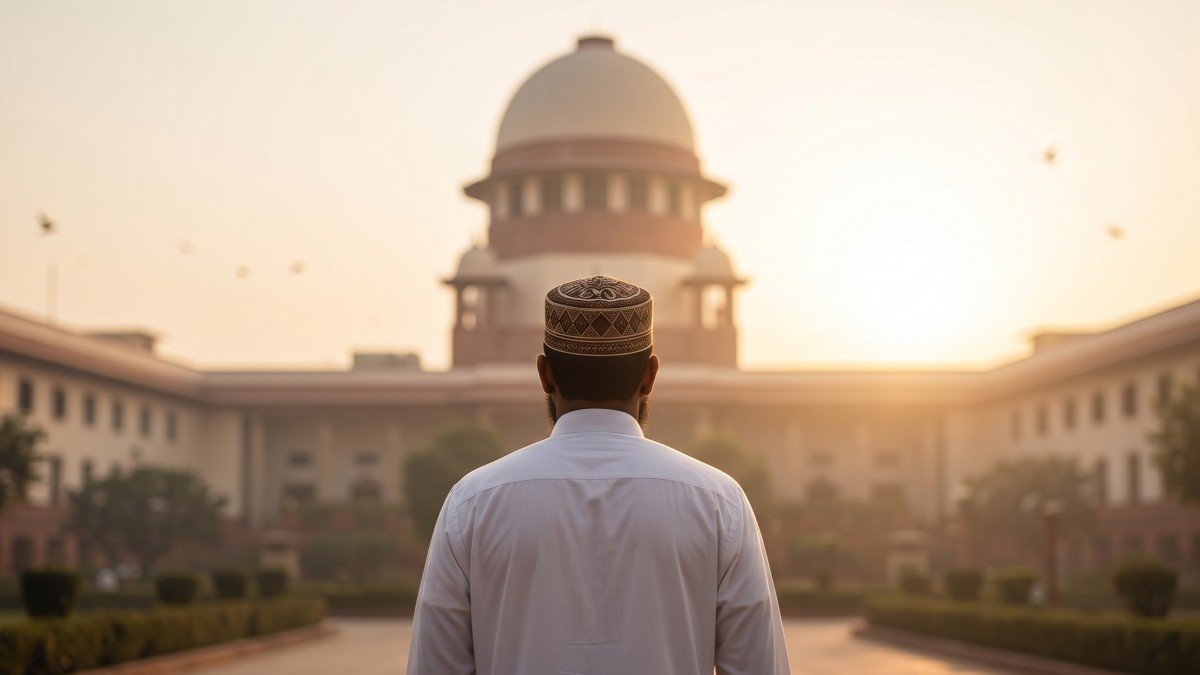
The Supreme Court on Thursday upheld a Madras High Court judgment that struck down a Tamil Nadu government order allowing people who converted to Islam from Hindu Backward Classes, Most Backward Classes, Denotified Communities and Scheduled Castes to obtain community certificates as Backward Class Muslims.
A bench of Justices Prashant Kumar Mishra and Shree Chandrashekhar refused to interfere with the High Court’s June 25 ruling, holding that a person’s caste or community status before conversion cannot automatically be transferred to a different notified backward class after conversion.
“Backwardness suffered in the antecedent social order cannot by itself be carried forward so as to confer upon him the status of a backward class in the religion to which he has converted,” the Supreme Court said.
The court held that conversion to Islam does not, by itself, make a person a member of any of Tamil Nadu’s seven notified Backward Class Muslim communities. It also said that a community certificate or executive order cannot override the constitutional and legal requirements for claiming reservation benefits.
Supreme Court on Reservation After Conversion
The case concerned Government Order (Ms) No. 31, issued by the Tamil Nadu government on March 9, 2024, following a recommendation by the Tamil Nadu Backward Classes Commission.
The order allowed people from Backward Classes, Most Backward Classes, Denotified Communities and Scheduled Castes who converted to Islam to obtain certificates identifying them as members of one of seven notified Backward Class Muslim communities.
The state government argued that the order was intended to ensure that socially and educationally backward people did not lose access to reservation benefits merely because they exercised their right to practise a different religion under Article 25 of the Constitution.
The Supreme Court, however, upheld the High Court’s conclusion that the order created an artificial route to reservation benefits without establishing the necessary social and legal connection to the specific Muslim communities recognised by the state.
“A person who converts from a Hindu social order to a non-Hindu social order cannot claim affirmative action under Article 16(4) of the Constitution merely on the basis of the social backwardness associated with his pre-conversion status,” the bench held.
The court added that conversion alone does not establish membership of a particular notified backward class community.
What the Court Said About Scheduled Caste Status
The bench also referred to Paragraph 3 of the Constitution (Scheduled Castes) Order, which provides that a person professing a religion other than Hinduism, Sikhism or Buddhism cannot be deemed to be a member of a Scheduled Caste under the existing framework.
The court said that a person who converts to a religion outside those specified in the order ceases to possess Scheduled Caste status attached to their previous caste and cannot claim benefits that depend on that status.
It clarified that a person who later reconverts to Hinduism would not automatically regain eligibility for affirmative action merely by relying on their earlier caste identity. The competent authority would have to make an independent, fact-specific assessment of whether the original social identity had genuinely revived and whether the person met the applicable legal requirements.
The bench also observed that community certificates recognise an existing legal status rather than create one. Neither a certificate nor a government instruction can change the constitutional conditions governing eligibility for reservation.
Case Began With Application by Sameer Ahamed
The case originated with Sameer Ahamed, who was born Hindu under the name Paramasivam and converted to Islam in 2015. He subsequently changed his name and sought a community certificate identifying him as a member of the Muslim Lebbai community to claim Backward Class reservation benefits.
After the Tahsildar rejected his application, Ahamed challenged the decision, relying on the Tamil Nadu government’s March 2024 order.
The Madras High Court ruled in his case on June 25, holding that conversion to Islam did not, by itself, entitle a person to claim reservation under the Backward Class Muslim category. It subsequently struck down the government order.
Tamil Nadu challenged the High Court judgment in the Supreme Court. The top court had reserved its decision on the state’s plea on August 7 before delivering its ruling on Thursday.