The Delhi High Court has ruled that facing serious charges under the Unlawful Activities (Prevention) Act (UAPA) does not automatically prevent a person from travelling abroad.
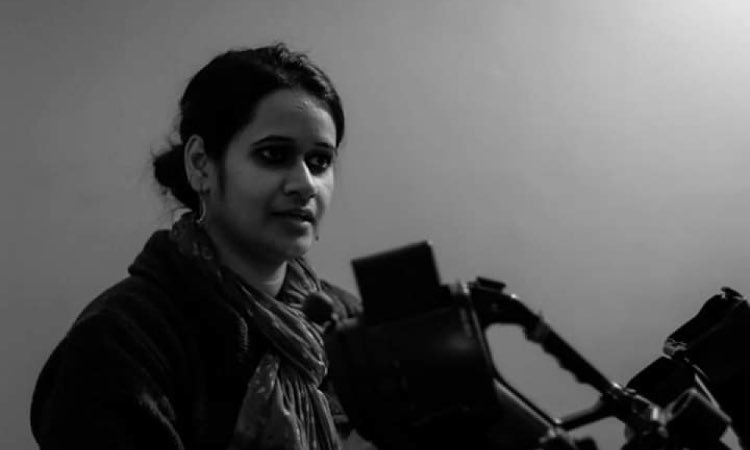
Justice Amit Bansal made the observation while allowing Natasha Narwal, an accused in the 2020 Delhi riots larger conspiracy case, to travel to the United Kingdom from November 2 to December 1.
Narwal sought permission to attend an international academic conference in London and meet her PhD supervisors at the University of Warwick.
“The fact that the petitioner has been charged of serious offences under the UAPA does not curtail her right to travel abroad in a blanket manner,” the court observed.
Court Allows Natasha Narwal to Attend Academic Conference
Narwal approached the High Court after a trial court rejected her applications seeking permission to travel abroad through two orders dated October 6.
She plans to present her research paper, titled “Gendered Carceral Labour as Social Reproduction”, at the Historical Materialism Conference, scheduled to take place at the School of Oriental and African Studies (SOAS), London, from November 5 to 8.
She also sought to meet her PhD supervisors at the University of Warwick, where she has been pursuing her doctoral programme remotely since October 2023.
Narwal is facing trial in two cases related to the 2020 Delhi riots, including one registered under the UAPA. She was granted bail in one case by the trial court in September 2020 and in the other by a division bench of the High Court in June 2021.
One of her bail conditions requires her to surrender her passport and obtain prior permission from the trial court before travelling abroad.
Delhi Police Opposed Foreign Travel
The Delhi Police opposed Narwal’s plea, arguing that travelling to the UK could create difficulties in securing her return to India.
The police cited the UK’s extradition laws and expressed concern that extradition could become difficult if Narwal sought asylum there. It also argued that she could participate in academic activities virtually.
The High Court, however, noted that Narwal had been on bail since 2021 and that the prosecution had not alleged any violation of her bail conditions.
It also observed that the trial was likely to take considerable time to conclude and that her close family members lived in the National Capital Region.
Right to Travel Abroad Is Part of Article 21
Relying on the Supreme Court’s judgment in Maneka Gandhi v. Union of India, the High Court reiterated that the right to travel abroad is part of the fundamental right to life and personal liberty under Article 21 of the Constitution.
The court allowed Narwal to travel subject to several conditions.

She must undertake to return to India on December 2, refrain from applying for asylum in the UK and avoid commenting on the merits of the pending cases during her stay.
She has also been directed to furnish a cumulative personal bond of Rs 1 lakh in both cases, with her brother standing as surety. Before departure, she must submit her UK visa, flight tickets and detailed travel itinerary to the investigating officer.
The court directed the trial court to release her passport immediately and ordered that any Look Out Circular (LOC) against her remain suspended during the authorised travel period.
Narwal must surrender her passport to the trial court within 48 hours of returning to India.