Actor Imran Khan on Monday tendered an unconditional apology before the Bombay High Court for his alleged participation in a protest against Chief Election Commissioner Gyanesh Kumar over the Special Intensive Revision (SIR) of electoral rolls. He also gave an undertaking that he would not participate in or encourage others to join similar demonstrations in the future.
The court extended its interim protection against a Leave India Notice issued by the Foreigners Regional Registration Office (FRRO), allowing the actor, a US citizen and Overseas Citizen of India (OCI) cardholder, to remain in India until the next hearing on December 7.
A bench of Chief Justice Mahesh Chandra Tripathi and Justice Advait Sethna questioned Khan’s participation in the demonstration, observing that OCI cardholders do not enjoy the same political rights as Indian citizens.
“You are an OCI cardholder. You can’t behave like an Indian citizen. You have nothing to say about SIR. You had no right to participate,” the bench told him.
Senior advocate Venkatesh Dhond, appearing for Khan, submitted that the actor had no association with the protest organisers and was unaware of the consequences of his participation. He said Khan was born in the United States but had spent most of his life in India, where he had built his professional and family life.
Dhond initially offered to submit an undertaking that Khan would not participate in future protests. The court, however, said an undertaking alone would not suffice and asked the actor to tender an unconditional apology.
Khan subsequently apologised and assured the court that he would not participate in any protest or directly or indirectly influence or instigate others to do so. He also expressed his love and respect for India and its Constitution.
Court Says OCI Cardholders Cannot Claim Same Rights as Citizens
During the hearing, the bench repeatedly emphasised the distinction between the rights of Indian citizens and those of OCI cardholders.
The judges compared Khan’s participation in the protest with an Indian citizen taking part in a political demonstration in the United States, observing that such a person could face deportation.
The court also suggested that Khan consider acquiring Indian citizenship if he wished to participate in political demonstrations in the country.

“You are a celebrity and what you say has consequences. See the magnanimity of this country. You are an OCI cardholder and all your recognition is from India, Maharashtra,” the bench observed.
The judges also referred to Khan’s social media posts following his detention, saying they could influence his young followers.
The court cautioned that the apology should not be interpreted as permission to participate in similar demonstrations in the future.
“The tendering of the apology is not a green signal,” the bench said, adding that the government had the authority to take action against foreign nationals who violated applicable rules.
At the same time, the court said the circumstances of Khan’s case would have to be considered before any final decision was taken.

Why Did Imran Khan Receive a Leave India Notice?
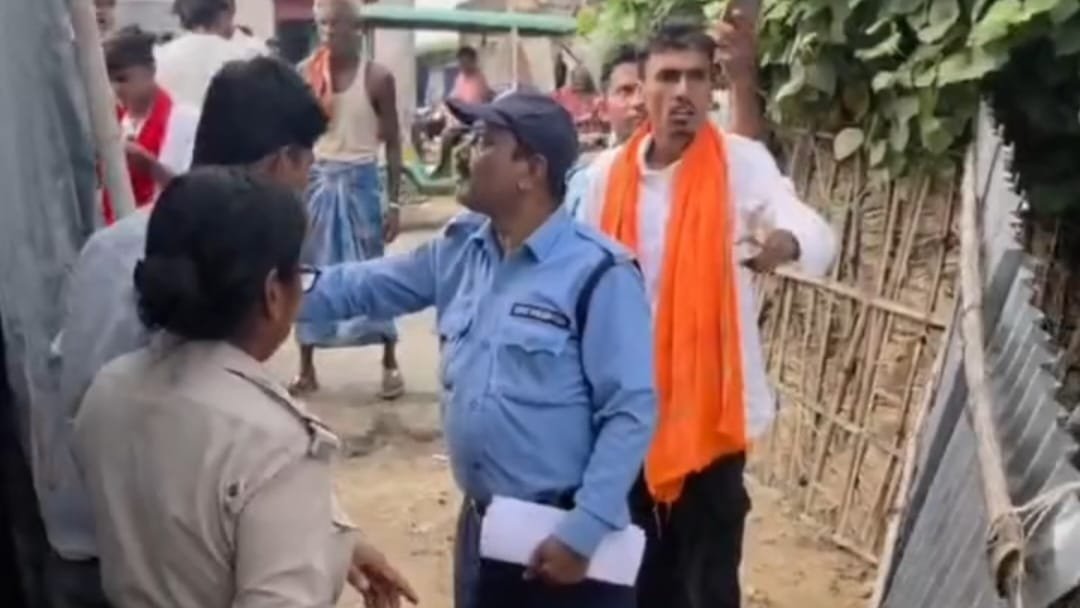
The case stems from a protest held at Mumbai’s August Kranti Maidan on October 10, demanding the resignation of Chief Election Commissioner Gyanesh Kumar over alleged irregularities in the SIR exercise.
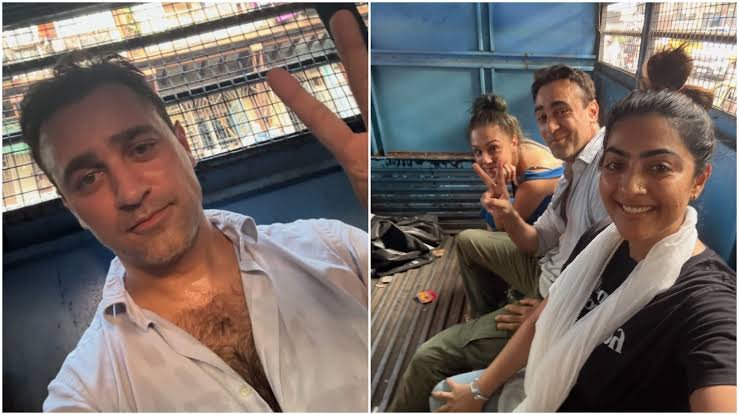
Khan was among those briefly detained by Mumbai Police during the demonstration, which was organised in solidarity with the Cockroach Janata Party’s agitation.
Following the incident, the FRRO issued a Leave India Notice directing him to leave the country by October 28 under the Immigration and Foreigners Act, 2025. The authorities also issued a separate show-cause notice asking why his OCI registration should not be cancelled.
Khan challenged the departure notice before the Bombay High Court, describing it as arbitrary and disproportionate. He argued that he had not organised the demonstration and had no affiliation with its organisers. He also said he had been living in India for most of his life and that his family and professional commitments were based in the country.
The actor’s petition sought the cancellation of the notice and protection from coercive action by the authorities.
The FRRO opposed his plea, arguing that Khan was a US citizen and that his rights as an OCI cardholder were limited. Additional Solicitor General Anil Singh also referred to the actor’s social media posts and an interview as evidence of his involvement in the protest.
The High Court had earlier kept the Leave India Notice in abeyance. On Monday, it extended that protection until December 7, when the matter will be heard again.