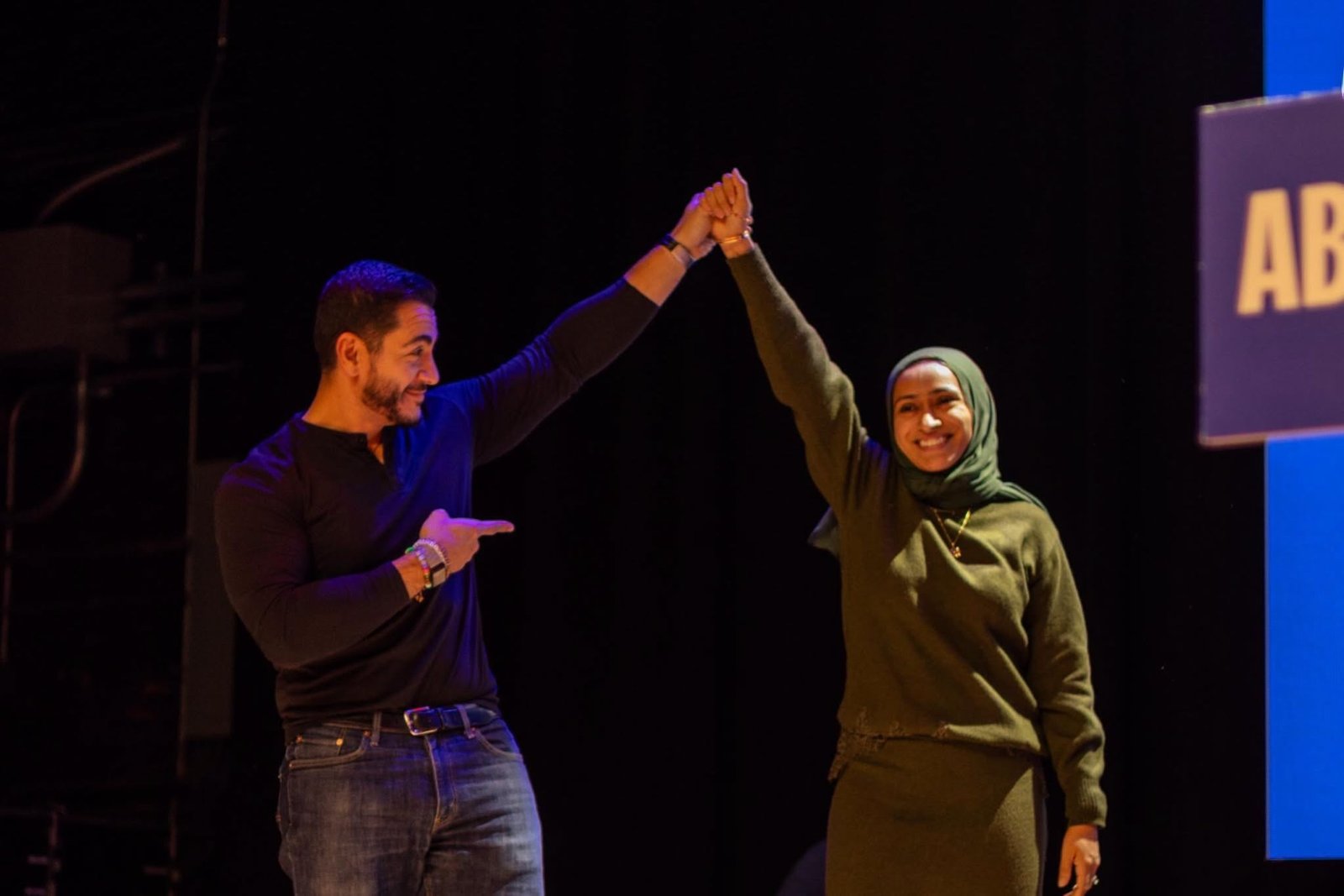
Democrat Abdul El-Sayed has won Michigan’s Senate race, becoming the first Muslim elected to the United States Senate, according to projections by major US news organisations.
El-Sayed defeated Republican Mike Rogers in a closely contested election. Fox News and Decision Desk HQ projected his victory in the early hours of Wednesday, November 4. CBS News, which had rated the contest a toss-up, also later projected El-Sayed as the winner.
Decision Desk HQ put El-Sayed at 51.89 per cent of the vote, with 77 per cent of ballots counted.
Addressing supporters in Michigan after the projections, El-Sayed declared, “Michigan, we did it!”
It is my honor and privilege to be headed to the US Senate to serve the great state of Michigan.
— Dr. Abdul El-Sayed (@AbdulElSayed) November 4, 2026
Michigan, we did what they said couldn’t be done. We won. Together. Now the real work begins. pic.twitter.com/ITgNRyUkNc
He said he was “so proud and honoured” to become senator-elect and thanked voters for supporting what he called “the unlikeliest of candidates”.
“You took a chance on the unlikeliest of candidates, so thank you,” he told the crowd. “This is all yours.”
El-Sayed also thanked people who had opened their churches, synagogues and homes to him during the campaign. Responding to attacks against him, he said his opponents “were targeting and attacking you”.
“They want an America that is too small for some of us,” he said. “We know that America is big enough for all of us.”
A bitter campaign marked by Islamophobic attacks
The Michigan contest was among the most closely watched and expensive Senate races of the 2026 election cycle.

Rogers, a former Republican congressman who lost Michigan’s other Senate seat to Democrat Elissa Slotkin in 2024, sought to portray El-Sayed as an extremist. He and his allies also attempted to link the Democrat to the Muslim Brotherhood, an allegation El-Sayed rejected.
El-Sayed faced criticism and attacks over his Muslim identity from Rogers, US President Donald Trump and Vice President JD Vance.
Trump repeatedly targeted his faith and mocked his Arabic name during the campaign. El-Sayed responded to the criticism during his victory speech, thanking voters who stood by him despite the attacks.
Two days before the election, Democratic Representative Haley Stevens, whom El-Sayed had defeated in the party’s August 4 primary, endorsed Rogers. The move drew criticism from Democratic leaders, and some of Stevens’ staff reportedly resigned.
El-Sayed’s campaign focused on universal healthcare, economic hardship and redirecting money spent on the Iran war and military aid to Israel towards domestic needs.
Who is Abdul El-Sayed?
The 42-year-old was born in Michigan to Egyptian immigrant parents. A physician by training, he previously served as Detroit’s health commissioner and headed the Wayne County health department.
He ran unsuccessfully for Michigan governor in 2018 and had not held elected office before his Senate victory.
El-Sayed’s campaign received support from prominent progressive figures, including Representative Alexandria Ocasio-Cortez. He built a grassroots campaign around healthcare access, economic inequality and reducing the influence of money in politics.
His wife, Sarah Jukaku, has family roots in Bhatkal, a coastal town in Karnataka. Her family is part of the Nawayath Muslim community, whose members have historical connections to trade and settlement along India’s western coast.
Her grandfather, Jukaku Shamsuddin, served as deputy finance minister in the Mysore government under Chief Minister BD Jatti in the 1950s. He was also a prominent lawyer and played a role in the development of Bhatkal.
Sarah’s father, Dr Jukaku S Tayeb, later moved to the Middle East before settling in Michigan in the 1980s.
Democrats take control of Congress
El-Sayed’s victory came as Democrats made major gains across the country in the 2026 midterm elections.
US networks projected that the party had won control of both the House of Representatives and the Senate, marking a significant setback for Trump and the Republicans.
Democrats also flipped seats in Ohio, Iowa, North Carolina, South Carolina and Maine. Texas and Kansas elected Democratic senators after decades of Republican victories. Texas had last elected a Democrat to the Senate in 1994, while the Kansas result ended a long period of conservative dominance.
According to Fox News data, young voters, independents, rural voters and Hispanic voters shifted away from Republicans in significant numbers. Inflation, Trump’s tariff policies and the war involving Iran were among the issues shaping voter dissatisfaction. CNN also reported that concerns about the President’s conduct and perceptions of personal enrichment influenced voters.
Trump told Fox News that he did not view the Republican losses as a setback for his presidency.
“We’ve had the greatest two years in the history of the presidency in terms of the economy, in terms of all the things that we’ve done,” he said.
He congratulated Democrats, saying, “They did a good job. They’ve been looking for this one for 11 years, and they finally got it.”