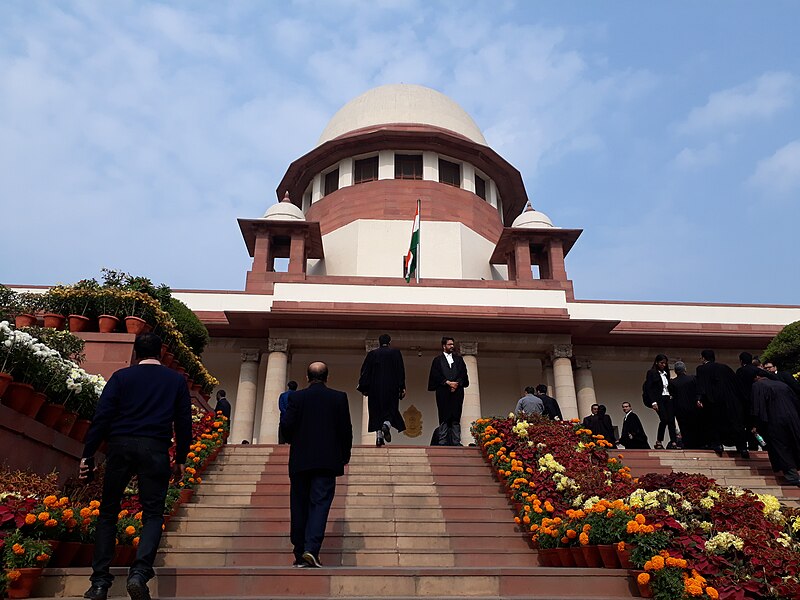
The Rajasthan High Court has dismissed appeals filed by eight accused in the 2022 murder of Udaipur tailor Kanhaiya Lal, upholding the charges framed against them by a special court of the National Investigation Agency (NIA).
A division bench of Chief Justice Sanjay K. Agrawal and Justice Sameer Jain upheld the special court’s orders dated January 12 and February 13, 2024, finding no grounds to interfere with the framing of charges.
The accused, Mohammad Riyaz Attari, Mohammad Ghouse, Mohsin Khan, Asif Hussain, Mohammad Mohsin, Wasim Ali, Mohammad Javed Khan and Muslim Khan, face charges under Sections 16, 18 and 20 of the Unlawful Activities (Prevention) Act (UAPA), along with provisions of the Indian Penal Code.
Court Says Conspiracy Can Be Established Through Circumstantial Evidence
The High Court observed that the absence of direct evidence or eyewitness testimony proving a conspiracy was not sufficient, by itself, to discharge an accused.
It said criminal conspiracy could be established through circumstantial evidence and that courts could consider the cumulative effect of the material on record while deciding whether charges should be framed.

The bench also clarified that courts are not required to conclusively determine an accused person’s guilt or innocence at the stage of framing charges. The evidence and credibility of witnesses would be examined independently during the trial.
The accused had challenged the charges on several grounds, including videos and online threats allegedly attributed to them. They also questioned the applicability of UAPA provisions, arguing that there was no direct evidence linking them to a banned terrorist organisation.
The High Court declined to interfere with the special court’s orders, allowing the trial against all eight accused to proceed.
Kanhaiya Lal Was Killed in Udaipur in 2022
Kanhaiya Lal, a tailor, was hacked to death inside his shop in Udaipur on June 28, 2022. The assailants also recorded a video of the killing, triggering widespread outrage.
The High Court’s ruling concerns the framing of charges and does not establish the guilt of the accused. That will be determined during the trial.