Congress leader Sonia Gandhi has recalled questioning her husband and then Prime Minister Rajiv Gandhi over his government’s handling of the Shah Bano case, asking why he was allowing newspapers to accuse him of sacrificing Muslim women’s interests.
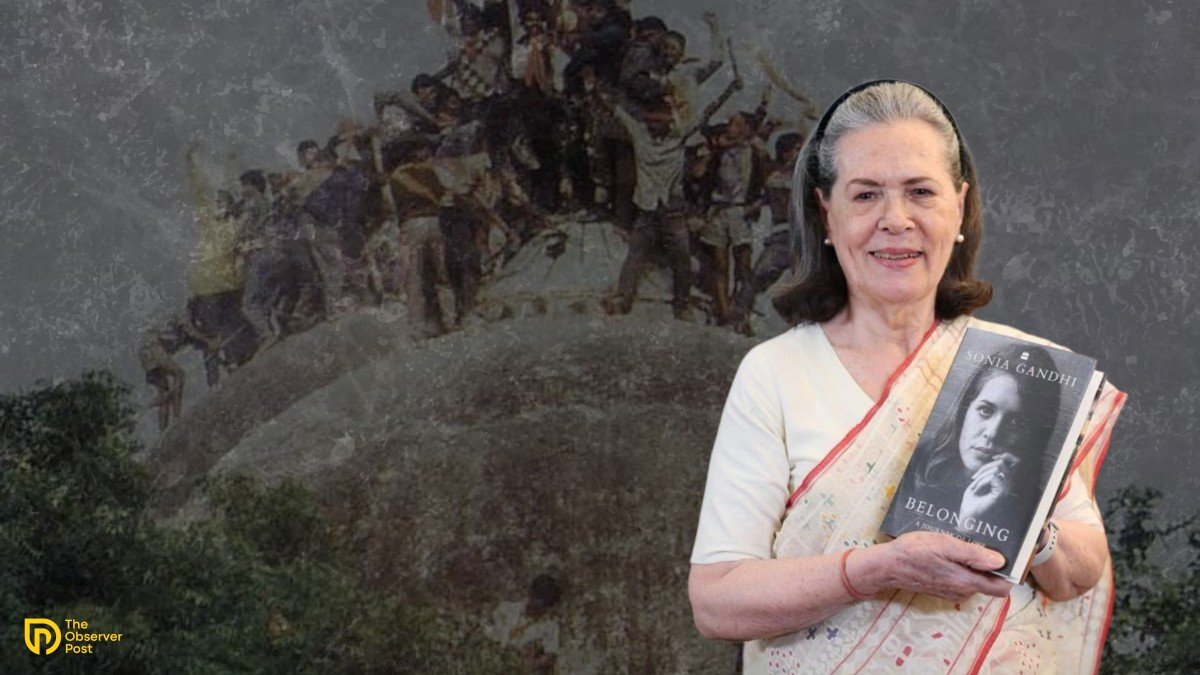
The conversation is recounted in Sonia Gandhi’s memoir, Belonging: A Journey of Love, which was released on Tuesday.
In the book, she says she was troubled by newspaper and magazine reports about the case and by the criticism that the government was failing to protect Shah Bano’s right to maintenance.
“I argued with him (Rajiv Gandhi) and questioned him: ‘The papers are accusing you of sacrificing Muslim women’s interests. What’s going on? Why are you letting this happen?’” she writes.
Rajiv Gandhi, she recalls, replied that he was trying to find a fair solution to a complicated issue. “Wouldn’t I defend women’s rights – don’t you know me?” he reportedly told her, explaining that he wanted to address Shah Bano’s case without putting the entire framework of Muslim Personal Law at risk.
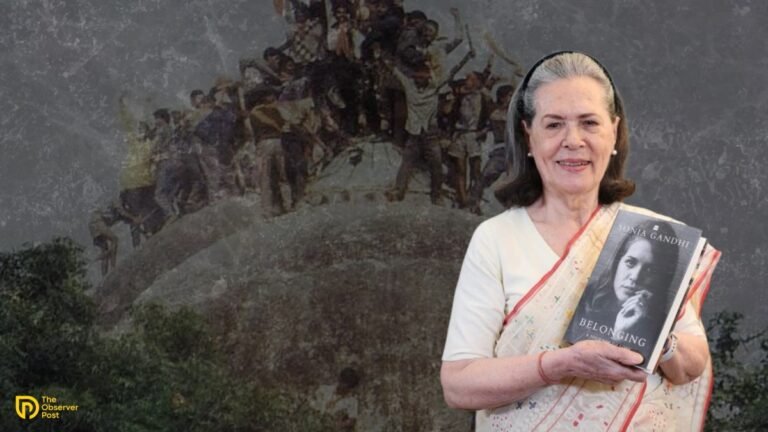
Sonia Gandhi revisits the Shah Bano case
Shah Bano, a divorced Muslim woman, had approached the court seeking maintenance from her former husband, who had remarried and turned her out of their home. In 1985, the Supreme Court ruled in her favour and ordered her husband to provide maintenance.
The judgment triggered a debate over women’s rights, religious personal laws and the constitutional guarantee of freedom of religion.
Sonia Gandhi writes that several women’s rights activists, including Muslim women, had publicly supported Shah Bano’s claim to maintenance. She says the issue brought the principle of equal laws for all citizens into conflict with protections for religious personal laws.
She argues that the compromise accepted by Rajiv Gandhi sought to balance religious beliefs with gender justice and offered Muslim women a fairer arrangement than the monthly maintenance of Rs 179.20 awarded to Shah Bano by the court.
However, she acknowledges that the 1986 Muslim Women (Protection of Rights on Divorce) Act, which followed the judgment, was a political decision that attracted widespread criticism. The BJP accused the government of vote-bank politics, while progressive and liberal voices viewed it as a concession to conservative sections of Muslim society.
Memoir discusses Babri Masjid demolition
Sonia Gandhi also revisits the Ram Janmabhoomi movement and the events that preceded the demolition of the Babri Masjid in Ayodhya in December 1992.
She describes the mosque as the centre of a long-running dispute between Hindus and Muslims and traces the movement for a Ram temple to the campaign launched by the BJP and the Vishwa Hindu Parishad in the 1980s.
According to her account, communal clashes intensified as processions passed through Muslim-majority areas, with provocative slogans and violence deepening divisions between communities.
She also recalls the February 1986 court order to unlock the gates of the mosque, allowing worshippers to enter. Sonia Gandhi writes that the decision reignited the dispute and gave the BJP a political issue it had long sought.
She says Rajiv Gandhi wanted a negotiated settlement that would allow a temple to be built without disturbing the mosque. However, she accuses the BJP and RSS of seeking the mosque’s destruction.
The memoir also describes the 1989 shilanyas ceremony. Sonia Gandhi says the VHP and BJP had given an undertaking to then Uttar Pradesh Chief Minister N D Tiwari and Union Home Minister Buta Singh that the ceremony would take place on an adjacent site outside the disputed area. She alleges that the ceremony was instead held at a different location, paving the way for further conflict.
The Babri Masjid was demolished by a crowd of Hindu activists on December 6, 1992.
Sonia Gandhi writes that Rajiv Gandhi’s vision of a Ram Rajya based on the ideals of virtue, morality and justice was overshadowed by the politics of the Ram Janmabhoomi movement. She argues that the events surrounding the dispute had lasting consequences for India’s social fabric.
The memoir also criticises the RSS’s vision of a Hindu nation, arguing that it threatens the constitutional principles of equality, pluralism and secularism and risks relegating religious minorities to second-class citizenship.