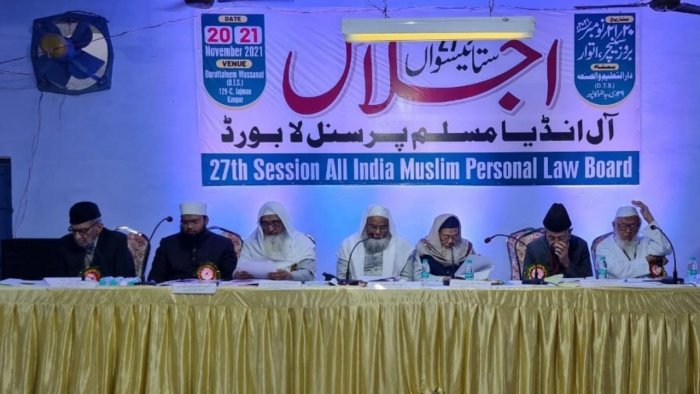
The All India Muslim Personal Law Board (AIMPLB) on Thursday strongly opposed the Union Cabinet’s decision to grant ‘Vande Mataram’ the same legal protection as the national anthem ‘Jana Gana Mana’.
The Board called the move unconstitutional and alleged that it violates religious freedom and the secular principles of the Indian Constitution.
The Union Cabinet recently approved amendments to the Prevention of Insults to National Honour Act, 1971, making any obstruction to the singing of ‘Vande Mataram’ a punishable offence. The proposed amendment would give the national song the same statutory protection currently enjoyed by the national anthem.
AIMPLB Says Decision Violates Constitutional Rights
In a statement, AIMPLB said the move was “a direct violation of the basic spirit of the Constitution of India, religious freedom, secular values, and the historic decisions of the Constituent Assembly.”
The Board also objected to reports that all six stanzas of ‘Vande Mataram’ could be made compulsory and recited before the national anthem in government offices and educational institutions.

AIMPLB spokesperson S Q R Ilyas said, “This decision is not only unconstitutional and undemocratic, but also against the religious and cultural diversity and constitutional ethos of the country.”
He added, “A secular state cannot impose the religious concepts or beliefs of one community upon all citizens by force.”
Objection to Religious References in ‘Vande Mataram’
The AIMPLB argued that several stanzas of the song contain references to Goddess Durga and other Hindu deities, which it said conflict with Islamic beliefs regarding the oneness of God.
“Several stanzas of ‘Vande Mataram’ contain invocations and glorification of Goddess Durga and other deities, which are in direct conflict with Islamic doctrine,” Ilyas said.
He also referred to a 1937 Congress decision, reportedly taken after advice from Rabindranath Tagore, limiting official use of the song to its first two stanzas because later verses were considered religious in nature.
“Making all six stanzas compulsory is not only a departure from historical consensus but also a dangerous and provocative step,” he said.
The Board urged the government to avoid using sensitive religious issues for political purposes.
“The government must refrain from exploiting sensitive religious issues for political purposes and avoid decisions that undermine communal harmony and national cohesion,” Ilyas said.
AIMPLB Raises Concerns Over Uttarakhand Madrasa Bill
Alongside the controversy over ‘Vande Mataram’, several Muslim organisations also expressed concern over a proposed madrasa-related law in Uttarakhand.
In a joint statement, prominent Muslim leaders said the bill, which reportedly makes registration with a government educational board mandatory for madrasas, threatens the constitutional autonomy of religious institutions.

The statement said, “The Constitution of India guarantees religious freedom under Articles 25 and 26, while Article 30 grants minorities the right to establish and administer their own educational institutions.”
The organisations argued that madrasas have historically contributed to India’s freedom movement and social development and should not face excessive state control.
Muslim Leaders Call Law “Against Secular Principles”
The statement alleged that the proposed law would allow government authorities to decide what religious content can be taught in madrasas and prescribe their curriculum.
“We believe this law is in clear violation of the guarantees and Fundamental Rights enshrined in the Constitution,” the statement said.
“It is also contrary to the expectations from a secular state,” it added.

The organisations said legal challenges regarding the matter are already pending before the Uttarakhand High Court and may later be taken to the Supreme Court if necessary.
Several Muslim Organisations Back Opposition
The joint statement was signed by several prominent Muslim leaders and organisations, including AIMPLB president Maulana Khalid Saifullah Rahmani, Jamiat Ulama-i-Hind leaders Maulana Arshad Madani and Maulana Mahmood Asad Madani, Jamaat-e-Islami Hind chief Syed Sadatullah Husaini, and others.
The groups said protecting the constitutional rights and autonomy of madrasas is a collective responsibility of the Muslim community.