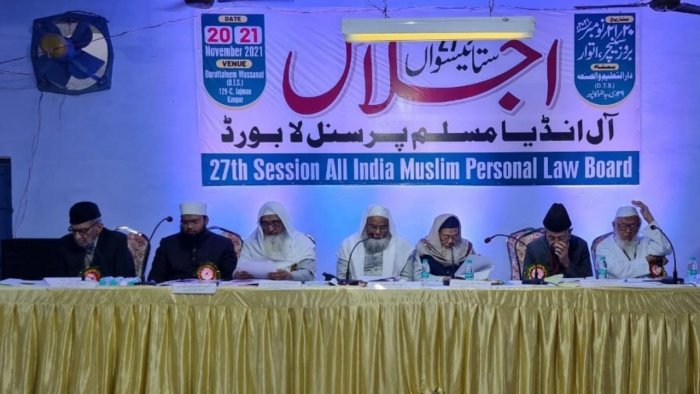
The All India Muslim Personal Law Board (AIMPLB) on Monday strongly opposed the Uttarakhand government’s proposed madrasa regulation law, saying it violates the constitutional rights of religious minorities and interferes with their autonomy.
In a detailed statement, the Board said that the Constitution guarantees freedom of religion and gives minorities the right to run their own educational institutions. It argued that any attempt to control how madrasas function goes against these protections.
“Violation of Fundamental Rights,” Says AIMPLB
The Board said the proposed law, which makes it mandatory for madrasas to register with a government board and follow a prescribed curriculum, is unconstitutional.
“There is no doubt that in our country, madrasas are among the most important institutions for preserving religious values,” the statement said. “The Constitution has recognised these rights as fundamental rights, and protecting them is our collective responsibility.”
It added that allowing a government body to decide what religious content can be taught in madrasas amounts to direct interference in religious matters.
Concern Over Government Control
The AIMPLB expressed concern over provisions that would allow authorities to regulate both administration and curriculum of madrasas.
“Making registration compulsory and allowing the state to decide what should be taught is a clear violation of constitutional guarantees,” the statement said. “It is also against the spirit of a secular country.”
The Board further claimed that such measures could weaken the identity and independence of Islamic seminaries.
Allegation of Targeting Minority Institutions
The statement also accused those in power of attempting to undermine minority institutions through such policies.
“It is deeply regrettable that certain elements, driven by divisive politics, are trying to deprive Muslims and other minorities of their religious identity,” it said. “This appears to be part of a larger pattern aimed at weakening madrasas.”
The AIMPLB said that madrasas have historically contributed to the country’s development and continue to provide education, especially to underprivileged sections.
Legal Challenge Likely
The Board said that the matter is already under consideration in the Uttarakhand High Court and hinted that it may approach the Supreme Court if required.
“Some cases related to this issue are already pending before the High Court,” the statement noted. “If necessary, we will also move the Supreme Court to protect our constitutional rights.”
It also assured full support to madrasa institutions and urged the community to stand united against what it described as an unjust law.
Call for Collective Action
The AIMPLB called on Muslim organisations and the wider community to oppose the proposed legislation and defend the autonomy of madrasas.
“Opposing this law and preserving constitutionally guaranteed rights is the responsibility of the entire Muslim community,” it said. “All representative organisations stand with the madrasas and will extend full support.”
The statement was endorsed by several prominent Muslim leaders and organisations, reflecting a broad consensus within the community on the issue.