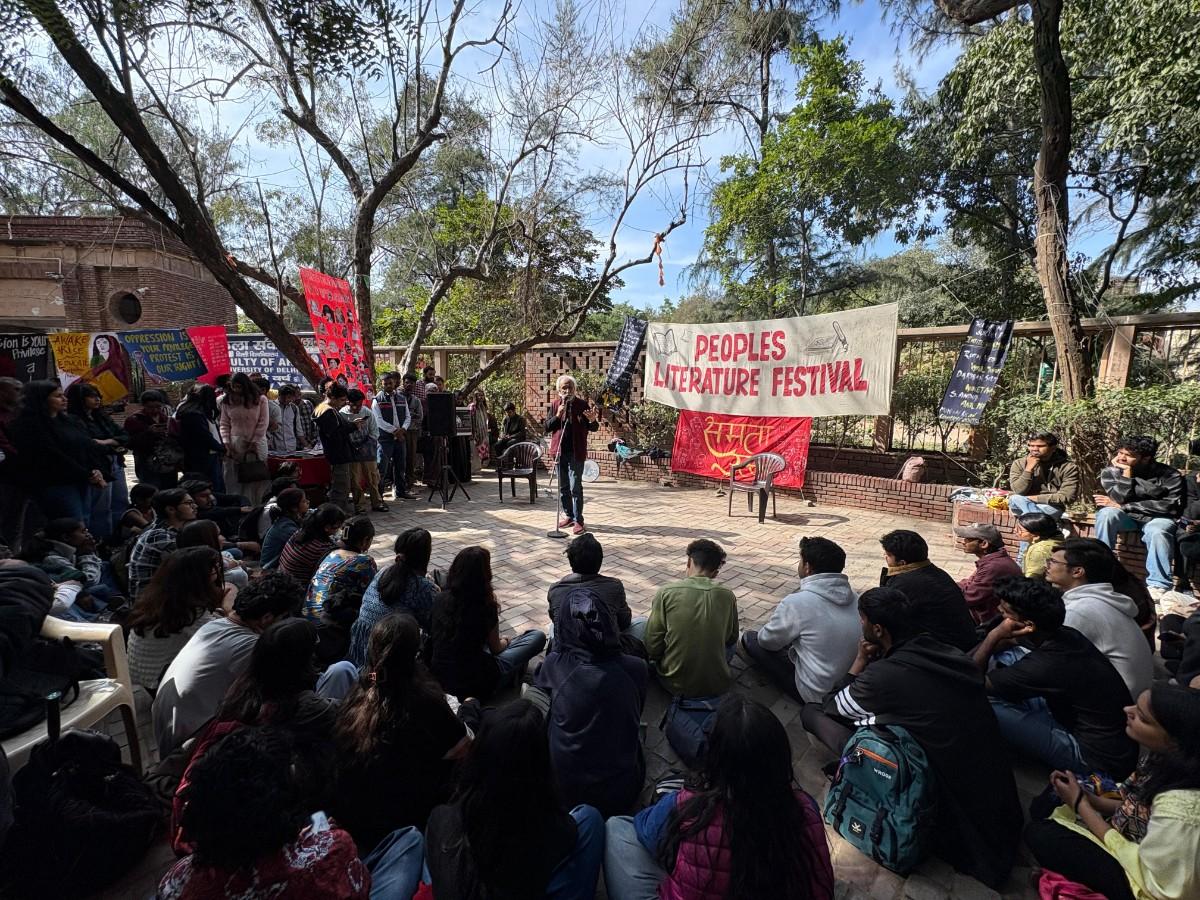
Hundreds of students gathered at the Arts Faculty of Delhi University on February 12 for the People’s Literature Festival titled Samta Utsav, organised by the All India Students Association. The student body said the event was held as an inclusive alternative to the university’s official Literature Festival, which it alleged promotes regressive and communal ideas.
According to AISA, the programme faced disruption attempts by members of the Akhil Bharatiya Vidyarthi Parishad, but the event continued and concluded successfully. The organisation claimed that despite what it described as a violent attempt to sabotage the festival, students remained united in their demand for the implementation of the UGC Equity Regulations 2026, often referred to by activists as the Rohith Act.
The festival began with a session on caste in society and the university. Historian S Irfan Habib addressed the gathering and spoke about what he called efforts to distort India’s history.
“There is a systematic attempt to rewrite India’s past and erase its composite heritage. Universities must challenge these distortions instead of surrendering to intimidation,” he said.
Literary critic Professor Hemlata Mahishwar spoke about the marginalisation of Dalit voices in academia. “Caste atrocities are not only physical but also academic and institutional. The literature of the oppressed must move from the margins to the centre,” she said.

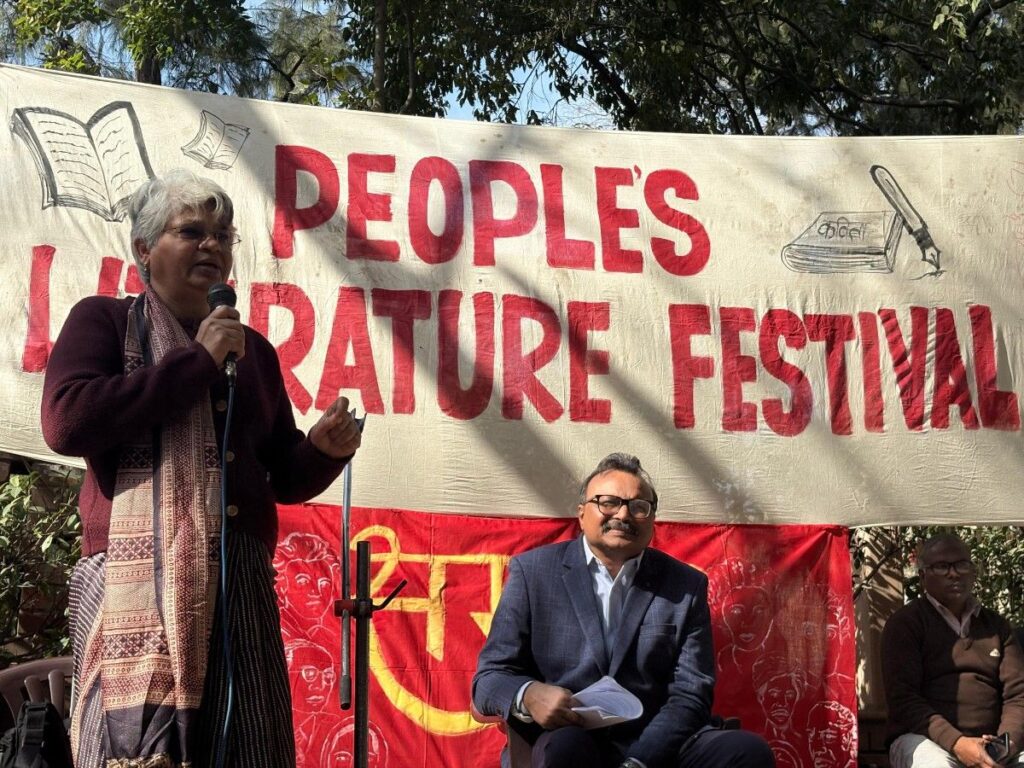
In another session focused on anti caste poetry and songs, Professor Keshav Kumar from the Department of Philosophy recited poems from his newly released anti caste collection, while Professor Uma Gupta read verses highlighting everyday caste violence. Professor Shivam led students in revolutionary songs during the cultural segment.
During the concluding session, Dr Jitendra Meena spoke about what he termed “institutional murders” in Indian higher education. “The violence witnessed today reflects the deeper structural exclusion faced by marginalised students. Students must not just demand admission but demand equity. The implementation of the Rohith Act is necessary to prevent universities from becoming graveyards of dreams,” he said.
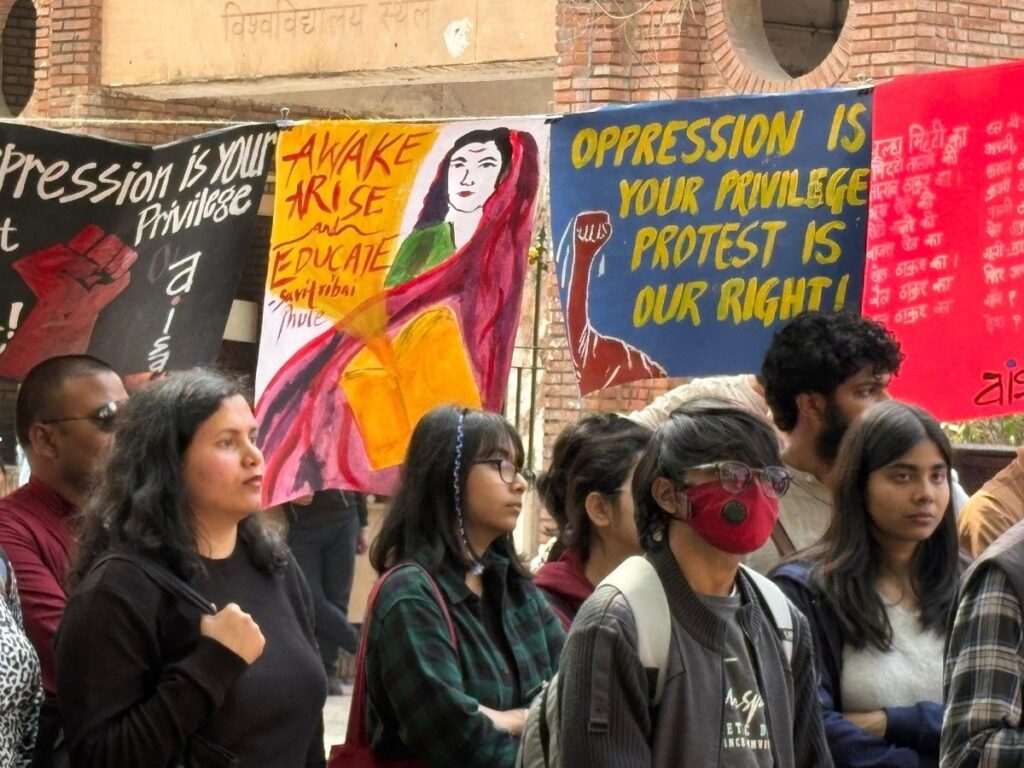
Anjali, Secretary of AISA Delhi University, described the festival as a victory for campus democracy. “The turnout shows that the spirit of social justice is alive at Delhi University. Despite attempts to intimidate us, we stood firm. We will continue our struggle until the UGC Equity Regulations 2026 become a reality and no more students like Rohith or Payal are lost due to institutional neglect,” she said.
AISA reiterated its commitment to intensifying its campaign for social justice and equity within campuses and society, as debates over caste discrimination and university policies continue across the country.