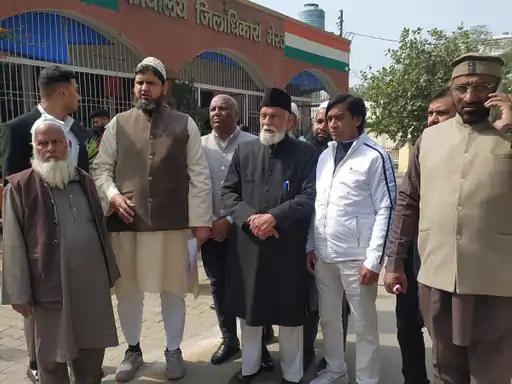
Ahead of the holy month of Ramadan, members of the Muslim community in Uttar Pradesh’s Meerut have appealed to the district administration to allow night-time markets, ensure uninterrupted civic services, and avoid removing loudspeakers from mosques in Muslim-populated areas.
A delegation led by Meerut city’s Naib Qazi, Zainul Rashiduddin, met District Magistrate Dr V K Singh to raise these demands. They requested permission for shops, hotels and tea stalls to remain open at night during Ramadan, which is expected to begin on February 18 or 19, depending on the moon sighting.
During the meeting, the delegation also sought uninterrupted electricity and water supply throughout the month to support prayers, fasting and daily religious activities. “Ramadan is a month of worship, fasting and community gatherings. Night-time markets and smooth supply of water and electricity are essential for the convenience of people,” Zainul Rashiduddin said.
Speaking to the media, the Naib Qazi raised concerns about loudspeakers installed at mosques. He said that in Muslim localities, loudspeakers are sometimes removed by the police, which creates problems during sehri and iftar. “Without loudspeakers, it becomes difficult to inform people about sehri and iftar timings,” he said, urging the administration not to remove them during Ramadan.
However, District Magistrate Dr V K Singh said there was no special discussion on loudspeakers. “The existing system will continue. Any action will be taken strictly as per rules and regulations,” he said, adding that all arrangements would be made in line with law and order and administrative guidelines.
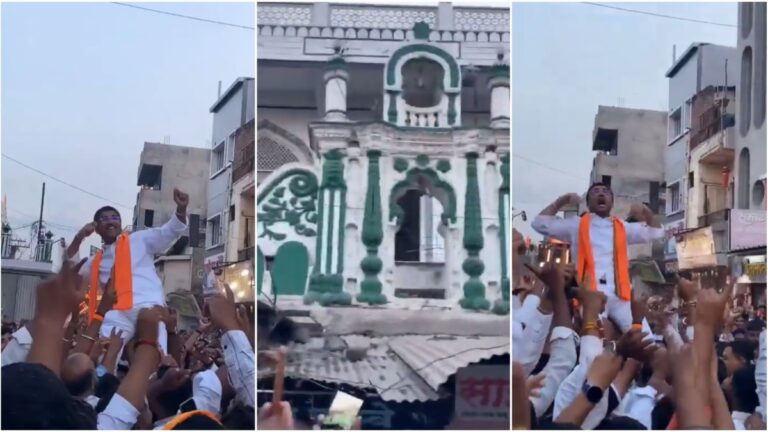
Separately, Mufti Mohammad Junaid Qasmi of Jamiat Ulama-e-Hind also met the District Magistrate and demanded special arrangements in Muslim-dominated areas during Ramadan. He sought uninterrupted power and water supply, enhanced cleanliness, and better civic management.
Mufti Qasmi also requested permission for night-time shops during Ramadan and raised the issue of loudspeakers at mosques. He urged the administration to make traffic arrangements to prevent congestion during iftar hours at busy intersections such as Bhumiya Ka Pul, Kanch Ka Pul, Lisadi Gate Chowpla, Gola Kuan and Hapur Adda.
Highlighting the role of Jamiat Ulama-e-Hind, Mufti Qasmi said the organisation, founded in 1919, has played a key role in India’s freedom struggle and continues to work for the protection of religious, social and civil rights of minorities within the framework of the Constitution.
In a detailed memorandum, community representatives also demanded special cleanliness drives near mosques, repair of streetlights, especially around Shahi Jama Masjid, and deployment of additional police personnel at major mosques during night prayers. They requested that power cuts be avoided between evening prayers and late-night hours, and again before dawn during sehri time.
Residents said these measures are necessary to ensure a peaceful and dignified observance of Ramadan. “We are only asking for basic facilities and cooperation so that people can pray and observe fasts without difficulty,” a community member said.