




















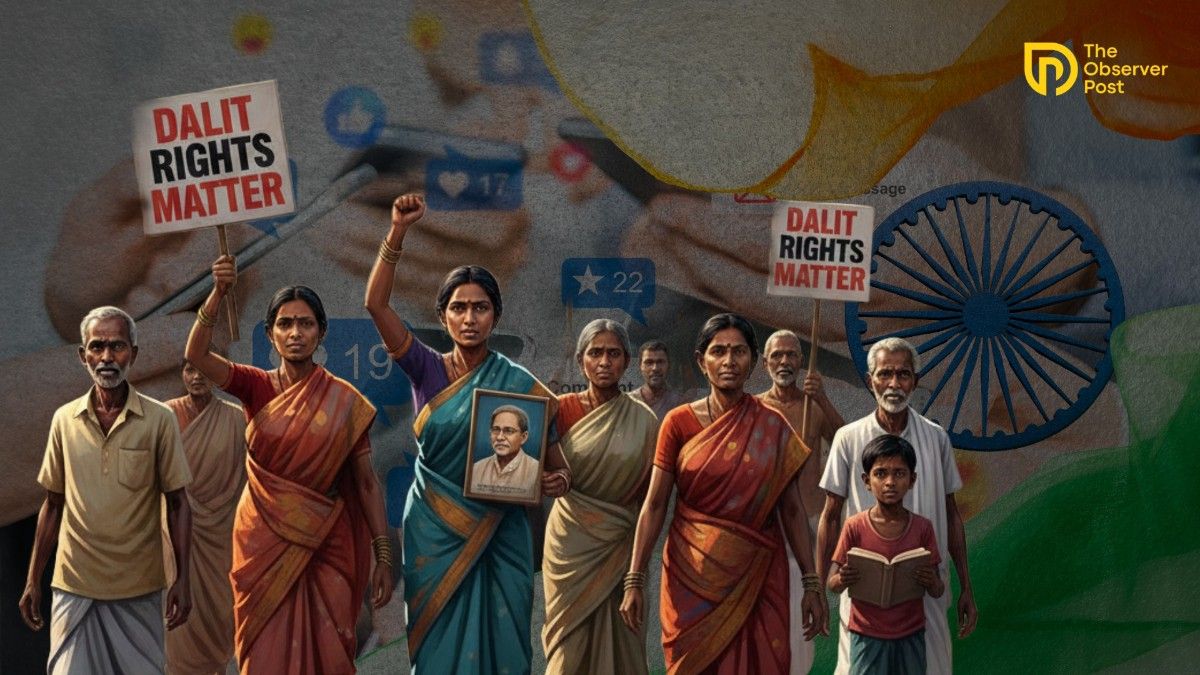
A new study by the University of Bath School of Management reveals that social media, often celebrated as a tool for giving everyone a voice, can actually reinforce inequality and deepen the marginalisation of communities such as Dalits in India.
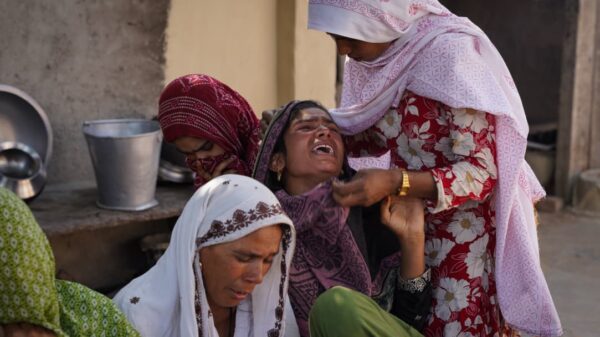
Dalits, formerly called “untouchables” and legally recognised as Scheduled Castes, make up over 200 million of India’s 1.47 billion population. Historically subjected to social and economic oppression, Dalits were confined to tasks considered “polluting,” including leatherwork and animal slaughter. Despite progress in employment across public services, banking, railways, and private industries, discrimination and violence remain widespread.
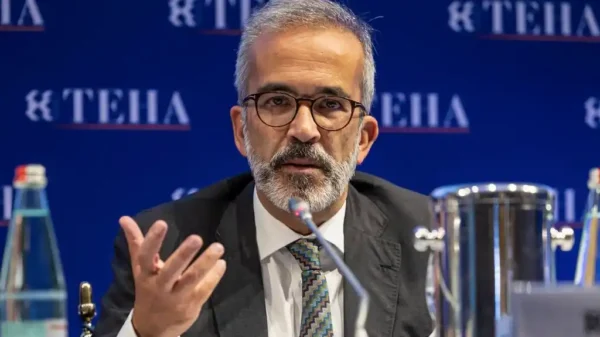
“Progress is painfully slow. Discrimination and violence against Dalits continue, and while the Dalit middle class is growing, social media has unfortunately amplified these problems instead of reducing them,” said Dr Pardeep Attri, lead researcher of the study.
How Social Media Excludes Dalits
The research, titled “You Belong to Gutters, Not Facebook or Twitter: Recovering Dalit Histories from the Shadows of Social Media”, highlights how online platforms shape, restrict, and sometimes erase the experiences of marginalized communities. The study identifies three major ways Dalits face exclusion online: being unseen, unheard, and unspoken.
Dalit histories and contributions are often invisible due to biased algorithms. Platform reporting systems frequently fail to protect them from harassment, leaving many unable to raise concerns meaningfully. Constant trolling, abuse, and discrimination force several users into silence or withdrawal.
Dr Attri explained, “There is an urgent need for moderators who understand the Dalit community and can address trolling effectively. Much of mainstream media and online moderation comes from dominant caste perspectives, which worsens the exclusion.”
Digital Visibility Brings Risks
The study found that simply being visible online does not guarantee empowerment. On the contrary, a higher online presence often exposes Dalits to greater harassment and attempts to discredit or erase their narratives. Many users feel they have little control over how their histories and contributions are represented.
“Economic barriers also limit participation. Many Dalits cannot afford devices or internet access, further restricting their online engagement,” Dr Attri added.
Despite these challenges, Dalits are building resistance. They are creating alternative archives, forming supportive online communities, and using digital activism, such as hashtags like #DalitLivesMatter, to reclaim their history and counter misinformation.
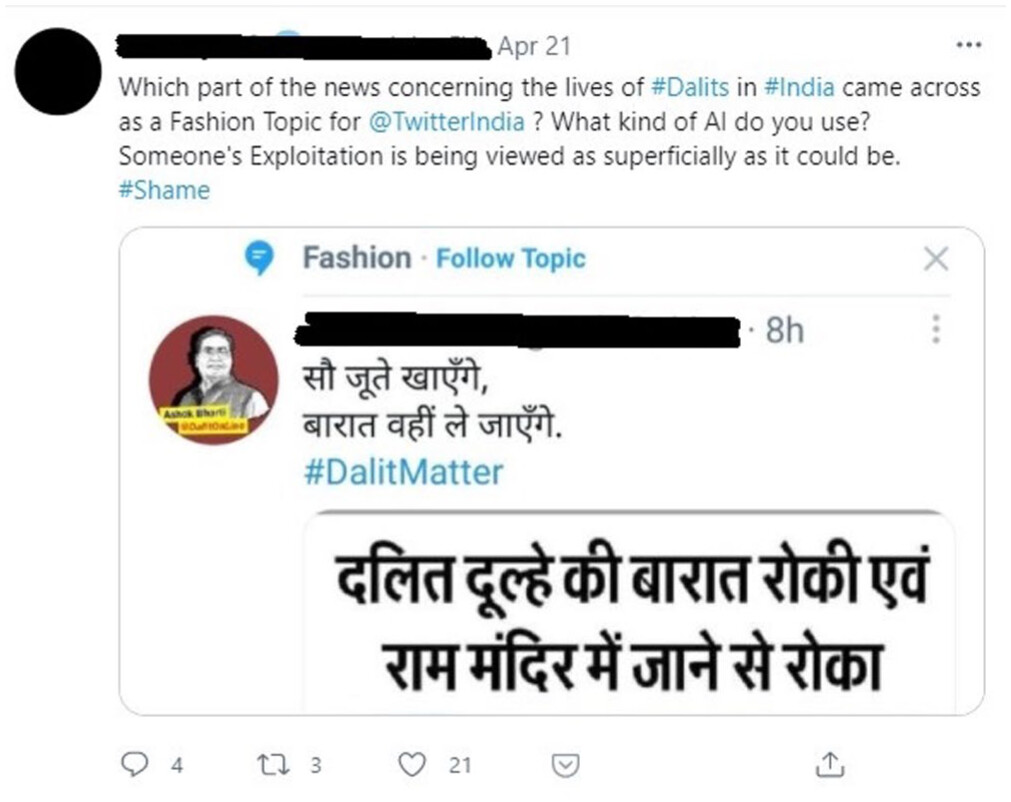
“But this effort risks reinforcing exclusion,” Dr Attri warned. “Social media platforms and policymakers must act to address caste-based discrimination with clearer policies, effective moderation, and technology that reduces harmful content without silencing marginalized voices.”
Subtle and Online Harassment
The research details how hashtags like #AmbedkarJayanti are hijacked by trolls promoting Hindutva ideology, which distorts Ambedkar’s legacy and offends Dalits. Suman, a study participant, said, “[Dominant caste members] quickly take over discussions and shift the narrative, leaving us invisible.”
Caste discrimination online is often subtle, with trolls using coded language, abbreviations, or “Hinglish” to bypass detection. Terms like “Bhimte” mock followers of Dr B.R. Ambedkar, while slurs such as “Bhangi” and “hijde” target Dalit women and gender-nonconforming individuals, reflecting intersectional oppression. Many posts, including sexualized abuse, remain unmoderated, reinforcing feelings of invisibility and exclusion.
Social media narratives also reduce Dalits’ lived experiences to stereotypes, glorifying broom work as cultural pride while ignoring its historical link to caste-based oppression. Dalit perspectives are often labeled “unverified” or divisive, unlike those of dominant caste users, and their stories are frequently dismissed as exaggerated or agenda-driven.
The Need for Structural Change
The researchers emphasise that online platforms must do more than provide visibility. They should ensure that marginalized communities can speak, be heard, and shape their histories online without fear of harassment or erasure.
The study team includes Dr Pardeep Attri, Professors Sarah Glozer and Vivek Soundararajan from the University of Bath, and Dr Ramya Sakthivel from Jönköping University, Sweden.
“Reducing inequality is not just about participation; it’s about giving all communities control over their narratives and protecting them from abuse,” Dr Attri concluded.
Table of Contents