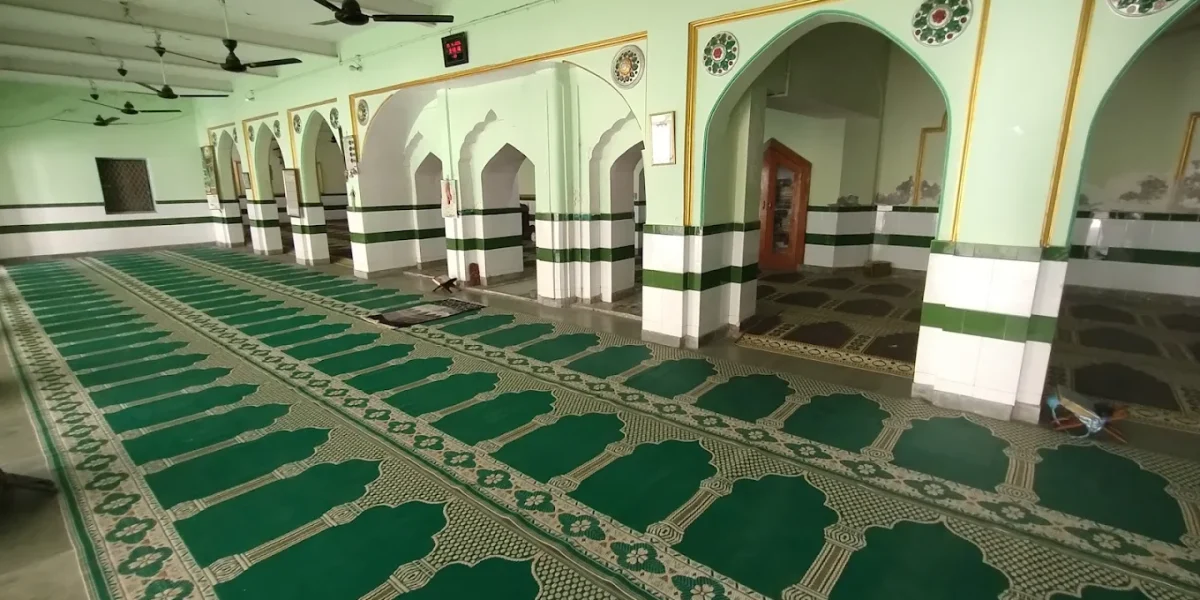
The Delhi High Court on Tuesday, October 27, sought the Union government’s response to a petition seeking protection of the Race Course mosque, located within the Jaipur Polo Ground premises, from demolition and restoration of access for worshippers.
Justice Anish Dayal issued notice on a petition filed by Syed Ahmed Saud and asked the Centre’s counsel to return with instructions on Thursday, October 29.
Govt Says No Demolition of Mosque Planned for Now
The government’s standing counsel, Ashish Dixit, told the court that the premises contain both a mosque and a temple and that no demolition action was being taken against the mosque at present.
Dixit said electricity and water supplies to the mosque had earlier been discontinued to prevent any risk to the public during the demolition of other structures on the premises.
He said the mosque is located on the same land parcel as three jhuggi clusters near the Prime Minister’s residence: Bhai Ram Camp, Masjid Camp and DID Colony. The Delhi High Court and Supreme Court had earlier cleared the demolition of these settlements.
The Delhi Waqf Board’s counsel informed the court that the board had submitted a representation to the Land and Development Office and other authorities regarding the matter. Dixit said the authorities would consider the representations submitted by the board and the petitioner.
Petitioner Seeks Access for Worshippers
Advocate M Sufian Siddiqui, appearing for the petitioner, urged the court to allow worshippers to access the mosque while the matter remained pending.
When the court questioned how the mosque could be protected amid wider demolition activity in the area, Siddiqui argued that the structure was a Grade II protected heritage building. He said any change affecting its existence required approval from the Heritage and Conservation Committee.
The petitioner also submitted that the mosque had been a notified Waqf property since 1977, alleging that the Delhi Waqf Board had failed to ensure continued access to it.
According to the petition, authorities had prohibited the petitioner from offering namaz without issuing any notice or order. The plea argued that the restriction violated Articles 14 and 25 of the Constitution, which guarantee equality before the law and freedom of religion, respectively.
The petitioner further contended that the mosque was not part of the litigation concerning the demolition of the three jhuggi clusters.
Plea Raises Concerns Over Heritage Protection
The petition stated that on October 21, the petitioner and his friends visited the mosque to offer namaz but were denied entry by security personnel stationed at newly installed iron gates at the entrance to the Race Course compound.
It argued that the restrictions on access, along with the threat of demolition, required examination in light of the mosque’s alleged statutory heritage protection.
The plea also maintained that even if restrictions on access did not automatically amount to a change in the religious character of a site, authorities could not ignore the mosque’s historical religious identity when taking decisions that could permanently affect its existence.
The Centre had defended the removal of the nearby settlements on the grounds that they were located in a protected zone adjacent to an operational Air Force station. It said the action was intended to protect defence infrastructure and address other public and security concerns.
The Centre took over Jaipur Polo Ground in June and the adjoining Delhi Race Club in August. The High Court is expected to take up the mosque protection plea again on Thursday, October 29.