The Government of Gujarat has allocated ₹60 crore to establish new bio-CNG plants through cooperative milk production societies, according to an official statement. The initiative, led by Chief Minister Bhupendra Patel, aims to transform the dairy sector into a hub for clean energy production while strengthening the rural economy.
The project is aligned with the broader vision of Prime Minister Narendra Modi, particularly initiatives such as ‘Waste to Wealth’ and Aatmanirbhar Bharat, which focus on sustainability and economic self-reliance.
Plan to Set Up Bio-CNG Plants Across the State
As part of a phased plan, the state government intends to establish around ten bio-CNG plants. These plants will convert organic waste such as cow dung, agricultural residue, and food waste into purified compressed biogas that can be used as fuel for transportation and industrial purposes.
Officials stated that this initiative is expected to position Gujarat as a leader in integrating clean energy solutions with traditional sectors like dairy, thereby creating a model that can be replicated across the country.
Banas Model Gains National Attention
A key inspiration for this initiative is the success of the Banas bio-CNG plant in Banaskantha district, developed by Banas Dairy. The model has gained national attention and is now being adopted by nearly 15 states with support from the Union Ministries of Jal Shakti and Cooperation.

The Banas plant has been operational for the past six years and processes around 40 metric tonnes of cow dung daily. It converts organic waste into clean fuel and organic fertilisers, thereby contributing to both environmental sustainability and rural income generation.
Expansion and Investment in New Plants
Building on this success, work is underway to establish five large bio-CNG plants in Banaskantha district, with two already operational and a third nearing completion. Each plant is designed to process approximately 100 metric tonnes of dung per day and is built at an estimated cost of ₹50 to ₹55 crore.
These facilities demonstrate how modern technology can be integrated with rural practices to simultaneously promote ecological conservation, enhance farmer incomes, and support industrial growth.
Income Boost for Rural Households
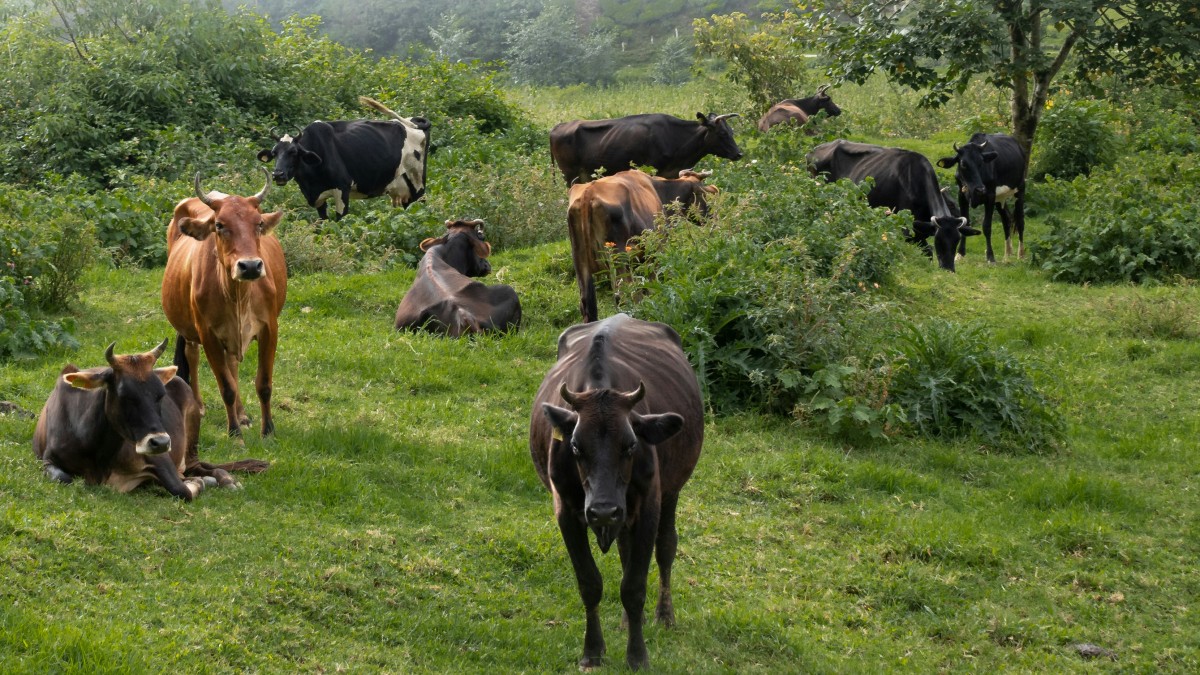
The bio-CNG model is also generating additional income for farmers in nearby villages. Families from around 20 to 25 villages within a 20-kilometre radius supply cow dung to the plants and are paid ₹1 per kilogram. This benefits nearly 400 to 450 animal husbandry families.
The system also creates local employment, with around 13 tractor-trolleys used for transporting dung to the plants, boosting economic activity in rural areas.

Multiple Revenue Streams and Environmental Benefits
Each plant operates on a diversified revenue model, producing compressed biogas as well as solid and liquid organic fertilisers. Approximately 1,800 kilograms of bio-CNG is produced daily and sold at around ₹75 per kilogram. In addition, about 25 metric tonnes of solid fertiliser and 75 metric tonnes of liquid fertiliser are generated and sold at competitive rates.
Together, these outputs generate a daily revenue exceeding ₹3 lakh, which can amount to nearly ₹12 crore annually. The model also contributes significantly to environmental sustainability, with the potential to reduce around 6,750 tonnes of carbon dioxide equivalent emissions each year.