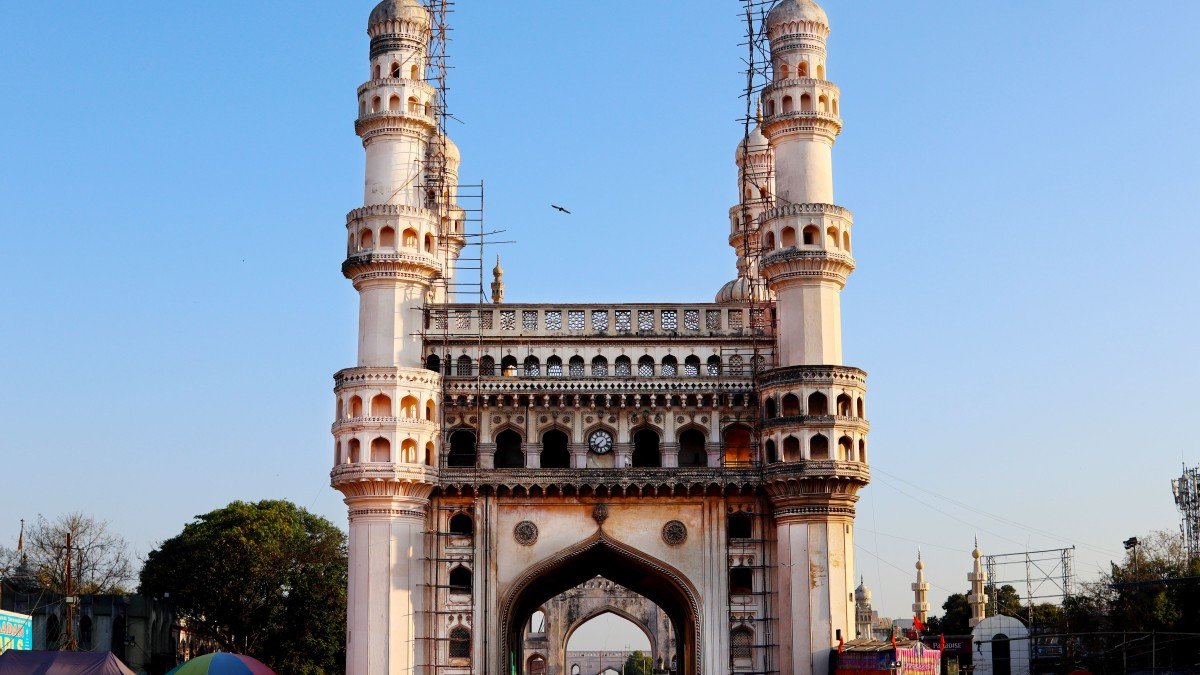
Nearly 89% of voters listed in Hyderabad’s January 2023 electoral rolls were excluded from the draft voters’ list following the Special Intensive Revision (SIR), according to a preliminary study by the SABAR Institute.
The study examined electoral data across 15 Assembly constituencies in Hyderabad and found that 19.41 lakh names had been deleted from the January 2023 rolls. The deletions amounted to 46.1% of the 2023 electoral roll and were higher than the winning margin in every constituency, the researchers said.
The analysis was conducted by Sabir Ahamed, Souptik Halder and Ashin Chakraborty.
92% of Deleted Voters Still Alive
The study found that 92% of the deleted voters were still alive.
According to the report, 69.3% of deleted voters were marked as having permanently shifted residence, while 17.7% were recorded as “untraceable” or “absent”.
More than 500 voters were removed on average from each polling booth in Hyderabad. Booth 297 in the Yakutpura Assembly constituency recorded the highest number of deletions, with 1,069 voters removed.
“Eight of Hyderabad’s 10 worst booths are in Yakutpura,” the report said.
The deletions in two constituencies, Malakpet and Yakutpura, were higher than the number of votes polled there in the 2023 Assembly elections. The SABAR Institute said the deletions were equivalent to 112% of votes polled in Malakpet and 110% in Yakutpura.
Both constituencies are represented by the All India Majlis-e-Ittehadul Muslimeen (AIMIM).
Muslims Account for 40.7% of Deletions
The study found that voters with Muslim names accounted for 40.7% of the total deletions across the 15 constituencies.
The share varied sharply between constituencies, from 12.1% in Secunderabad Cantonment to 85.9% in Bahadurpura.
However, the researchers cautioned that the study cannot establish whether Muslim voters were deleted at a higher rate than other groups, as religion-wise electoral data is not available from the Election Commission at the constituency level.
The researchers said religion was identified from voters’ names for the purpose of their analysis and was not obtained from Election Commission records.
Among Muslim voters who were deleted, 63.8% were recorded as having permanently shifted, compared with 73% among non-Muslims.
At the same time, 19.8% of Muslim deletions were marked “untraceable/absent”, compared with 16% among non-Muslim voters.

Over 9 Lakh Women Deleted
The study also found that 9.28 lakh women voters were deleted from the Hyderabad rolls.
Women accounted for 47.8% of all deletions, compared with 48.5% of the January 2023 electoral roll.
Yakutpura’s Booth 297 alone saw 535 women removed, of whom 527 were found to be alive, according to the study.
The researchers said the overall gender distribution of deletions was broadly proportional to the existing electoral roll, although women were over-represented among deletions in three constituencies.
Telangana Sees 73 Lakh Deletions
The Hyderabad findings come amid the wider SIR exercise in Telangana.
According to reports, 73.39 lakh names, or 21.70% of the state’s electorate, were deleted from Telangana’s draft electoral rolls published after the revision. Telangana had around 3.38 crore voters when the SIR began on June 25.
The deleted names reportedly included 9.22 lakh voters marked deceased, 11.25 lakh marked absent, 45.18 lakh recorded as permanently shifted and 6.70 lakh marked as enrolled at multiple locations.
SABAR Calls for Nationwide Study
The SABAR Institute said the consequences of electoral-roll deletions could extend beyond voting rights, particularly where electoral records are used alongside other documents for administrative services.
The researchers called for an independent nationwide study of the SIR, covering deletions, restorations, appeals, delays in adjudication, demographic patterns, documentary requirements and the social and economic impact of voter exclusion.
They also called for greater parliamentary scrutiny of the exercise through debates, questions and committee mechanisms.