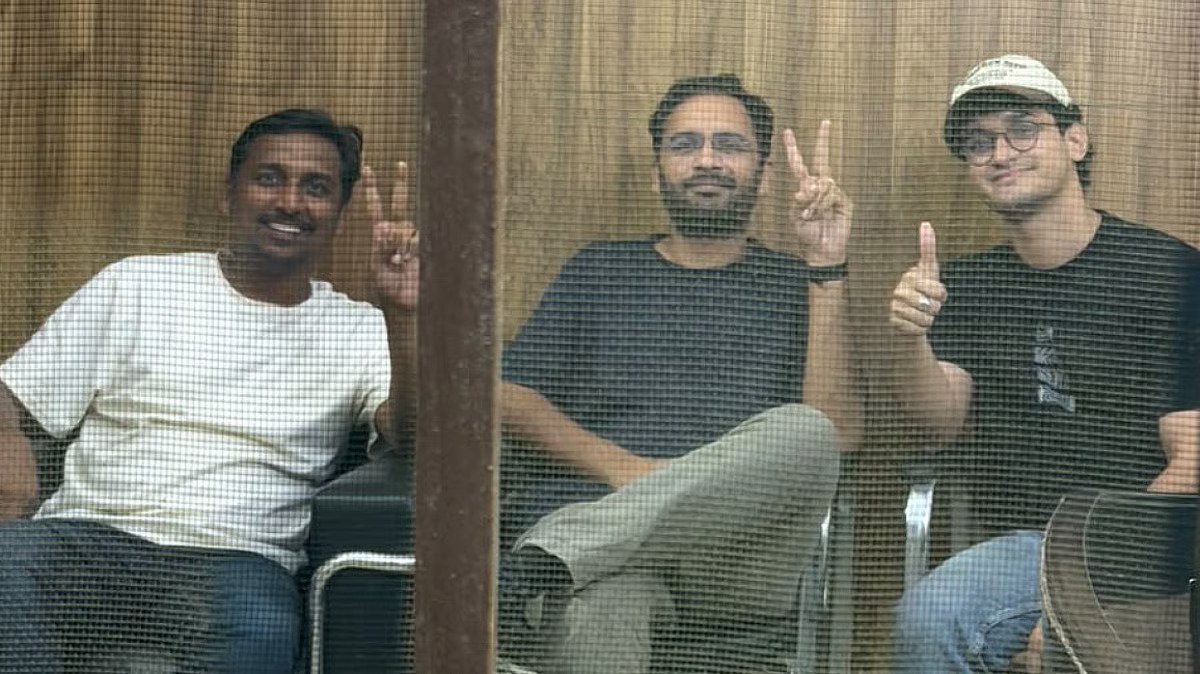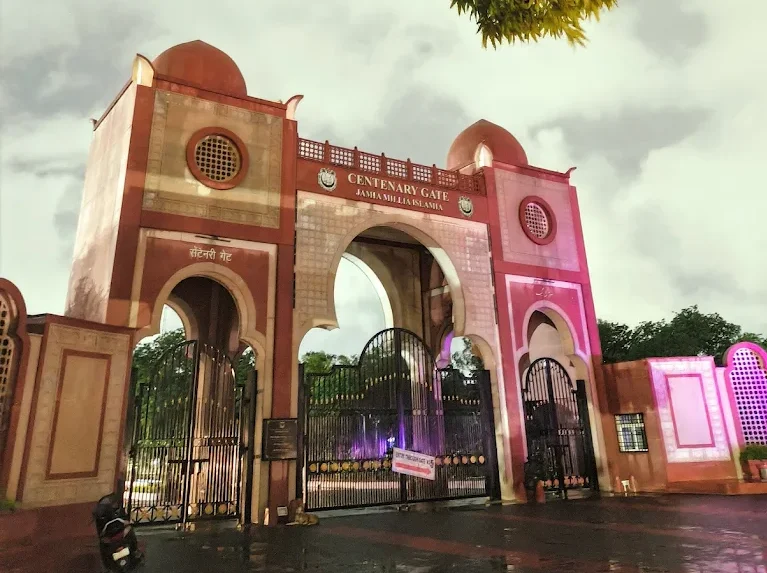
Jamia Millia Islamia (JMI) has formed a committee to draft the constitution of its students’ union, which was dissolved in 2006, amid ongoing protests demanding the restoration of elected student representation on campus.
The university announced the decision on Wednesday, October 21, as four students continued an indefinite hunger strike that began on October 12. Two of the protesting students were hospitalised on Wednesday morning, while a mass boycott of classes was also reported.
The five-member committee will examine the circumstances surrounding the dissolution of the Jamia Millia Islamia Students’ Union (JMISU), relevant court rulings and the recommendations of the Lyngdoh Committee of 2007. It has been asked to consult stakeholders, including students, and submit a draft constitution by December 20.
According to a notification issued by the Registrar’s office, the committee has been constituted under Articles 23(J) and 23(K) of the Jamia Millia Islamia Act, 1988.
Five-Member Committee to Examine Students’ Union Rules
The committee will be chaired by Zubair Meenai, Dean of the Faculty of Social Sciences. Its members include Luqman Ahmad Khan, Dean of the Faculty of Life Sciences; Aslam Khan of the National Medical College and Public Relations Department; M Amarjeet Singh of the Centre for North East Studies and Policy Research; and Neelofar Afzal, Dean of Students’ Welfare, who will serve as the convener.
The university said the committee would review the applicable court orders, university ordinances and statutes, along with the Lyngdoh Committee’s recommendations on student organisations and union elections in higher education institutions.
The move follows the formation of a seven-member high-level committee on October 18 to engage with protesting students and examine their demands.
According to the university administration, the high-level committee visited the protest site on October 19 and held discussions with student representatives on October 20. The administration said the students did not agree to sign the minutes of the discussions.
Vice-Chancellor Mazhar Asif chaired a meeting on Wednesday with members of the high-level committee, faculty deans and other senior officials to discuss the recommendations and explore ways to restore normalcy on campus.
Students Reject Committee, Demand Election Schedule
Student representatives have rejected the latest announcements, arguing that they do not address their three main demands: an immediate schedule for the 2026-27 students’ union elections, withdrawal of disciplinary action against protesters, and removal of the Chief Proctor and the Security Advisor.
They alleged that asking another committee to draft the union constitution by December 20 would delay the restoration of elected representation.
The students have said their indefinite hunger strike will continue until the university announces the election notification and schedule.
The protest has drawn support from several MPs, alumni and student leaders associated with the Delhi University Students’ Union, Jawaharlal Nehru University Students’ Union and Aligarh Muslim University.
Jamia Reviews Disciplinary Action Against Protesters
In a separate notification issued by the Chief Proctor’s office on Wednesday, the university said disciplinary action initiated against protesting students between 5.30 pm on October 12 and October 21 would be reviewed.
Students facing such action were advised to approach the Chief Proctor. However, the notification warned that any cause arising after 5.30 pm on October 21 would invite strict disciplinary action.
The students objected to this warning, saying it did not address their demand for the withdrawal of disciplinary proceedings.
The administration also expressed concern over alleged damage to the statue of Ghalib, university gates, walls and other infrastructure during the protest. It said Gate No. 18 had been designated as a space for student demonstrations and urged students to exercise their right to dissent peacefully.
The university said it had deployed a medical team under the supervision of the chief medical officer to monitor students on hunger strike and stationed an ambulance at the protest site.
Students have been protesting at Ghalib Lawns since October 12, demanding the restoration of an elected union nearly two decades after its dissolution. The administration said it remained committed to addressing student representation in accordance with the university’s governing law, applicable rules and court orders.