Sayima Ahmad
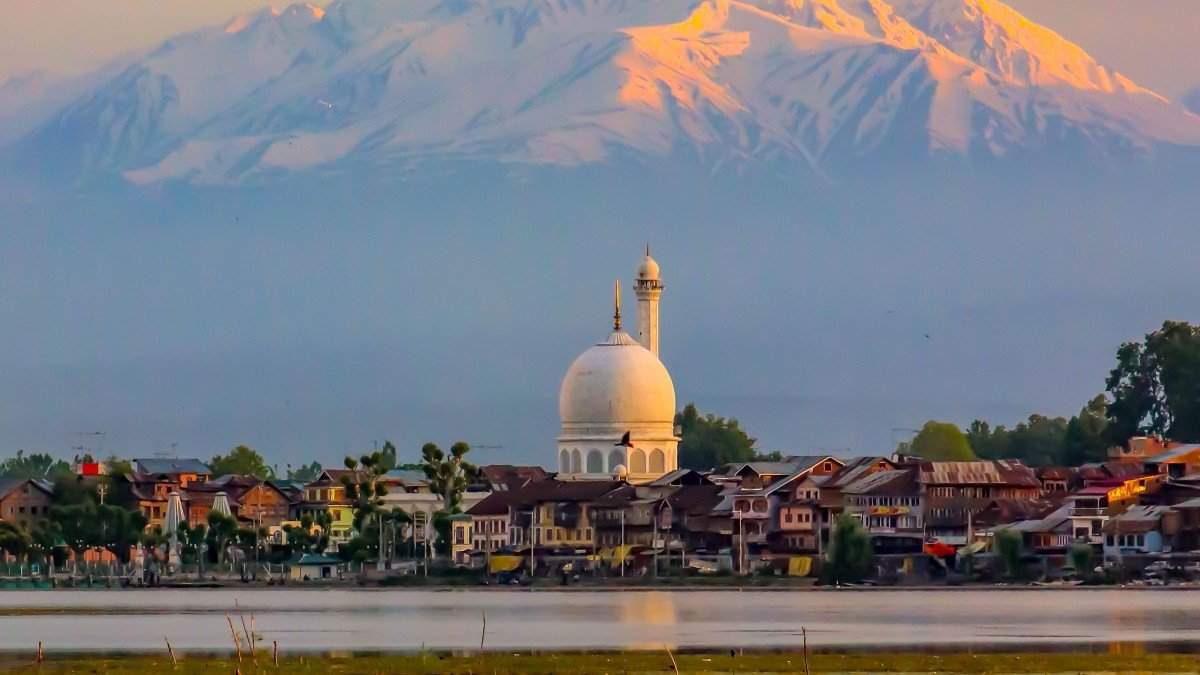
If you have ever visited Kashmir and happened to be there on a Friday while listening to the Jumu’ah Khutbah (Friday sermon), you would hear that this is the only place left where Kashmiris can hear their own reality being voiced loudly.
The Khutbah, delivered before the Friday congregational prayer by a religious leader or speaker known as a khatib or imam, who stands on an elevated pulpit called a minbar, is the heartbeat of Kashmiri Muslim society, and people hold it in high regard. For ages, the Khutbah has been a traditional form of communication at mass gatherings in Kashmir, where the imam not only quotes the Quran and Hadith (the sayings or traditions of the Prophet Muhammad) but also highlights major concerns and issues that harm or threaten Kashmiri society. The imam also raises his voice about what is bleeding in his society: Is it drugs, rising suicide rates, late marriages because of high expectations, innovative rituals, extravagant wazwan feasts, or dowry?
However, it now appears that the traditional mode of preaching in Kashmir, which has persisted for centuries, is set to take a new turn. This was confirmed after reports surfaced that the J&K Waqf Board had proposed a common theme for Khutbahs across its affiliated shrines, Jamia mosques, and other religious institutions in Kashmir. This proposal has sparked massive anger among the people of the Valley, who see the move as an attempt to script faith and culture.
To understand this move, one first needs to understand what the J&K Waqf Board has become today. The Board, which was created to manage Islamic religious properties, including Sufi shrines, mosques, and other assets across the Valley, is no longer an independent religious body but now comes under the control of the ruling Bharatiya Janata Party rather than independent religious organisations or the local elected government. This change occurred after the abrogation of the erstwhile state’s special status under Article 370.
For half a century, the J&K Waqf Board had been functioning under the control of local Mutawallis (traditional caretakers) and local Auqaf Committees, which had been managing shrines for generations under the J&K Waqf Act. The government had no role in deciding who would be an imam or what would be preached in mosques and shrines. However, this changed completely after the repeal of Article 370. In 2022, the Centre extended the Central Waqf Act to J&K and scrapped the entire previous autonomous structure.
Following these changes, the BJP, for the first time in Kashmir’s history, made a significant entry into the J&K Waqf Board after the Lieutenant Governor’s administration appointed Dr Darakhshan Andrabi, a BJP National Executive member, as the Board’s chairperson. Andrabi was neither an Alima nor a theologian; her only qualification was her political affiliation with the BJP. So, today, when we talk about the J&K Waqf Board, we are not talking about an independent body of Ulema but a body controlled by a ruling political party.
In recent years, under the BJP’s leadership, the Board has reportedly taken direct control of 123 major religious institutions across Kashmir, including the famous Hazratbal shrine and mosque, Charar-e-Sharief, the 600-year-old Sufi shrine, Khanqah-e-Moula, the first Sufi monastery built in 1395 CE by Sultan Sikandar in memory of Mir Sayyid Ali Hamadani, a 14th-century Persian Sufi saint and scholar from Hamadan who helped spread Islam and traditional crafts in Kashmir, and Aishmuqam, a famous 15th-century Sufi cave shrine dedicated to Zain-ud-Din Wali, a chief disciple of the renowned Kashmiri Reshi saint. The local caretakers at these places were removed overnight and replaced by government officials.
Later, the Board announced another historic order, barring the collection of donations known as Nazr-o-Niyaz across all Sufi shrines. Sufi devotees who wanted to donate were strictly instructed to deposit money into a centralised bank account. Devotees were also restricted from bringing and distributing taheri and other food items and feeding birds inside the premises of Waqf-managed shrines. The move was seen as interference in a deeply rooted aspect of Kashmir’s Sufi culture. Feeding pigeons and distributing nazr-o-niyaz have long been associated with visits to the Valley’s shrines, where devotees offer food in memory of saints and as an expression of faith.
Additionally, the Board later commercialised Waqf properties. According to local reports, more than 700 shops and properties around historic Hazratbal, Residency Road, and other shrines were re-auctioned. Rents were increased threefold or fourfold, and many shops were rented out to outside bidders and non-local contractors, displacing local Kashmiri shopkeepers who had been running these businesses for 30 to 40 years. Many small local business operators had to vacate their shops voluntarily because they could not afford the newly assessed market rents or were outbid during the open bidding process.
While explaining the order, Andrabi claimed that the decision was taken to make imams address social evils such as drug abuse and family issues. However, this argument is somewhat contradictory, as these topics have long been discussed and continue to be discussed. During their Khutbahs, imams in Kashmir already warn listeners and worshippers against harmful practices, such as the excessive use or misuse of phones, and speak about depression, drug consumption, disobedience to parents, conflicts with neighbours, the breakdown of families, and many other concerns.
Having grown up in Kashmiri society, I know that the imam decides on the topic for the Friday sermon a week in advance. He prepares for it throughout the week and then speaks on the subject, addressing both the underlying causes and possible solutions. Imams and khatibs spend years studying and learning the Quran and Hadith; only then do they become qualified to speak before hundreds of people about social issues or religious affairs. The pulpit of a mosque is a position of immense religious responsibility, not one to be dictated by Delhi or any Board office.
In Kashmir, this is nothing new. Whenever I listen to the Khutbah at the Jamia Masjid in my own small village, the discussion invariably touches on a social issue. Last Friday, for instance, the Khutbah focused on how we can become better human beings, shed hatred, envy, and jealousy, become exemplary individuals, and help reform society.
There is a long-standing tradition in Kashmir in which people approach the imam with their concerns, often about issues relevant to society, and request that he address the topic during the Friday sermon. The imam, in turn, fulfils his responsibility by researching the subject. When people bring such matters forward, it is not just the imam who is being deprived of this role; the people themselves are also being stripped of this right. We don’t need a Waqf order for that. Kashmiri society is already living through these realities.
Kashmiris have questioned this order, asserting that if these social problems are already being addressed in Jumu’ah Khutbahs, then what is the point of centralisation and control? Here is the simple answer: the move has been initiated to take direct control over the narrative and the speeches. When those in power choose the topic, they will also decide what not to reveal or present before the people. A scripted sermon on drug abuse or marriage problems means there may be no sermon on political dispossession. They want the public to remain detached from political affairs and unaware of what changes have been introduced, what is being planned, or whether the Waqf Amendment Act, 2025, is right or wrong.
Additionally, this is a matter of perspective. If the Board assigns the same topic to every mosque, how will people be able to relate to it? Different places face different issues. For instance, Pulwama deals with crop failure, Srinagar with the drug menace, Ganderbal with delayed marriages, and Anantnag with mental health concerns. If there is only one uniform topic, pressing local issues will be sidelined, and such a sermon will never truly resonate with the people. An imam knows exactly what is happening in his own neighbourhood; he knows what needs to be addressed. How could Andrabi or the Board members, sitting in their offices or homes, possibly know what is unfolding in the various villages and neighbourhoods across Kashmir? They understand only the most generic issues, such as drugs or family matters. A Friday sermon is not like a school lesson; it is a lesson rooted in the realities of people’s lives.
Now, the biggest question is this: as I have mentioned before, if a social issue arises in a village or someone is being morally harassed by others in the community, they would typically take their grievance to the imam, who would turn the issue into a general topic and raise it during the Friday sermon. Now, if an individual faces issues within society that are morally wrong, even if not necessarily illegal, to whom should they turn? Should they go to Andrabi, or perhaps to a Board member? Andrabi will have to provide an answer to this concern as well.
Meanwhile, Chief Minister Omar Abdullah termed the proposal “unacceptable”, accused the BJP of attempting to interfere in the religious affairs of Muslims, and demanded that the Waqf Board chairperson withdraw the initiative. PDP president Mehbooba Mufti also criticised the proposal and stated that “BJP wants to turn Kashmir into a place where even the Imam has to read a script written in Nagpur”.
National Conference MP Aga Syed Ruhullah Mehdi, president of Anjuman-e-Sharie Shiayan Aga Syed Hassan Mosavi Al-Safavi, and the Mutahida Majlis-e-Ulema (MMU), headed by Mirwaiz Umar Farooq, also opposed the order, saying that religious guidance must remain the domain of qualified Ulema.
J&K Deputy Chief Minister Surinder Choudhary also criticised the move, saying that a political party has no right to interfere in the religious affairs of any community and asserting that religion must remain above politics. Speaking to reporters in Ganderbal during his visit to the Mata Kheer Bhawani temple amid Navratri celebrations, Choudhary said the country’s strength lies in its religious diversity, communal harmony, and spirit of brotherhood.
After facing massive backlash, Andrabi addressed the media on Tuesday, 13 October, in Srinagar and claimed that the proposed core committee would comprise religious scholars and sermon-givers. She maintained that neither she nor any Waqf Board official would dictate what should be preached from the pulpit. However, a virtual meeting in which Waqf Executive Magistrate Ishtiyaq Mohi-ud-Din is seen instructing preachers to follow a common theme for the Friday sermon has been recorded and widely reported.
Responding to Abdullah’s claims of BJP interference in Muslim religious affairs, Andrabi said, “Where did BJP interfere? If I am the leader of BJP, I am proud. I feel very proud today that I am from BJP.”
In conclusion, the people of the Valley have witnessed massive losses over the last six years, whether in the form of statehood or control over local Auqaf. However, one thing remained: the imam standing on the mosque’s pulpit and delivering a 30-minute-long Jumu’ah Khutbah related to the situation on the ground, without reading from a government file. If this, too, is snatched from the hands of Kashmiris, then what is left?
The views expressed in this article are the author’s own and do not necessarily reflect the policy of the platform.