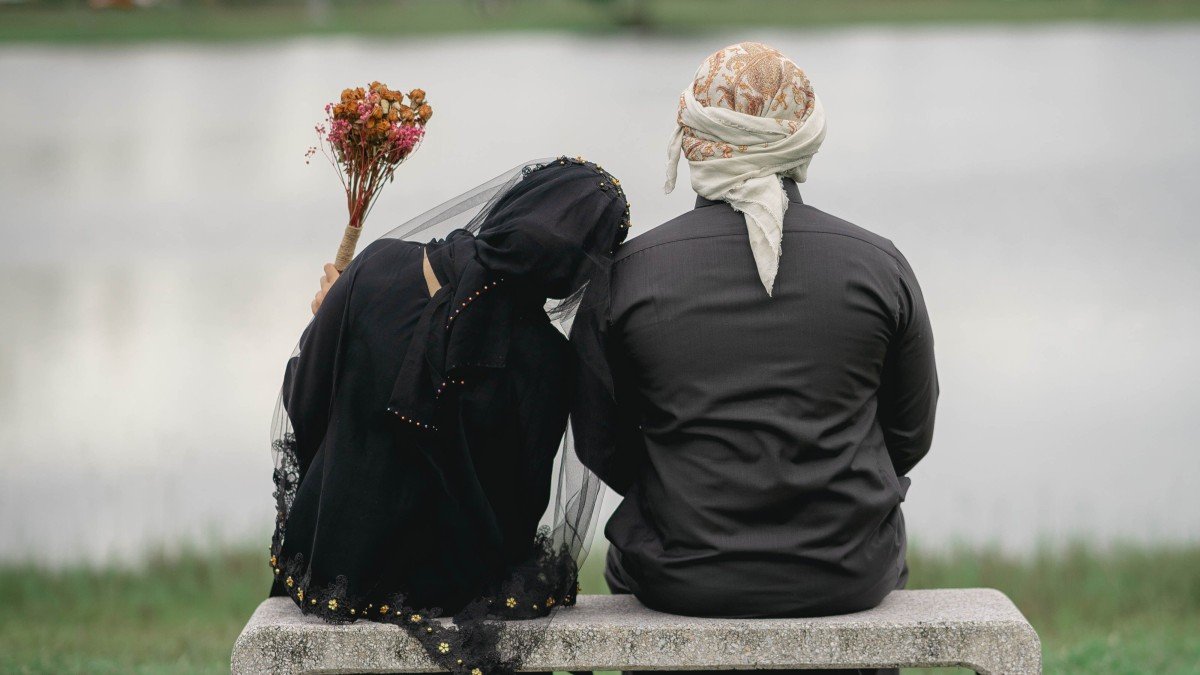
The Karnataka High Court has ruled that a Muslim man’s second marriage performed under the Special Marriage Act (SMA), 1954, is void if his first marriage was still legally valid at the time of the second marriage.
Justice Sachin Shankar Magadum held that anyone who voluntarily chooses to marry under the Special Marriage Act must comply with its provisions, and personal law cannot be used later to validate a marriage that violates the Act.
“The statutory requirement that neither party should have a spouse living cannot be diluted by resorting to personal law,” the court observed.
Case Arose From Property Dispute
The ruling came while hearing a petition filed by a woman who claimed to be the second wife of a deceased man in a partition suit pending before a court in Ballari, Karnataka.
The woman sought to be added as the deceased’s legal representative along with her daughter, claiming that she had married him under the Special Marriage Act on April 24, 2008.

The trial court initially allowed her application, but the Karnataka High Court later ordered a fresh inquiry into her legal status.
After examining the evidence, the trial court found that the man’s first marriage was still subsisting when the second marriage took place. It held that the marriage was void but allowed the daughter to be added as a legal representative. The woman challenged that order before the High Court.
Court Says Marriage Violated Special Marriage Act
The High Court referred to Section 4(a) of the Special Marriage Act, which states that neither party should have a living spouse at the time of marriage.
The court said this condition is mandatory and leaves no room for exceptions.
“Once these foundational facts stand admitted, the inevitable consequence is that the alleged marriage… was in direct violation of Section 4(a) of the Act,” the court said.
It also noted that the petitioner herself had admitted she was the deceased’s second wife and acknowledged that his first wife was alive when they married.
Personal Law Cannot Override Special Marriage Act
The woman argued that Muslim personal law permits a man to have more than one wife in certain circumstances.
Rejecting this argument, the High Court drew a distinction between marriages conducted under Muslim personal law and those registered under the Special Marriage Act.
“It is true that Mohammedan personal law… permits a Muslim male to contract more than one marriage. Such permissibility, however, operates only within the domain of personal law governing marriages solemnized thereunder,” the court said.
The court added that the Special Marriage Act is a secular and self-contained law. Once parties choose to marry under it, they are bound by its requirement of monogamy.
“Once parties consciously invoke the provisions of the Act instead of their personal law, they subject themselves to the mandatory statutory regime enacted by Parliament,” the judgment stated.
Woman Cannot Claim Status of Widow
Since the marriage was declared void, the High Court held that the petitioner could not claim the legal status of the deceased’s widow or represent his estate in the partition proceedings.
“In the absence of a valid marital status, the petitioner cannot claim the status of widow… and cannot insist upon being brought on record merely on the basis of an admittedly void marriage,” the court said.
However, the court upheld the trial court’s decision allowing the daughter to remain a party in the case, observing that children born from a void marriage are entitled to statutory protection and can pursue their legal rights.