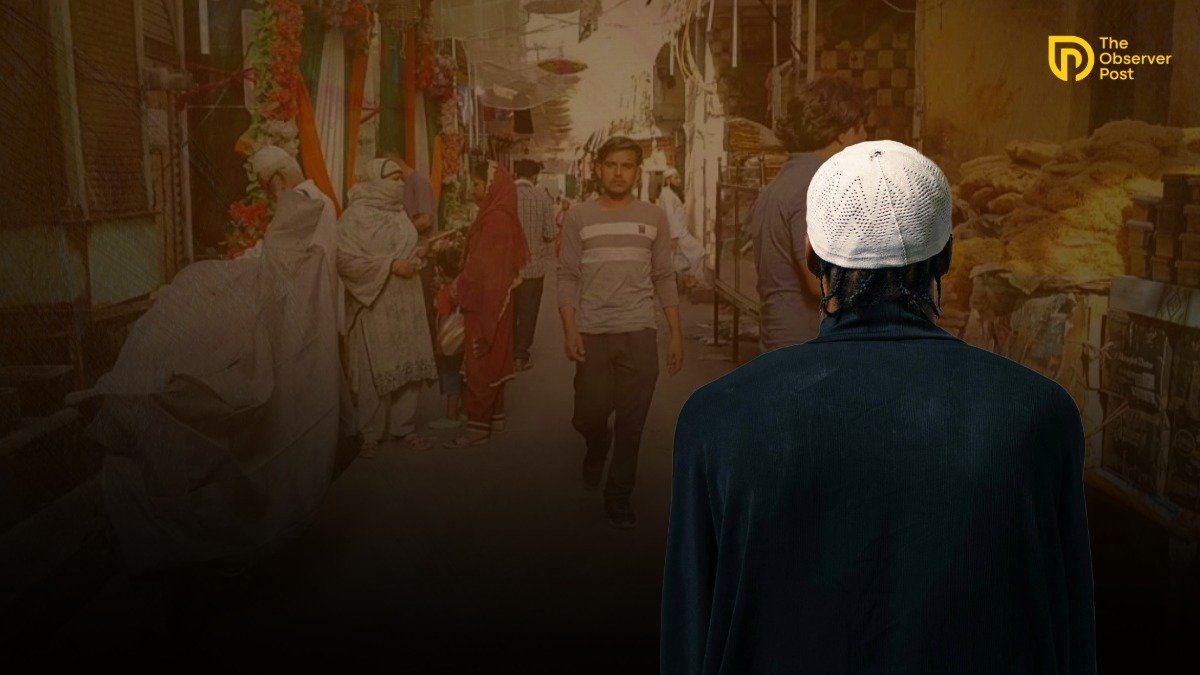
The Bihar Public Service Commission’s (BPSC) largest-ever recruitment exercise has renewed discussions over the representation of Muslims in the state’s civil services, with unofficial estimates suggesting that the community continues to remain underrepresented despite forming nearly 17% of Bihar’s population.
The BPSC declared the final results of the 70th Combined Competitive Examination (CCE) on June 20, recommending 2,027 candidates against 2,035 advertised vacancies for administrative posts including Sub-Divisional Magistrate (SDM), Deputy Superintendent of Police (DSP), and Block Development Officer (BDO). More than 5,400 candidates had reached the interview stage, and Shraddha Pandey secured the first rank in the examination.
The commission does not publish the religious identity of selected candidates. However, an unofficial estimate based on candidates’ names, which has been widely shared on social media, suggests that around 96 to 100 Muslim candidates have been selected. If the estimate is accurate, Muslims account for roughly four per cent of the successful candidates. The figure has not been officially verified by the BPSC or any government agency.
The estimated share is lower than the previous major recruitment cycle. During the 64th BPSC examination in 2021, media reports stated that 101 Muslim candidates were selected out of 1,454 successful candidates, accounting for nearly seven per cent of the total. Nineteen of those selected candidates were Muslim women, and several had received coaching through Bihar’s Haj Bhawan programme.
According to the 2011 Census, Muslims make up close to 17 per cent of Bihar’s population. Despite this, their presence in government services has remained significantly lower over the years. Earlier official estimates indicated that Muslims constituted around 2.5 per cent of the Bihar Police and less than four per cent of other state civil services. Updated department-wise data has not been made public.

Researchers say representation in competitive examinations depends on several factors, including access to quality education, coaching facilities, economic conditions, and participation rates. They also note that because the BPSC does not record the religion of applicants or selected candidates, there is no official long-term data available to accurately measure representation across recruitment cycles.
To improve access to competitive examinations, Bihar’s Minority Welfare Department has been running a free residential coaching programme at Haj Bhawan in Patna since 2010 under the supervision of Maulana Mazharul Haque Arabic and Persian University. The programme provides coaching for around 150 BPSC aspirants every year, with one-fourth of the seats reserved for women. Similar coaching centres have also been established in districts including Bhagalpur and Darbhanga, while a separate coaching programme prepares candidates for Bihar Police recruitment.
The BPSC has already announced the 72nd Combined Competitive Examination for 1,186 vacancies, with the preliminary examination scheduled for July 26. The upcoming recruitment cycle will once again be closely watched to see whether the representation of Muslims in Bihar’s civil services improves in line with their share of the state’s population.