Amzad Ali
The grant of bail to three young students accused in a human trafficking case has sparked a broader legal debate over the invocation of trafficking provisions under the Bharatiya Nyaya Sanhita (BNS), the manner in which police arrests are carried out, and the safeguards surrounding personal liberty.
On August 1, 2026, the Special NIA Court (Additional Sessions Judge, Court No. 3, Lucknow) granted bail to Shoaib Khan, Mujeeb Khan, and Umair, all residents of Baijpur Ekdanga village in Uttar Pradesh’s Gonda district. The three, aged between 18 and 21, are students with no previous criminal record.
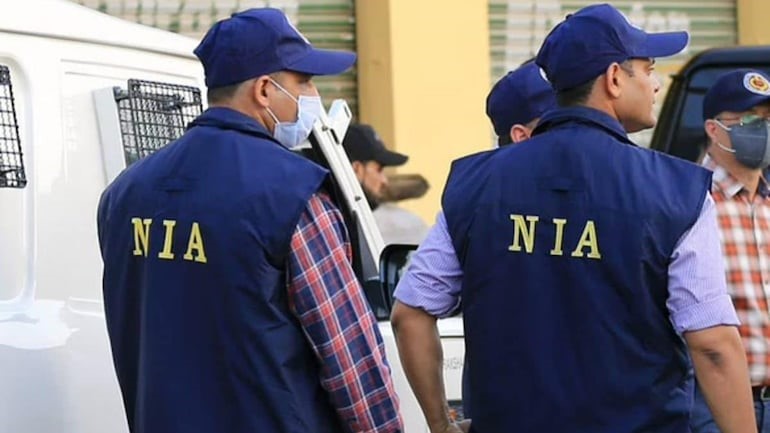
Case Reached Special NIA Court Due to Human Trafficking Charge
The case originated from FIR No. 736/2026, registered at Kotwali Dehat Police Station, Gonda, on the night of July 23, 2026, under Sections 191(2), 143(2), 62, 351(3), and 3(5) of the BNS.
Since Section 143(2) (human trafficking) is a Scheduled Offence under the National Investigation Agency Act, 2008, jurisdiction over the bail proceedings lay with the Special NIA Court in Lucknow rather than an ordinary Sessions Court.
Allegations in the FIR
According to the complainant, his minor sister’s mobile number was allegedly obtained by some individuals, after which she received repeated phone calls. The FIR further alleged that a group of young men later visited her residence intending to take her away and “sell” her. The complainant stated that villagers intervened, preventing the alleged act.
However, the defence argued before the court that the FIR neither identified any alleged buyer nor mentioned any financial transaction, vehicle, intermediary, recovery, or other material indicating exploitation. It contended that the trafficking allegation rested primarily on the assertion that the accused “wanted to sell” the girl.
Arrest Recorded Within One Minute of FIR Registration
One of the most striking aspects of the case concerns the timeline of the arrests.
Court records indicate that the FIR was registered at 11:44 p.m., while the arrest of the three applicants was recorded at 11:45 p.m., a gap of just one minute.
The defence argued that such a brief interval left virtually no scope for any meaningful preliminary investigation and suggested that the arrests appeared mechanical and predetermined.
It further submitted that the arrest memo referred to provisions different from those mentioned in the FIR. It also argued that Section 143(2), the trafficking provision that ultimately brought the matter before the Special NIA Court, was not reflected in the arrest memo.
Defence’s Legal Arguments
Appearing for the applicants, Advocate Mohammad Taha Chishti argued that the prosecution had failed to establish the essential ingredients required to invoke Section 143 of the BNS.
The defence submitted that the offence of human trafficking requires the presence of three core elements:
- A specific act such as recruitment, transportation, transfer, harbouring, or receipt of a person;
- The use of prohibited means such as force, coercion, threat, fraud, or deception; and
- The intention to exploit.
According to the defence, none of these statutory ingredients were evident from the FIR. It argued that the alleged victim never left her residence, there was no transportation, no identified buyer, no recovery of money, and no material suggesting exploitation.
Observations in the Bail Order
The Special NIA Court also noted that the mobile number allegedly used to contact the girl did not belong to any of the three applicants who were granted bail. According to the FIR, the number was attributed to another co-accused.
Taking these circumstances into account, the court directed the release of the three applicants upon furnishing a personal bond of ₹1 lakh each along with two sureties of the like amount.

Counsel’s Response
Following the order, Advocate Mohammad Taha Chishti stated that merely using the words “wanted to sell” in an FIR does not, by itself, establish the offence of human trafficking.
He maintained that allegations of trafficking must be supported by concrete factual material rather than broad assertions. Referring to the case, he said there was no identified buyer, no financial transaction, no recovery, and no transportation, yet first-time accused students were arrested within a minute of the FIR being registered.
He further argued that the indiscriminate invocation of serious non-bailable offences without an adequate factual foundation risks undermining both individual liberty and the credibility of anti-trafficking laws, which are intended to protect genuine victims of organised exploitation.
Proceedings Against Juveniles Continue
The FIR names six accused persons in total. While the three adult accused have secured bail from the Special NIA Court, proceedings concerning the remaining three juveniles are pending before the Juvenile Justice Board, Gonda.
Legal Significance
Although the criminal trial is yet to commence and the allegations remain to be tested during the course of the proceedings, the bail order has drawn attention to the threshold required for invoking human trafficking provisions under the BNS. The case also raises broader questions regarding the exercise of police powers in effecting immediate arrests under serious penal provisions and the balance between effective investigation and the constitutional guarantee of personal liberty.
It is settled law that the grant of bail does not amount to an adjudication on the merits of the prosecution’s case. The guilt or innocence of the accused will ultimately be determined during the trial.
Amzad Ali is pursuing a B.A. LL.B. (Third Year) at the Faculty of Law, Aligarh Muslim University. He has a strong interest in legal journalism and public policy.