Pratyusha Pan
In a day, the tricolour will go up over Red Fort, the anthem will play in a thousand schoolyards, and the country will spend another August 15 marking the freedom it won in 1947. But freedom is supposed to be a live condition, tested by how a nation treats the people it disagrees with. By that measure, something has been quietly failing for six years in a cell in Delhi’s Tihar Jail.
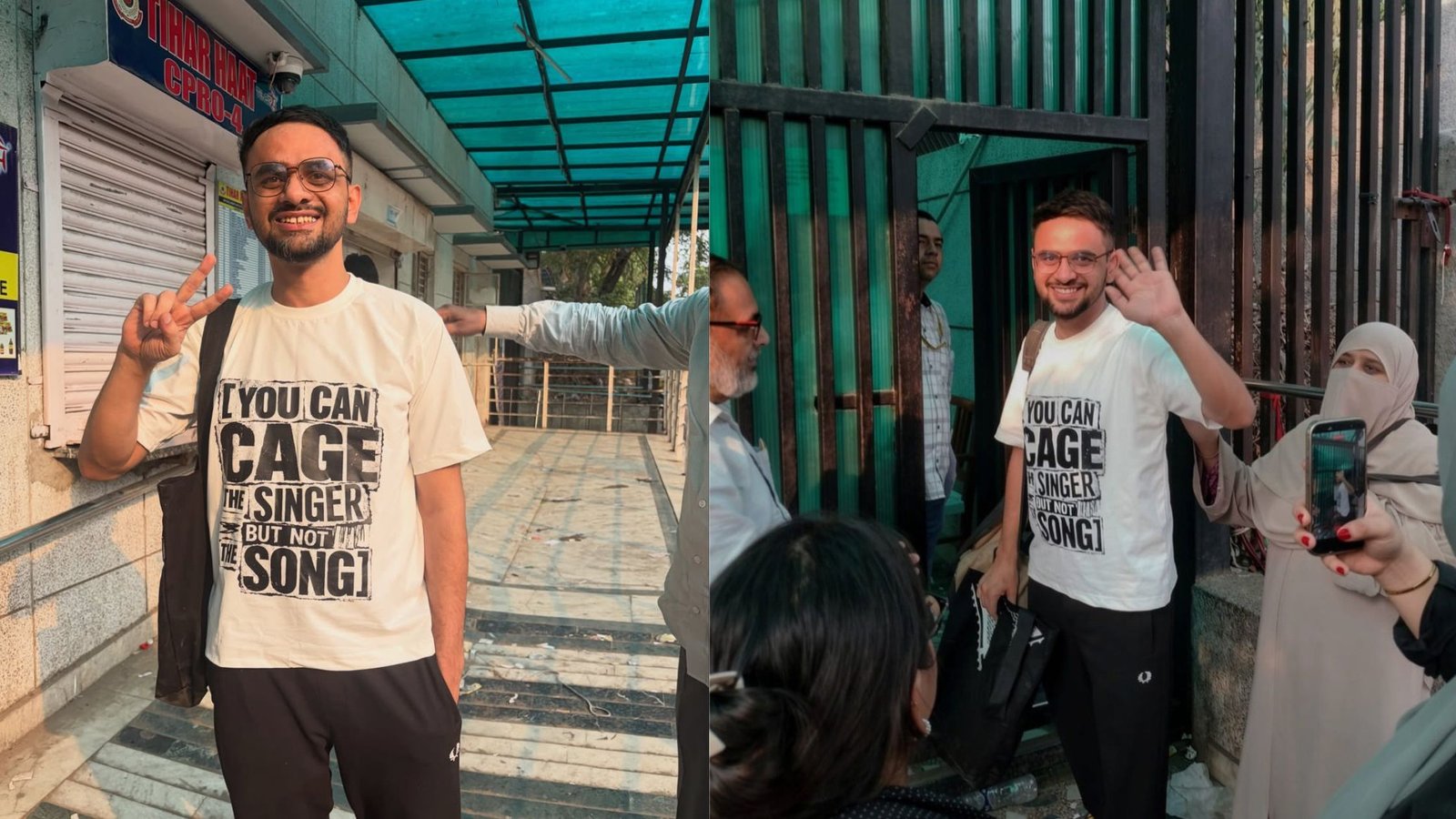
Dr. Umar Khalid is a former JNU student leader, a historian of the Bastar insurgency, and one of the most recognizable faces of the anti-CAA movement. He has not walked free since Delhi police came for him in September 2020. He has not been convicted of anything. He has not even faced a trial. He is, six years on, still waiting for the Indian state to prove the case it says it has against him. A republic that lets a man sit in jail this long without ever putting its evidence to the test is not living up to the independence it celebrates every August.
That is the fact that should anchor every conversation about Umar Khalid, however it starts: not guilt or innocence, but time. Under any reading of the Indian Constitution’s promise of a speedy trial, six years in Tihar Jail without a single witness cross-examined is not due process. It is punishment first and adjudication later, if at all.
Khalid was arrested in September 2020 and charged under the Unlawful Activities (Prevention) Act, India’s principal anti-terror law, along with several sections of the Indian Penal Code covering criminal conspiracy, rioting, and promoting enmity between groups. The charges stem from the police’s ‘larger conspiracy’ case around the February 2020 Delhi riots, communal violence that broke out amid protests against the Citizenship Amendment Act and left 53 people dead, most of them Muslim.
Delhi Police allege Khalid was among the masterminds of that violence. Their claim is that a speech he gave, along with meetings and messages tied to other co-accused, amounted to a premeditated plan to trigger unrest timed to coincide with a visit by then US President Donald Trump. Khalid has always maintained he had no role in the riots and no conspiratorial link to those who did, and many journalists and investigative documentaries, of them the most notable being Prisoner No. 626710 is Present has demonstrated the alleged videos to be doctored.
What makes Khalid’s case a rallying point for civil liberties groups is the machinery around them. UAPA’s Section 43D(5) sets an unusually high bar for bail: a judge must find the accusations are not even prima facie true before granting it, a reversal of the ordinary presumption that bail is the rule and jail the exception. Courts have repeatedly held that bar is met in Khalid’s case, even as the underlying trial has barely moved. Tens of thousands of pages of evidence remain unexamined, and formal charges in the case still had not been framed years after his arrest.
The bail history reads like a study in the law’s own delay. The Delhi High Court rejected Khalid’s bail in October 2022. He carried the fight to the Supreme Court, where hearings stalled for over a year amid recusals, unavailable lawyers, and a case tagged to an unrelated constitutional challenge. In February 2024, rather than let the appeal die slowly, Khalid withdrew it and applied afresh in the trial court. That didn’t work either. Then, on January 5, 2026, the Supreme Court ruled again: five co-accused, Gulfisha Fatima, Meeran Haider, Shifa Ur Rehman, Mohd Saleem Khan, and Shadab Ahmed, were granted bail. Khalid and fellow activist Sharjeel Imam were not. The bench described the two as sitting on a different footing; language rights groups read it as branding them architects of a conspiracy the state has yet to prove in open court.
Since then, the door has barely cracked open. When a separate Supreme Court bench flagged inconsistency in how lower courts were applying precedent on prolonged pre-trial custody, Khalid and Imam tried to use that opening for fresh bail pleas. They were told in July 2026 that the trial court remained bound by January’s ruling. Khalid has since taken the fight to the Delhi High Court again, his eighth attempt at bail by most counts, with police response now due and a hearing set for late August.
UAPA has drawn sustained criticism from the UN Working Group on Arbitrary Detention and other UN human rights mechanisms for its vague definitions and bail provisions that function like default detention. Domestic groups such as the People’s Union for Civil Liberties have documented how the law has repeatedly been deployed against political dissenters, journalists, and Muslims, with prolonged pre-trial incarceration used as a de facto sentence regardless of eventual outcome. Amnesty International has described the pattern in Khalid’s case as a case study in how India’s anti-terror architecture can swallow a protest movement whole.
None of this means the courts have acted lawlessly. Judges have applied the statute as written, and the Supreme Court itself has, in other rulings, held that prolonged incarceration and trial delay can justify bail even under UAPA’s tough standard. But that principle has thinned in practice each time it brushed up against Khalid’s file. The law leaves room for compassion, but reality shows how rarely that room gets used.
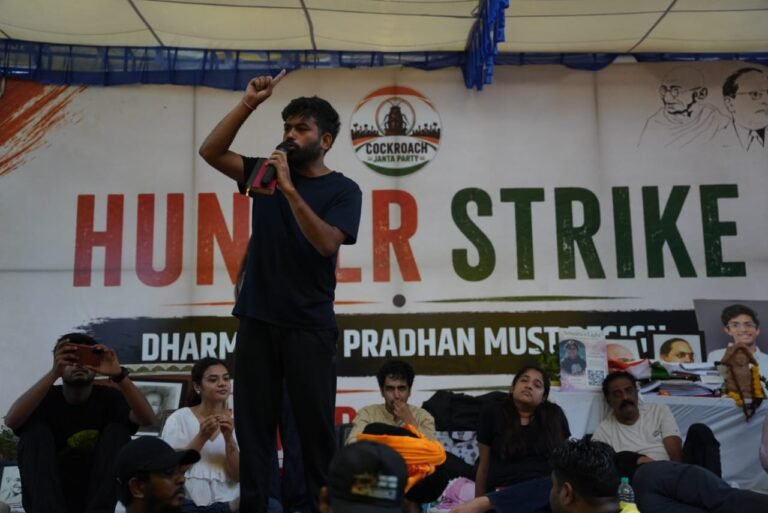
It is not incidental that Khalid’s case sits at the intersection of the CAA protests, the 2020 riots, and a state that has increasingly treated dissent as a security threat. His supporters see in his continued detention a message aimed well beyond one man – that organizing against the government’s citizenship agenda carries a cost measured in years. Whatever a trial eventually finds, the six years already spent behind bars cannot be returned.
Umar Khalid’s case is a test of whether India’s legal system can still tell the difference between a protester and a terrorist, and whether it can do so on any timeline that deserves to be called justice. Six years without trial is a long time to wait, and everyone who believes dissent should not be a crime has a stake in how, and whether, it ends.
The views expressed in this article are the author’s own and do not necessarily reflect the policy of the platform.