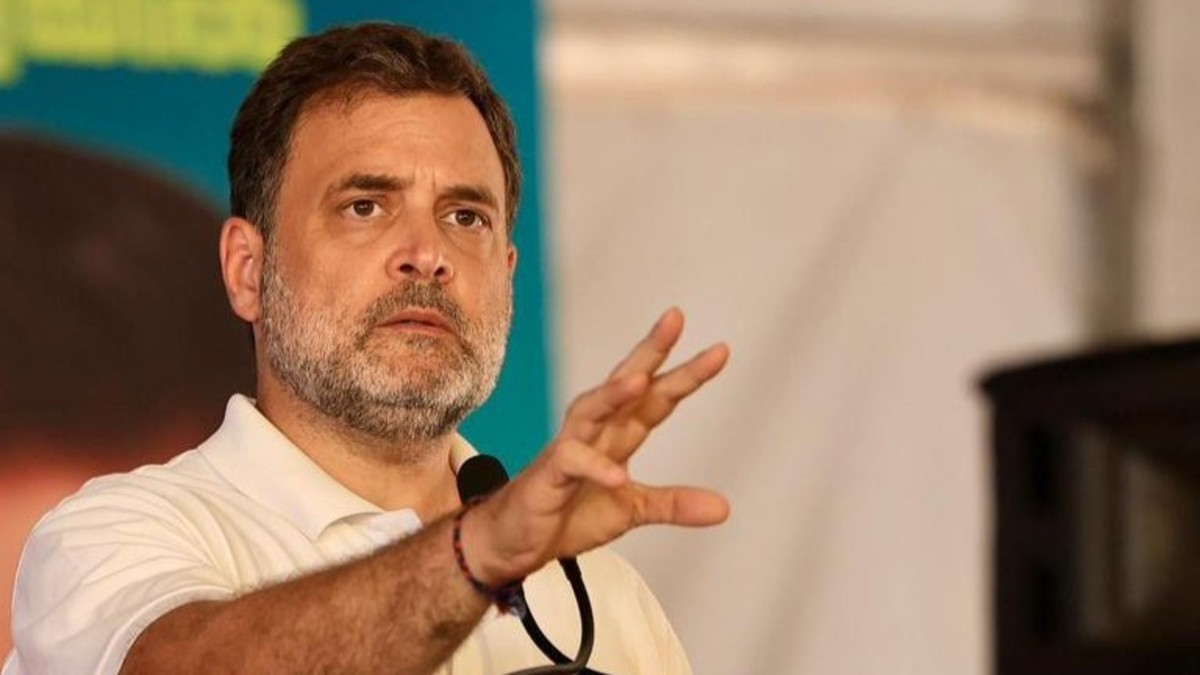
Leader of Opposition in the Lok Sabha Rahul Gandhi on Monday raised concerns over India’s data sovereignty, questioning the government’s approach to ongoing digital trade negotiations with the United States. He warned that lack of clarity could affect India’s position in the global technology and artificial intelligence race.
Questions Over Data Protection and Transparency
Rahul Gandhi said India’s data is a strategic national asset that belongs to its people and can play a key role in building the country’s artificial intelligence ecosystem, supporting domestic companies and generating employment.
However, he alleged that the government has not been transparent about how such data will be protected under proposed agreements. “Every question on data sovereignty, health data, AI, and local data storage gets the same treatment — ‘framework’, ‘balance’, ‘autonomy’ — big words, zero specifics,” he said.
He also questioned what “reducing barriers” in digital trade with the US would mean for India’s data ecosystem. He asked whether sensitive data such as health records, financial information and government databases would continue to be stored within the country, and whether India would retain the authority to enforce data localisation rules for foreign companies.
Concerns Raised in Parliament
The Congress leader said he had formally raised these issues in the Lok Sabha on April 1, seeking clarity from the government on how India plans to balance its commitments under a proposed India-US trade framework with existing data protection and localisation policies.

He also questioned whether India’s regulatory autonomy could be affected, particularly in areas such as mandating local data storage, restricting foreign access to sensitive infrastructure and regulating AI development.
Rahul Gandhi further asked whether key sectors like financial systems, digital identity platforms, health databases, telecom networks and AI datasets could be impacted by the agreement.
Government Defends Digital Trade Strategy
Responding to these concerns, Minister of State for Electronics and Information Technology Jitin Prasada highlighted the strength of India’s digital economy. He said the IT sector recorded revenues of over 280 billion dollars and exports of 225 billion dollars in the financial year 2024-25, employing more than 60 lakh people.
He emphasised that digital trade is a crucial part of India’s economic strategy and said the government is expanding global partnerships through Free Trade Agreements.
On the proposed India-US Bilateral Trade Agreement, Prasada said both countries are working on an interim framework to create a “free, fair and dynamic” digital trade environment that ensures mutual benefits.
Assurance on Regulatory Autonomy
The minister asserted that India’s regulatory independence remains protected. “In no way do these agreements restrict India’s ability to take measures for managing its own data within the established legal framework,” he said.
He added that the government is trying to maintain a balance between promoting technological growth and safeguarding national interests.
Ongoing Political Debate
The exchange highlights a growing political debate over data governance and digital sovereignty in India. While the Opposition is demanding greater transparency and clarity, the government maintains that adequate safeguards are in place.
The issue is expected to remain a key point of discussion as India negotiates its position in the rapidly evolving global technology and AI landscape.