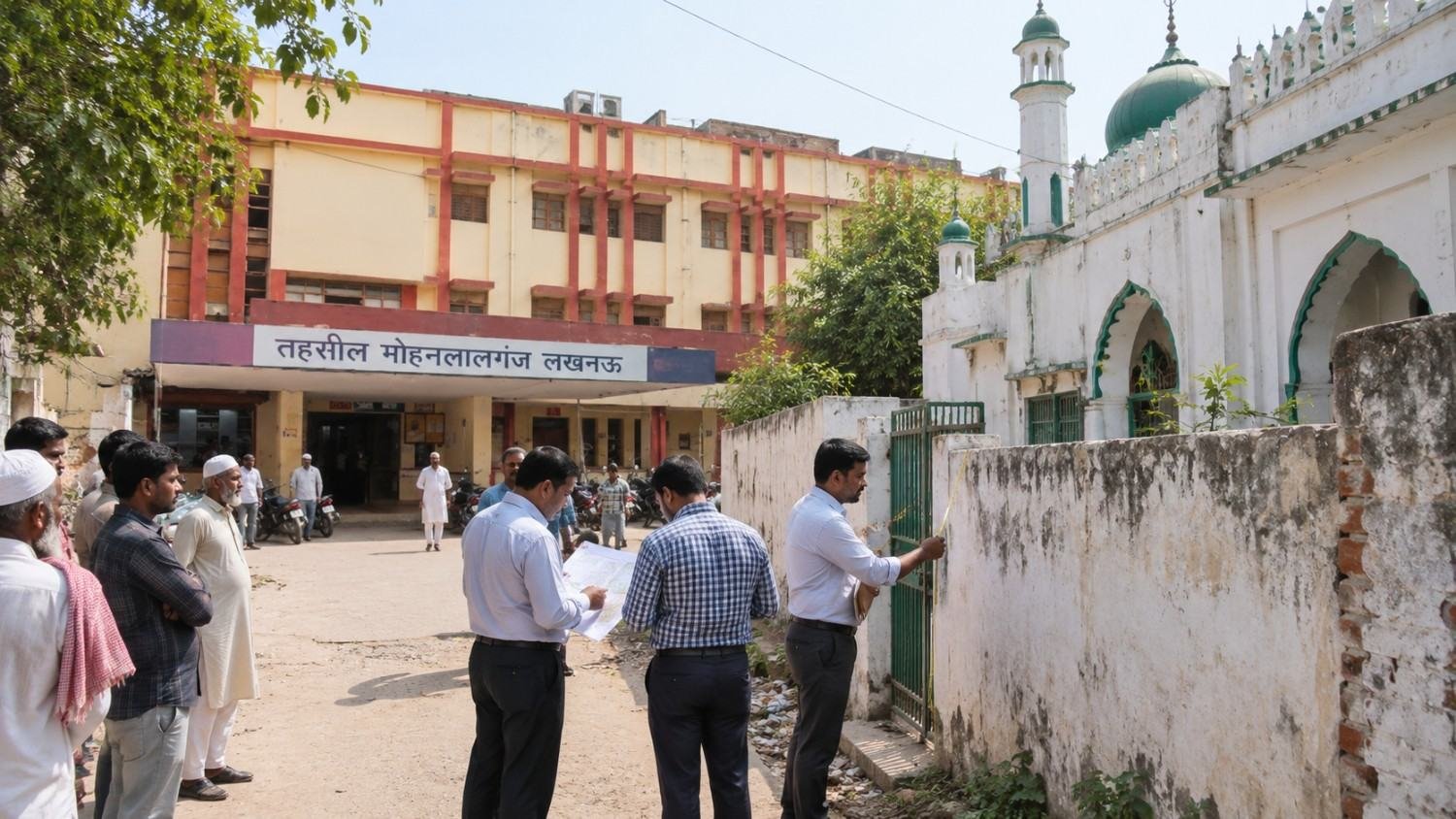
A revenue court in Mohanlalganj on the outskirts of Lucknow has issued notices to four people who manage a mosque and a madrasa in Khujhauli village, after a government inquiry reportedly found that parts of the buildings stand on land recorded as a pond.
The court, in Mohanlalganj, has summoned the four to appear before the court on October 29. They will get the chance to present documents and challenge the government’s findings. The proceedings are under Section 67 of the Uttar Pradesh Revenue Code, 2006, which allows authorities to seek the removal of unauthorised occupation from certain categories of public land.
The case began, according to local revenue officials, with a complaint by villagers on the state government’s grievance portal. They claimed that portions of the mosque and madrasa had been built on land designated for a pond.
A revenue inspector and a local land records official then inspected the site. The officials reported that permanent structures occupy about 0.03 hectares of the disputed land, roughly 300 square metres.
No final eviction or demolition order has been issued so far. The proceedings concern a specific portion of land and do not establish that the entire mosque or madrasa stands on government property. The reports do not say how long the buildings have been there, who owns the plot on paper, or what the four managers have said in response.

The notices have raised concerns among local Muslims, who fear that a dispute over a small part of the land could end with action against both institutions. The Khujhauli case will now test whether the management can challenge the government’s classification of the land and head off further action.
The case comes amid wider anxiety over the treatment of Muslim religious properties in Uttar Pradesh. In a separate case, authorities recently demolished a mosque inside the government administrative complex in Saharanpur, after a local court upheld an order that declared the structure an unauthorised occupation of public land. The demolition drew criticism from Muslim organisations and political leaders, who questioned whether the mosque’s managers had been given enough opportunity to challenge the decision.
AIMIM chief Asaduddin Owaisi condemned the demolition and raised concerns over religious freedom and the legal rights of Muslim communities. Jamiat Ulama-i-Hind said it was examining historical land records and legal documents to decide on further action. Former Chief Minister Mayawati criticised the hurried demolition of mosques and urged authorities to respect religious institutions and follow established legal procedure.
The next hearing, on October 29, will show what documents the managers in Lucknow mosque case can produce and how the court proceeds.