Authorities have sealed a marriage hall in Uttar Pradesh’s Shamli district after allegations that beef was served during a wedding feast in Kairana. The action comes days after the groom, the hall operator, and another relative were arrested in the case.
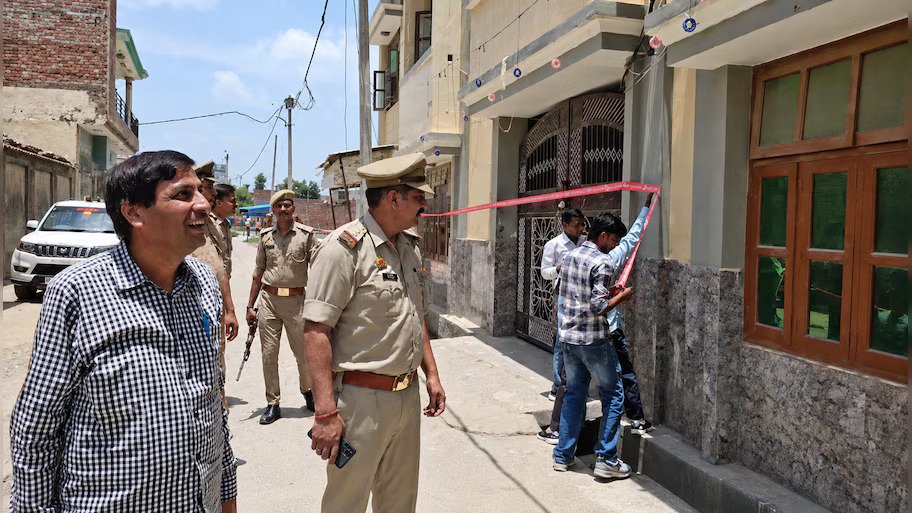
The venue, known as Mughal Garden (also referred to as Venkat Hall), is located in the Retewala area of Kairana. Officials from the Muzaffarnagar Development Authority (MDA), along with police, carried out the sealing action on Tuesday, claiming the structure was an illegal construction.
Groom and hall operator already in jail
The controversy began on June 18 when police raided Khurgan village after receiving information about alleged cow slaughter. According to police, animal remains and cattle skin were recovered during the raid.
Investigators later claimed that the meat was served at a walima function held at Mughal Garden. Following this, the groom, identified as Farman, his maternal uncle Salman, and later the marriage hall operator Anees Ahmed were arrested and sent to jail.
Police also destroyed the alleged meat during the operation.

Hindu groups demanded bulldozer action
After the arrests, several Hindu organisations demanded stricter action against the marriage hall. Reports say local Hindu leaders had given the administration a one-week deadline to demolish the building.
One religious leader reportedly warned that if authorities failed to act, supporters would take action themselves.
Soon after, the development authority sealed the property, increasing fears that demolition could follow.
Legal experts question demolition move
The sealing and possible demolition have raised legal and constitutional questions. Legal experts say demolition of property linked to an accused before trial or conviction can be challenged in court.
Advocate Neyaz Ahmed Khan said that demolishing property merely because someone is accused in a criminal case could violate established legal principles and Supreme Court guidelines.

He said even if there are claims of illegal construction, due legal process, including notice and hearing, must be followed.
Concerns over ‘bulldozer justice’
Rights activists have criticised what they describe as a growing pattern of “bulldozer action” against Muslims in several BJP-ruled states.
They argue that in many cases, demolition follows immediately after allegations are made, even before courts determine guilt.
The Shamli case has once again sparked debate over whether administrative actions are being carried out strictly under the law or under political and communal pressure.