Anusreeta Dutta
Pakistan and Bangladesh have long portrayed themselves as defenders of Muslim causes, from Kashmir and Palestine to the Rohingya crisis. Yet when it comes to the Uyghur Muslims of China’s Xinjiang region, both governments have remained strikingly silent. Their response reflects a broader reality of international politics: strategic interests often outweigh religious solidarity.
Despite significant international scrutiny and allegations of mass surveillance, arbitrary detention, religious restrictions, and forced labor documented by human rights groups and the United Nations, both Islamabad and Dhaka have largely refrained from publicly criticizing Beijing over its treatment of Uyghur Muslims in China’s Xinjiang Uyghur Autonomous Region. The contrast raises questions about why two Muslim-majority countries that frequently emphasize religious unity have remained largely silent on one of the most pressing issues facing a Muslim minority today.
The Issue of the Uyghurs
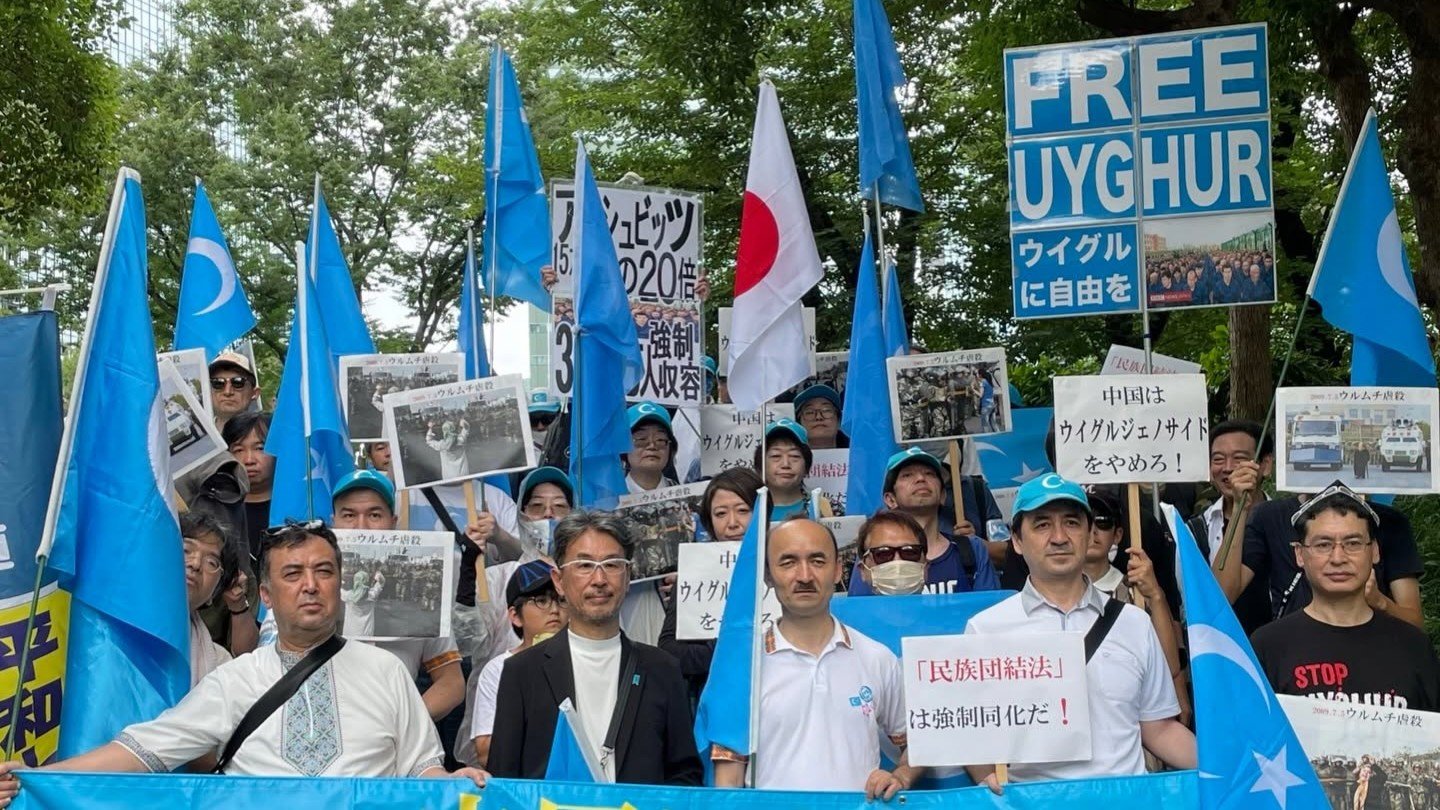
The Uyghurs are a Muslim ethnic group who speak a Turkic language and live primarily in China’s Xinjiang province. Xinjiang has been a major topic of international discussion over the past decade, with reports of large-scale detention facilities, restrictions on Islamic rituals, family separations and widespread digital surveillance.
The United Nations High Commissioner for Human Rights said in 2022 that allegations of serious human rights violations in Xinjiang “may constitute international crimes, in particular crimes against humanity.”China has always denied such accusations, saying that its programs are real anti-terrorism and poverty alleviation efforts aimed at curbing extremism and ensuring regional stability. Thus the issue has turned into one of the most controversial human rights issues in contemporary international politics.
Pakistan’s strategic calculus
Pakistan and China share a relationship that goes deeper than just diplomatic goodwill. Beijing is Islamabad’s closest strategic partner and the main source of infrastructure investment through the China-Pakistan Economic Corridor (CPEC), a flagship part of the Belt and Road Initiative. China has also become Pakistan’s main defense partner, providing modern military equipment, joint fighter aircraft manufacturing, naval platforms, and diplomatic support in multilateral forums, especially on Kashmir-related issues.
Pakistan’s successive governments, given their close strategic ties, have always backed the Chinese position on Xinjiang. Pakistani leaders have frequently expressed their belief in China’s justifications for its internal policies and have refrained from public criticism, even in the face of calls from both within and outside the country for increased advocacy on behalf of Uyghur Muslims. This position is indicative of the fact that geopolitical and economic interests often outweigh religious affiliation in the making of foreign policy decisions.
Bangladesh’s delicate balancing act
Bangladesh’s approach is more nuanced, but limited too. China has emerged as one of the top trading partners of Bangladesh and a leading investor in infrastructure, energy, transport and industrial development. Dhaka’s ambitions to significantly modernise its economy have made Beijing’s financial assistance increasingly vital. At the same time Bangladesh wants to keep balanced relations with India, the United States, Japan and other development partners. China’s Xinjiang policy. Criticism of China in public could damage these relations and have an impact on Chinese investment and economic cooperation.
Bangladesh has ironically won international praise for taking in Rohingya migrants fleeing persecution in neighbouring Myanmar. Dhaka, which has been prominently involved in humanitarianism in the Rohingya crisis, has been very cautious in responding to allegations against Uyghur Muslims. This difference highlights the tough trade-offs that middle powers often confront in trying to reconcile moral convictions with strategic and economic goals.
The boundaries of religious solidarity
Statements by Pakistan and Bangladesh question the premise that a common religious identity necessarily produces a common outlook in foreign policy. National interest is more important than ideological or religious bonds in international relations. Shared cultural or religious ties are often less important in diplomatic behaviour than strategic alliances, security cooperation, economic dependence and geopolitical realities. This pattern is not confined to South Asia. Saudi Arabia, the UAE, Egypt, Iran and several Central Asian republics have similarly avoided public criticism of Beijing despite routinely speaking out on other issues affecting Muslim communities.
And so humanitarian advocacy is applied selectively, with very different responses depending on how strategically important the state is.
China’s growing diplomatic influence
The economic footprint of China is growing and it has changed diplomatic calculations for all the developing countries. Through the Belt and Road Initiative, infrastructure finance, trade alliances and development support, Beijing has forged close ties with countries increasingly seeing China as an important economic partner. For many developing countries, especially those with infrastructural shortfalls or fiscal constraints, maintaining stable relations with China is usually seen as essential for long-term growth. This growing power has made it easier for Beijing to gain diplomatic support – or at the very least diplomatic silence – on issues it regards as domestic concerns.
Strategic interests and human rights
The different responses to Kashmir, Palestine, the Rohingya crisis, and Xinjiang, reveal a general truth of international politics: states are not often consistent with human rights standards. Major powers and regional bodies frequently alter their positions according to strategic goals, alliances, economic requirements and security interests. This selectiveness is not a phenomenon of a single region or political bloc, but rather a common element of global diplomacy. The Uyghur case thus exemplifies the perennial tension between normative commitments and geopolitical pragmatism.
Conclusion
Pakistan and Bangladesh’s muted reactions to the situation in Xinjiang are not necessarily indicative of indifference to the suffering of Muslim communities. Rather they are a reflection of the intricate relationship between national interests, economic dependencies, strategic alliances and regional security considerations that characterise foreign policy. The Uyghur issue is a warning that moral values or religious unity are seldom enough to govern international affairs. But diplomacy more often than not forces governments to make a choice between ideals and interests.
As China’s global influence increases, this tension is likely to become more central to debates on human rights, sovereignty and the future of international diplomacy.
Anusreeta Dutta is a columnist and climate researcher with experience in political research analysis. ESG research and energy policy.

The views expressed in this article are the author’s own and do not necessarily reflect the policy of the platform.