The Congress on Wednesday accused the Narendra Modi government of using the proposed Uniform Civil Code (UCC) as a political tool rather than as a legal reform, alleging that it could deepen social divisions and keep society polarised.
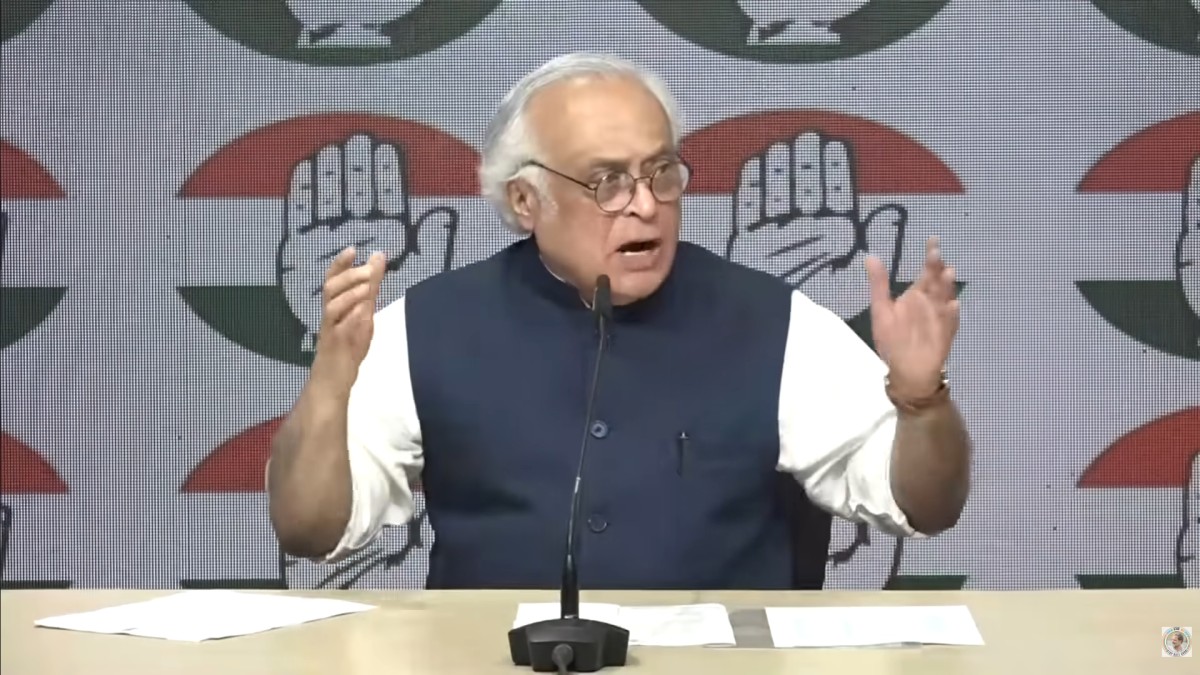
Congress general secretary in charge of communications Jairam Ramesh made the remarks after former Bombay High Court judge Justice R.C. Chavan resigned from the Maharashtra government’s UCC committee over concerns about the process of seeking public feedback.
Jairam Ramesh Questions State Wise UCCs
Ramesh said the resignation raised broader questions about the government’s approach to implementing UCCs in different states.
“A retired High Court judge has shown courage to resign from a committee set up by the Maharashtra government to prepare a uniform civil code for the state,” Ramesh said in a statement posted on X.
He questioned whether the Constituent Assembly had ever envisaged every state introducing its own version of a UCC.

“Did the Constituent Assembly ever imagine a situation in which every state would enact its own separate version of a UCC?” he asked.
Ramesh also referred to the Law Commission’s 2018 consultation paper on family law. According to him, the commission had concluded at the time that introducing a UCC was “neither necessary nor desirable at this stage” and had instead recommended reforms within individual family laws.
‘UCC Is a Tool for Polarisation’
Ramesh alleged that the Modi government had ignored the 2018 Law Commission position because it did not fit its political agenda.
He also criticised the implementation of different state level UCC frameworks, arguing that they were not actually uniform because they contained different provisions, procedures, penalties and exemptions.
“For the Modi Government, the UCC is not an instrument of considered legal reform to be implemented after the widest possible consultations and public debate and with the broadest possible consensus,” Ramesh said.
He alleged that the policy was instead being used for “division, disruption and diversion” and to “stoke prejudices and keep society in a state of permanent polarisation.”
Asked about the Congress’ position later, Ramesh said, “The UCC bulldozer is to permanently polarise society.”
Justice R.C. Chavan Resigns From Maharashtra Panel
Justice R.C. Chavan resigned from the Maharashtra UCC committee on September 19, two days after the panel’s second meeting. He had raised concerns over the proposed format for public feedback as well as the participation of a person who was not a committee member.
Chavan objected to reducing complex questions concerning marriage, infertility, family relationships and other social issues to simple “Yes” or “No” answers.
In a later interview, he said public consultation should allow people to provide longer and more detailed responses. He also said he had suggested involving law universities and other institutions in the consultation process.

The seven member Maharashtra committee, headed by retired Supreme Court judge Justice Ranjana Desai, was formed in July to prepare a framework for implementing the UCC in the state.
UCC Push Across BJP Ruled States
The controversy comes amid a wider push for UCC implementation. Uttarakhand became the first state to bring its UCC into force in January 2025. Gujarat, Assam and Madhya Pradesh have since passed UCC Bills, though the status of those measures differs from Uttarakhand’s law.
Union Home Minister Amit Shah has also said UCC would be implemented in all NDA ruled states before the 2029 Lok Sabha election.
Under Article 44 of the Constitution, the State is directed to “endeavour to secure” a Uniform Civil Code for citizens. Article 44 is part of the Directive Principles of State Policy and is not directly enforceable by courts.