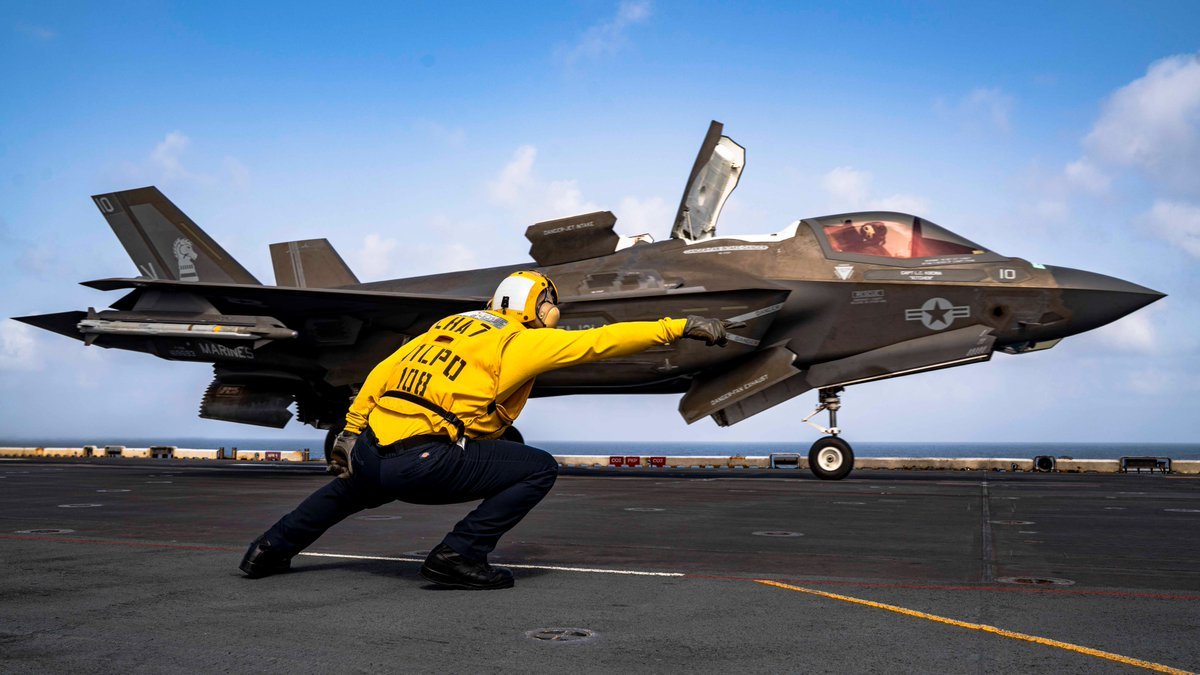
The United States military said on Monday that its forces carried out strikes on missile launch sites and vessels in southern Iran, describing the operation as an act of “self-defence” amid ongoing tensions despite diplomatic efforts to end the conflict.
According to the US military’s United States Central Command, the strikes targeted missile launch sites and boats allegedly attempting to place sea mines near the Strait of Hormuz.
“US forces conducted self-defense strikes in southern Iran today to protect our troops from threats posed by Iranian forces,” CENTCOM spokesperson Timothy Hawkins said in a statement.
The strikes reportedly took place near the southern Iranian port city of Bandar Abbas, after Iranian media reported explosions in coastal areas overlooking the Strait of Hormuz.
Iranian outlets, including state-linked agencies, reported explosion-like sounds near Bandar Abbas, Sirik and Jask, but said normal activity continued and there was no disruption to port operations.

Iran-US Talks Continue in Qatar
The military action comes as top Iranian negotiators travelled to Qatar for talks aimed at ending the war involving the United States, Israel and Iran.
Iran’s Foreign Ministry spokesperson, Esmaeil Baghaei, said progress had been made in negotiations but cautioned against assuming an agreement was close.
“It is correct to say that we have reached a conclusion on a large portion of the issues under discussion,” Baghaei said. “But to say that this means the signing of an agreement is imminent — no one can make such a claim.”
According to Iranian officials, discussions are currently focused on ending military aggression and de-escalation, while issues related to Iran’s nuclear programme and management of the Strait of Hormuz are not part of the immediate talks.
Trump Pushes Regional Role in Deal
Donald Trump said any agreement with Iran should involve regional countries, including Saudi Arabia, Pakistan and Turkiye, joining the Abraham Accords to normalise ties with Israel.
Trump also said Iran’s enriched uranium should either be handed over to the US for destruction or dismantled under international supervision.
However, Gulf countries such as Saudi Arabia and Qatar have repeatedly maintained that normalising relations with Israel depends on the creation of an independent Palestinian state.
Israel Escalates Threats Against Hezbollah
Meanwhile, tensions also escalated in Lebanon after Benjamin Netanyahu ordered what he described as “strong blows” against Hezbollah.
Netanyahu said Israel was “at war” with Hezbollah and vowed to intensify military operations following alleged drone attacks targeting Israeli forces.
Lebanon’s Health Ministry said Israeli attacks since March 2 have killed at least 3,185 people and wounded more than 9,600 others, with intensified air strikes reported in the eastern Bekaa Valley and southern Lebanon.

Oil Prices React to Diplomatic Hopes and Military Action
Global oil markets reacted sharply to developments.
US crude oil futures reportedly dropped more than 6 percent after reports suggested progress toward a possible agreement between Washington and Tehran that could reopen the Strait of Hormuz, a key global energy route.
However, Brent crude prices later rose again after news of the US strikes in southern Iran renewed fears of further escalation in the region.