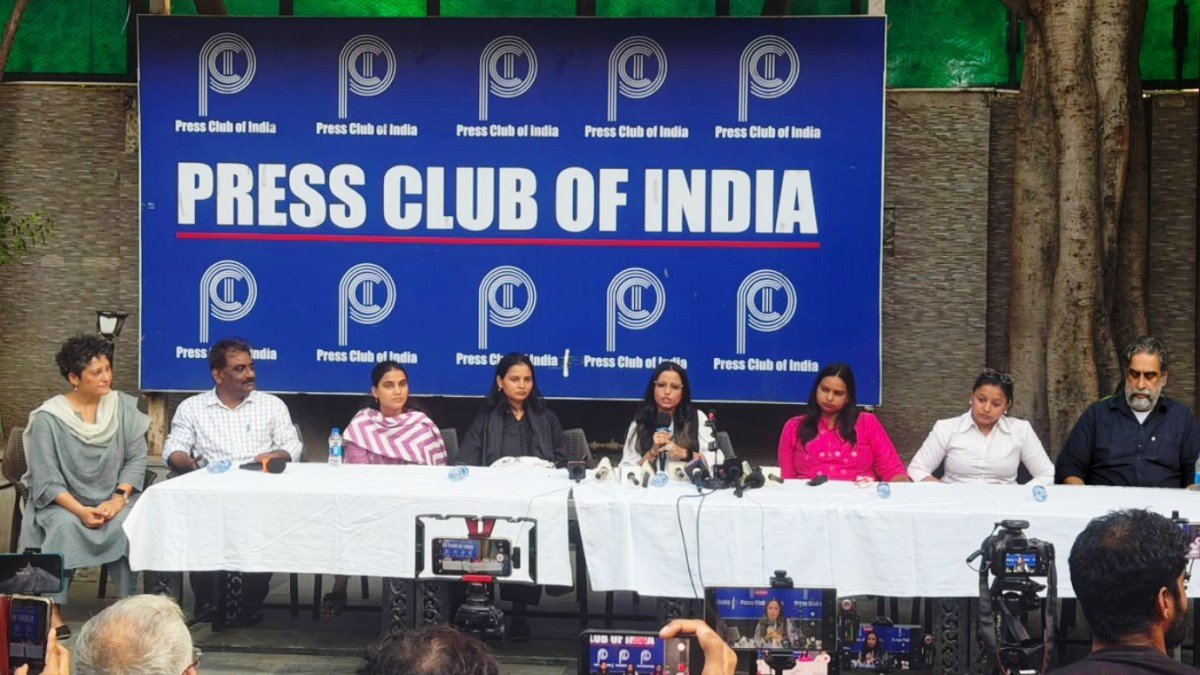
A protest meeting was held at the Press Club of India on Friday against the FIR registered against Red Chilli Live journalist Pooja Mathur following her ground reporting on the demolition of a mosque in Saharanpur, Uttar Pradesh.
The meeting brought together journalists and representatives of the Press Club of India, the Delhi Union of Journalists (DUJ), and the Network of Women in Media, India (NWMI). Participants discussed press freedom, the safety of women journalists and the legal and institutional pressure faced by reporters working on the ground.
Pooja Mathur Defends Saharanpur Reporting
Mathur said she visited the site of the mosque demolition in Saharanpur, spoke to people present there and interviewed the mosque imam. She alleged that an FIR was registered against her following her reporting.
Speaking at the meeting, Mathur said journalists should not be intimidated for reporting from the ground.
“File 100 cases instead of two. We are not going to be afraid. Our journalistic voice cannot be weakened through cases and pressure. We will not step back from our responsibility to show the truth and ask questions,” she said.
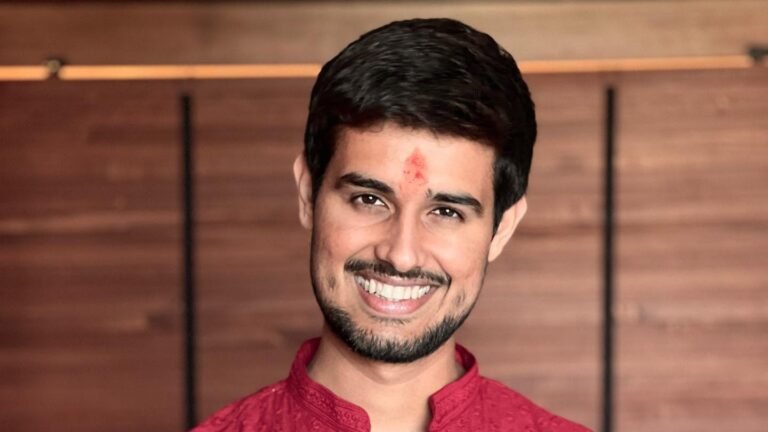
Mathur also rejected the suggestion that independent journalists should be dismissed as YouTubers.
“Do not dismiss us as mere YouTubers. We are serious journalists, we are qualified, and we do our research before we go online,” she said.
She said her reporting was aimed at showing the situation at the site and bringing the accounts of people there before the public.
“Journalism Is Not a Crime”
The meeting also heard from journalist Divya Srivastava, who spoke about alleged online trolling and threats after she attempted to question Uttar Pradesh Chief Minister Yogi Adityanath during a press conference.
“It is not a sin to ask questions,” Srivastava said, adding that asking questions was part of her responsibility as a journalist.

Other women journalists also shared accounts of alleged harassment and pressure while reporting on issues in different parts of the country.
Independent journalists Bindu Romi Gujjar and Monika Singh spoke about their reporting on the deaths of tribal children in Madhya Pradesh’s Balaghat district. They alleged that they faced pressure and threats after documenting the situation in tribal villages and government hospitals.
Shaheen and Nafeesa Recall Police Detention
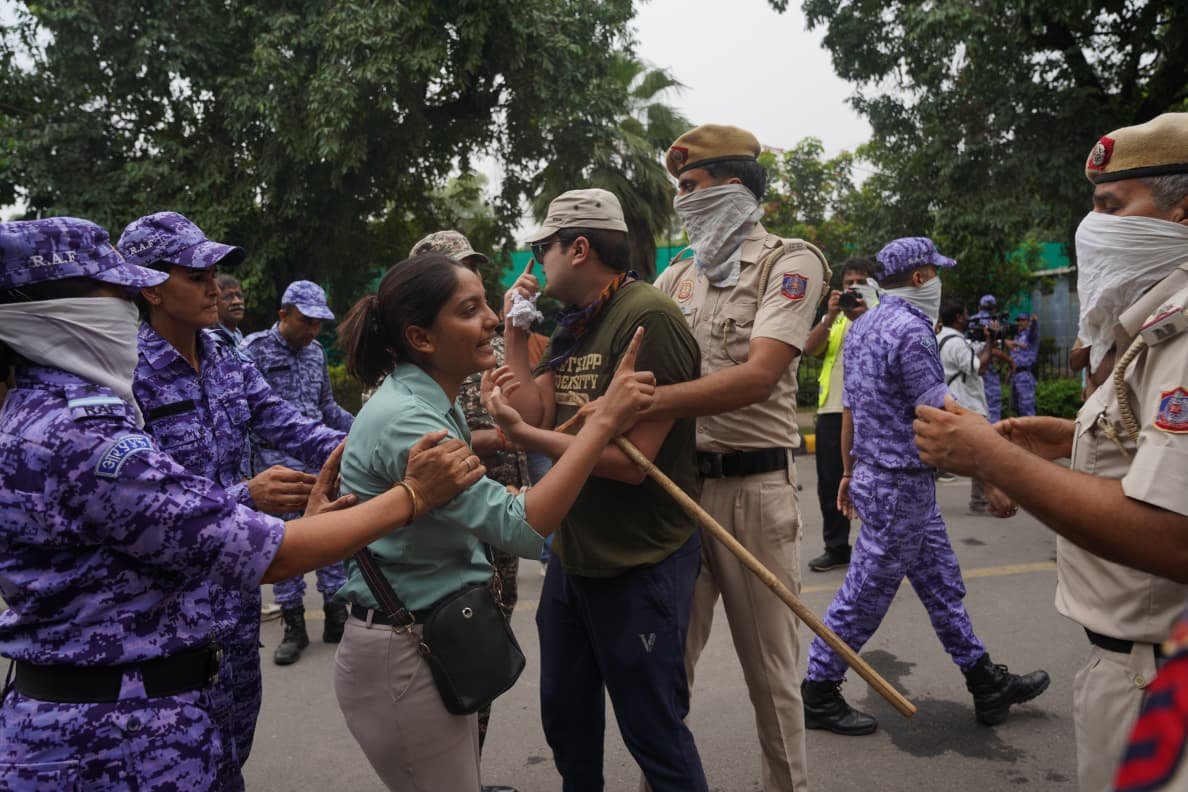
Journalists Shaheen Khan and Nafeesa Khan of 4PM News also spoke about their alleged detention and assault at Saket police station on September 3 while they were covering the visit of Union Home Minister Amit Shah and Delhi Chief Minister Rekha Gupta.
The journalists have alleged that they were taken to the police station after attempting to ask questions and were assaulted during their detention. They have also sought preservation of CCTV footage from the police station.
The Network of Women in Media, India has called for an inquiry into the allegations.
Journalist Bodies Extend Support
Press Club of India President Sangeeta Baruah Pisharoty, Secretary General Afzal Imam, DUJ President Sujata Madhok, NWMI representative Divya Arya, journalist Khushbu Akhtar and Caravan editor Hartosh Singh Bal were among those who expressed solidarity with the journalists.
Mathur thanked the journalist organisations and others who supported her.
“Even if there are cases and pressure, we will continue to ask questions and show the truth from the ground. We will continue to raise and show the voice of truth,” she said.
The meeting called for greater legal and institutional support for journalists facing pressure or legal action over their reporting.