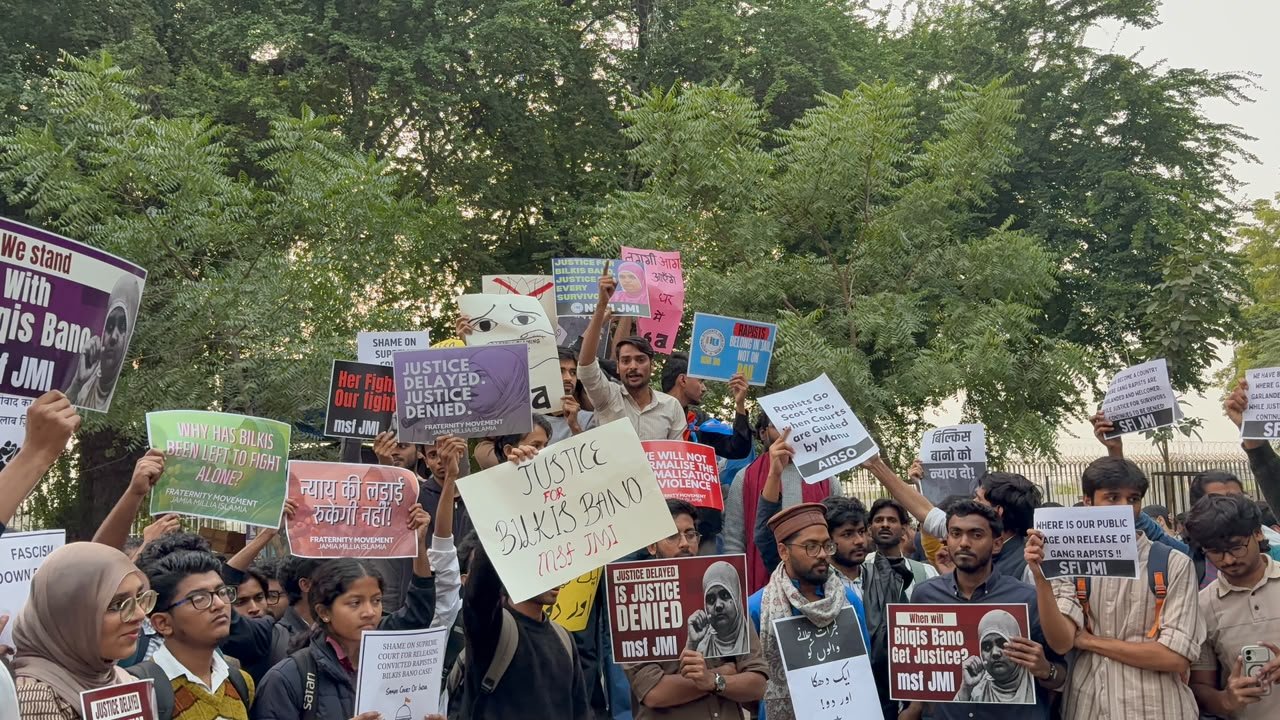
Several student organisations, including AISA, MSF, Fraternity Movement, AIRSO, AIDSO, DISSC and Disha, jointly organised a solidarity gathering for Gujarat pogrom survivor Bilkis Bano at the Central Canteen of Jamia Millia Islamia.
The gathering was held to express solidarity with Bano and condemn what the organisers described as systemic failures, institutional indifference and political complicity in her decades-long struggle for justice.
Addressing the gathering, students questioned the continued denial of justice to Bano, whose ordeal began during the 2002 Gujarat pogrom. She was gang-raped, while 14 members of her family, including her three-year-old daughter, were murdered.
Her pursuit of justice has involved repeated threats, displacement, years under protection and a prolonged legal battle spanning more than two decades.
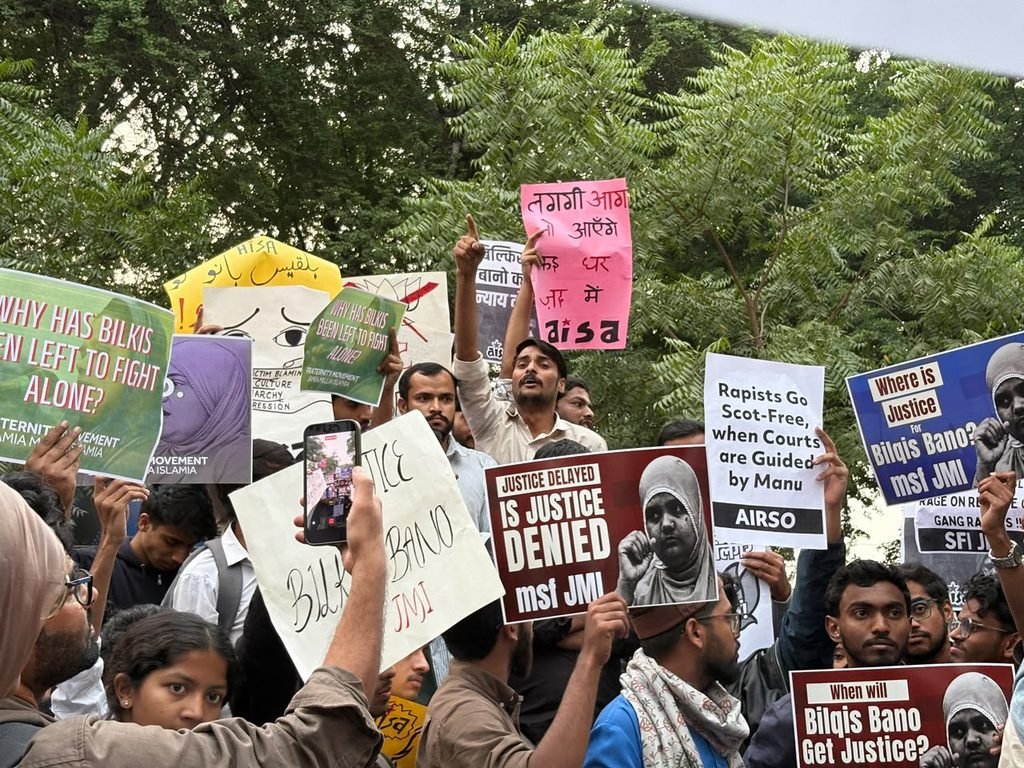
Students also condemned the premature release of the 11 convicts by the Gujarat government in 2022. The Supreme Court quashed the remission orders in January 2024, directing the convicts to return to prison. The recent grant of bail to two of them, however, has renewed concerns over accountability and the treatment of survivors of sexual violence.
The Fraternity Movement also raised questions about the Congress’s role during the 2002 Gujarat pogrom, arguing that accountability for communal violence should not be limited to one political regime.
The organisation also recalled the Asifa Bano case, condemning what it described as political protection for the perpetrators and communal mobilisation following the rape and murder of the eight-year-old girl in Kathua.
It stressed that the fight against sexual violence and communal injustice must address institutional failures and political complicity across party lines, rather than allowing any government to evade accountability.
Participants placed Bano’s struggle within a wider pattern of violence against women, particularly Muslim women and members of marginalised communities. They also condemned what they described as political protection and institutional impunity in cases such as those in Gujarat, Kathua and Unnao.
The gathering concluded with a call for collective resistance against communal and sexual violence and the selective application of justice. Students said the demand for justice should not depend on a survivor’s religion or the political influence of those accused of committing crimes.
They reaffirmed that Bano’s fight for justice was not hers alone.