Amzad Ali
A UGC-NET qualified Muslim research scholar has moved the Hon’ble Delhi High Court, alleging that Jamia Millia Islamia, a constitutionally protected minority institution, illegally denied him admission to the PhD. Programme (Academic) 2025–26, while also failing to disclose and implement Muslim minority reservations in its PhD admission process.
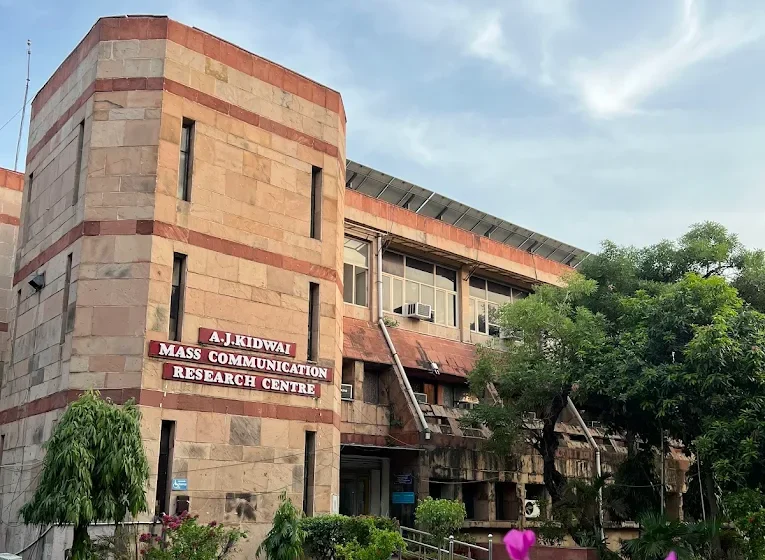
The petitioner was duly selected under the UGC-NET Exempted Category for the PhD programme at the Anwar Jamal Kidwai–Mass Communication Research Centre (AJK-MCRC). His name appeared in Jamia’s Final Selection List dated 19 December 2025; his documents were verified, his research proposal was approved, and a supervisor was formally allotted.
Yet, at the final stage, Jamia allegedly denied him admission without any written order, without notice, and without a hearing, in what the petition calls a complete violation of due process and constitutional protections.
Jamia allegedly failed to disclose or apply the Muslim minority reservation in its PhD admissions, despite being a minority institution under Article 30(1) of the Constitution.
Under Jamia’s own PhD. Ordinance (Ordinance 6 – VI), the University is legally bound to declare reservation-wise seat distribution, including minority quotas. However, Jamia allegedly conducted the entire PhD admission process without publishing any category-wise breakup of seats, effectively rendering the Muslim minority reservation invisible and meaningless.

The petitioner, himself belonging to the Muslim minority community, argues that Jamia’s conduct violates Articles 29 and 30 of the Constitution, which guarantee minorities the right to preserve and promote their educational interests through minority institutions.
The petition asserts that when a minority university fails to protect minority seats, it ceases to act as a minority institution in substance, reducing constitutional safeguards to a mere formality.
Jamia allegedly justified the denial on the oral claim that the petitioner’s UGC-NET was “one year old”, a ground the petition calls false and illegal.
The petitioner qualified UGC-NET (June 2024), with results declared on 17 October 2024. His eligibility was valid until 16–17 October 2025, and Jamia issued its PhD admission notification on 16 October 2025, squarely within the validity period.
There is no cut-off date in the UGC regulations or Jamia’s PhD ordinance for determining NET validity. Jamia accepted his application, issued an admit card, verified his certificate, interviewed him, selected him, and only then attempted to disqualify him; a move the petition calls legally barred by estoppel and legitimate expectation.
Despite being selected, the petitioner was denied admission without any show-cause notice, without an opportunity to be heard, and without any written reasoned order. His formal representation dated 30 December 2025 was ignored, allowing the admission deadline to lapse.
The petitioner’s research on “AI and Influencer Marketing in Indian Elections: Effects on Floating Voter Narratives” was already approved and had progressed to the supervision stage, making the denial not only illegal but devastating to his academic career.
A writ petition has been filed seeking urgent court intervention to quash the alleged illegal denial and enforce minority reservation with transparency.
The plea also asks the court to protect the petitioner’s constitutional and academic rights. The case is being argued by Advocate Kaif Hasan along with Mohammad Waseem and Vaibhav Pachauri, with the case diary number generated on January 10.